Engine Coolant Supplier for the Middle East
At 48 °C ambient the question is never freeze protection — it is how much boiling margin is left when the gauge already sits high.
The Gulf does not test a coolant's freeze point. It tests the other end of the scale. With ambient at 45–48 °C for months, a cooling system is already running hot before the engine adds its own load, and the difference between normal operation and boil-over narrows to a few degrees. A product specified for −45 °C spends its glycol on a property that never activates here, while the inhibitor package and reserve alkalinity that keep an aluminium radiator alive through hard-water top-ups get under-specified in the cheap drums the market is full of.

Which grade for which altitude
Ambient heat is only half the load. Radiator cores in this region pack with desert dust, so airflow falls while heat-rejection demand rises — a combination that shows up as overheating in traffic rather than on the highway. Boiling margin and a corrosion package that tolerates mineral-heavy top-up water decide whether a radiator lasts, not the number on the label.
| Zone | Altitude | What fails here | Grade to specify |
|---|---|---|---|
| Riyadh, Kuwait City & the interior | 300–600 m | Ambient 45–48 °C, dust-loaded cores | 0 °C, high boil-over |
| Jeddah, Dubai, Doha & the Gulf coast | Sea level | 40–45 °C with 60–90 % humidity; salt air drives corrosion | 0 °C, high boil-over |
| Baghdad & central Iraq | 34 m | Summer peaks above 48 °C; variable top-up water quality | 0 °C, high boil-over |
| Northern Iraq — Mosul, Erbil | 200–400 m | Very hot summers, occasional winter frost inland | 0 °C, or −25 °C for highland resale |
What is on the road
- Toyota Land Cruiser and Hilux — the default working vehicle from Riyadh to Basra
- Nissan Patrol and pickups in fleet, municipal and utility service
- American full-size pickups in Saudi fleet use
- Sinotruk and Shacman heavy trucks on construction and oilfield haulage
- Diesel generator sets — a very large installed base for construction and standby power, often running continuously in high ambient
Shipping and loading
- Loading port
- Guangzhou / Shenzhen, China
- Destination
- Jebel Ali (UAE), Jeddah and Dammam (Saudi Arabia), Umm Qasr (Iraq)
- Transhipment
- Jebel Ali re-exports across the Gulf and into East Africa — a single shipment can serve several markets
- Lead time
- 15–25 days after deposit, plus 18–25 days transit
Documents and clearance
- SDS in the 16-section GHS format for every formulation
- Certificate of analysis per batch — freeze point, boil point, pH, reserve alkalinity
- Certificate of Origin for preferential duty treatment
- Product data and test reports your agent needs for the SABER application in Saudi Arabia, or the destination scheme in the UAE and Iraq
Saudi Arabia routes conformity through SABER — a product certificate followed by a shipment certificate for each consignment, both issued through a recognised conformity assessment body and both issued to the importer, not the factory. What we control is having the SDS, batch COA and product data ready before your agent files, which is usually what delays a first application. The UAE and Iraq run different schemes again. We do not claim certificates we do not hold; ask us and we will send exactly what we can issue.
Recommended for this market
Matched to the climate above, not the full catalogue.
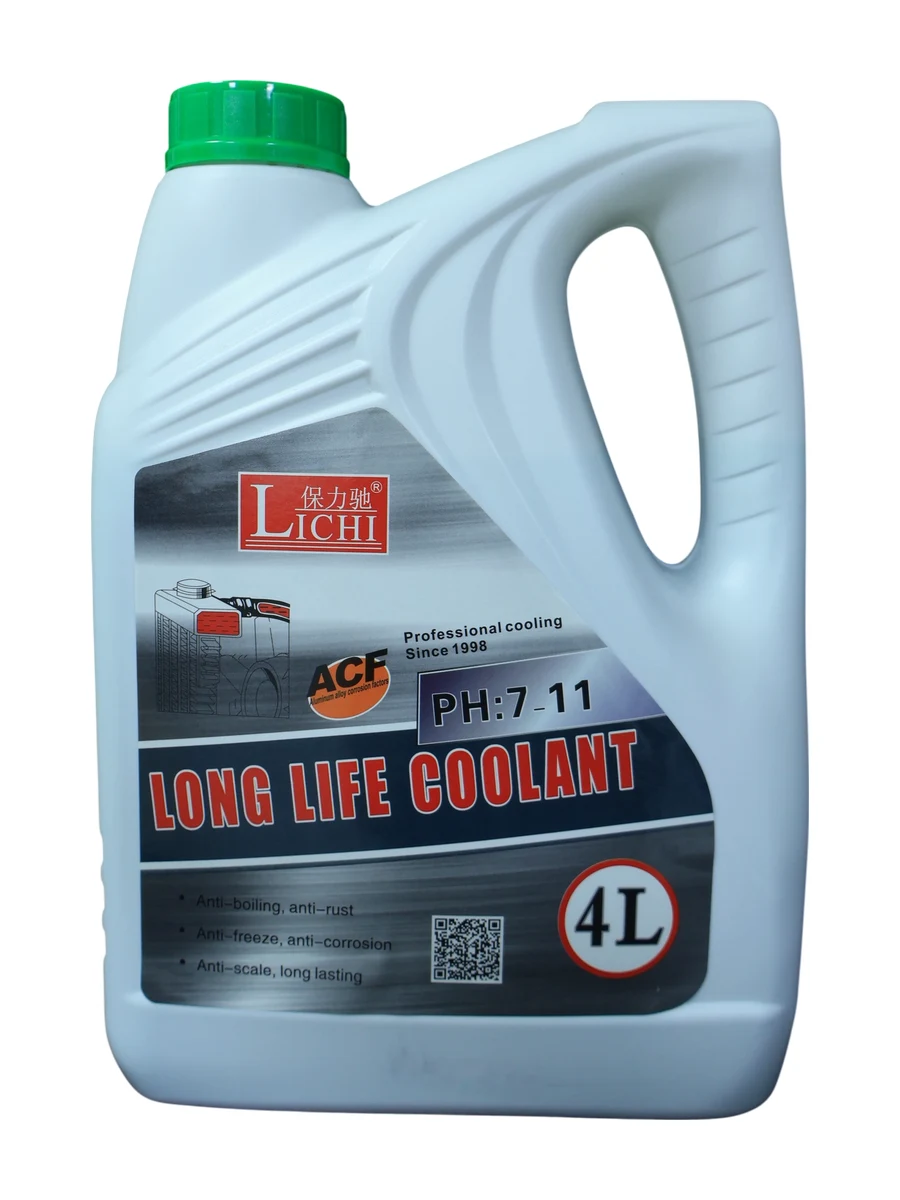 Coolant (Antifreeze)
Long-Life Engine Coolant — 4L Jug
Value 4L size for families & taxis
Long-life coolant in a 4L jug — one fill for most passenger engines, 6 jugs per carton.
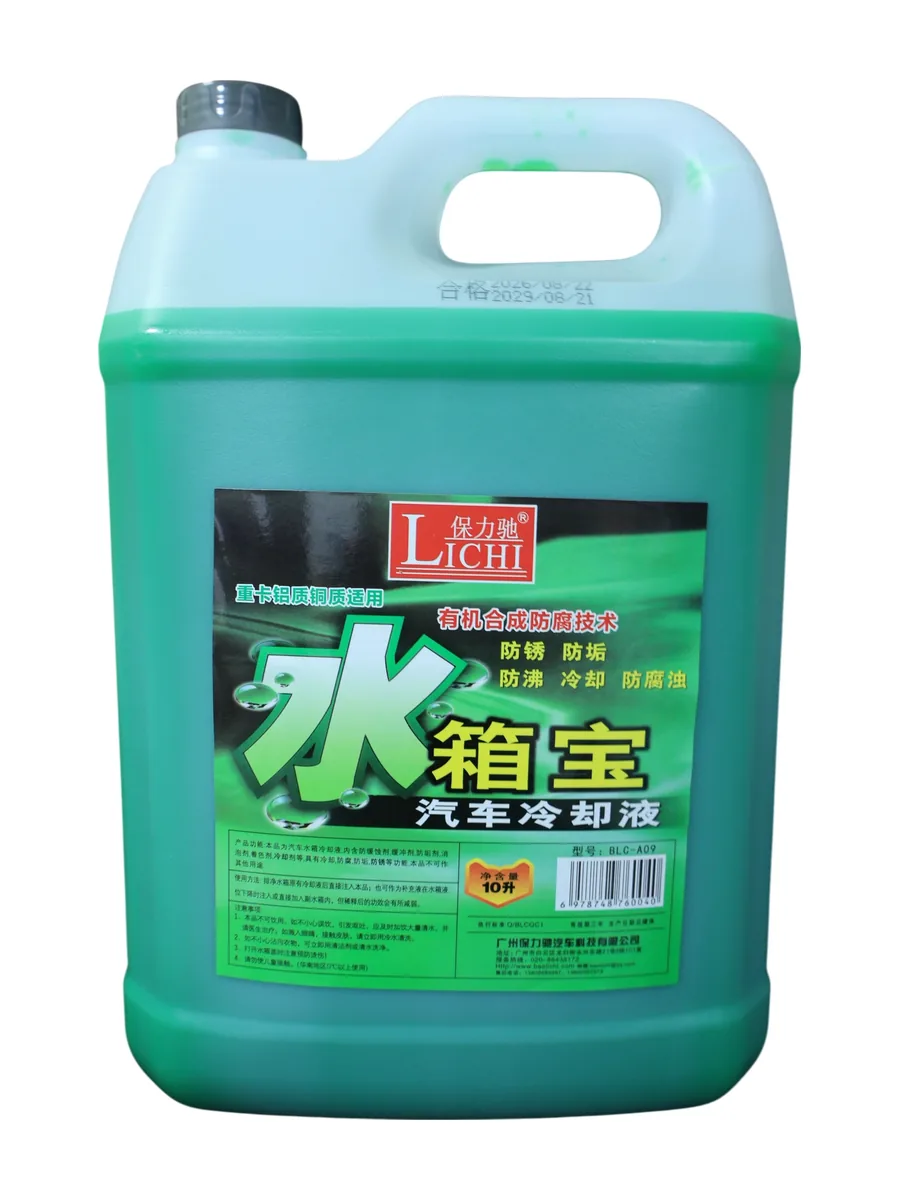 Coolant (Antifreeze)
Workshop Engine Coolant — Fleet Drum
Workshop-size drum for daily top-ups
10L workshop drum for service bays and fleet maintenance that refill coolant daily.
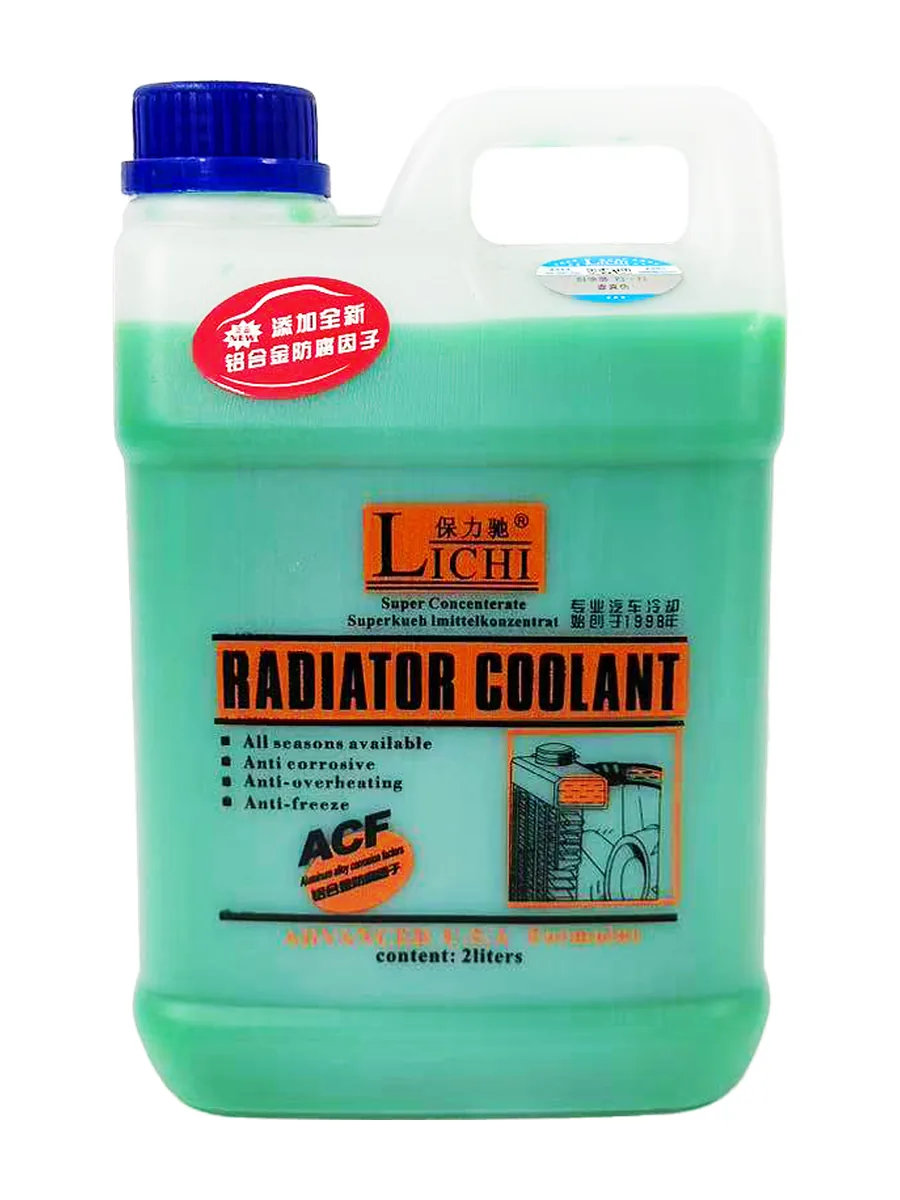 Coolant (Antifreeze)
Long-Life Engine Coolant
Reinforced anti-corrosion formula
Long-life radiator coolant with a reinforced anti-corrosion package, in a classic 2L bottle.
Common questions
Do we need antifreeze in the Gulf at all?›
No. There is no freeze event anywhere in this region. A −45 °C coolant spends the expensive part of the formulation on protection that will never activate, while a 0 °C grade puts that cost into inhibitors and reserve alkalinity — the two properties that actually decide radiator life here.
Will a 0 °C grade cope with 48 °C ambient?›
Ambient is not coolant temperature. The 0 °C grade carries a measured atmospheric boiling point of 101 °C, and a pressurised cap adds roughly 20–25 °C on top of that, so the system has real headroom — provided it is filled with coolant rather than water. The vehicles that boil over in Gulf traffic are almost always the ones running on straight tap water with a blocked core.
What is the minimum order?›
Retail-ready cartons: 1,200 × 2 L bottles (100 cartons), 600 × 4 L jugs, or 400 × 5 L drums. Bulk drums: 100 units. Mixed containers across coolant, brake fluid and washer fluid are accepted.
Can you supply Arabic labelling?›
Yes. Private label covers artwork, carton and language, including Arabic-only or bilingual Arabic/English packs. We supply the batch test data so the product is documented from the first container.
Send your destination port and volume
We reply with a graded recommendation, a loading plan and a price within one business day.
Other markets
- NigeriaA 0 °C grade built for a market that never freezes — Apapa and Tin Can loading plans, SONCAP paperwork prepared with your agent.
- Kenya, Tanzania & UgandaHigh-altitude formulations for the East African plateau — where boiling point, not freeze point, is what fails first.
- Ghana, Côte d'Ivoire & SenegalHumidity is the enemy on this coast, not cold — a specification written for Accra, Abidjan and Dakar.
- South AfricaThe one African market that genuinely needs both — highveld altitude and inland winter frost, in the same vehicle.
- Brazil, Chile, Peru & ColombiaThree climates on one continent — Andean altitude that eats your boiling margin, a southern cone that genuinely freezes, and a coastal belt that does neither.
- Türkiye, Israel, Lebanon & JordanOne region, two opposite specifications — an Anatolian winter that reaches −30 °C on one side, a Negev summer above 40 °C on the other.