Engine Coolant Supplier for Nigeria
A 0 °C grade built for a market that never freezes — Apapa and Tin Can loading plans, SONCAP paperwork prepared with your agent.
Nigeria does not freeze. The coolant failure mode here is boil-over in stop-start Lagos traffic and inhibitor depletion from hard-water top-ups, not ice. Specifying a −45 °C product for a Lagos fleet spends money on protection that never activates, while the property that actually decides whether a radiator survives — boil-over margin — gets no attention.
Which grade for which altitude
Altitude is the variable most suppliers ignore. Boiling point falls roughly 1 °C for every 300 m above sea level, so the same coolant that is comfortable at Apapa is working harder on the Jos Plateau.
| Zone | Altitude | What fails here | Grade to specify |
|---|---|---|---|
| Lagos, Port Harcourt & coastal belt | Sea level | Boil-over in congestion; humidity drives corrosion | 0 °C |
| Abuja, Kano & northern belt | 400–600 m | Hot dry season, sustained radiator load | 0 °C |
| Jos Plateau & highland roads | 1,200 m | Boiling point drops ~4 °C — margin matters | 0 °C, high boil-over |
What is on the road
- Sinotruk, Shacman and FAW heavy trucks on long-haul and construction work
- Toyota Hilux and Land Cruiser pickups in fleet and project service
- Japanese used passenger cars, frequently on their second or third coolant fill
- Diesel generator sets — a large installed base that runs hot for long hours
Shipping and loading
- Loading port
- Guangzhou / Shenzhen, China
- Destination
- Apapa, Tin Can Island (Lagos); Onne, Port Harcourt
- Container plans
- 20GP and 40HQ loading plans issued before you commit
- Lead time
- 15–25 days after deposit, dependent on SKU mix
Documents and clearance
- SDS in the 16-section GHS format for every formulation
- Certificate of analysis per batch — freeze point, boil point, pH, reserve alkalinity
- Certificate of Origin for preferential duty treatment
- Product data and test reports your agent needs for the SONCAP application
SONCAP is issued to the importer through an accredited conformity assessment body, not to the factory. What we control is having the product data and test reports ready on day one — that is usually what delays a first application. We do not claim a SONCAP certificate we do not hold; ask us and we will send exactly what we can issue.
Recommended for this market
Matched to the climate above, not the full catalogue.
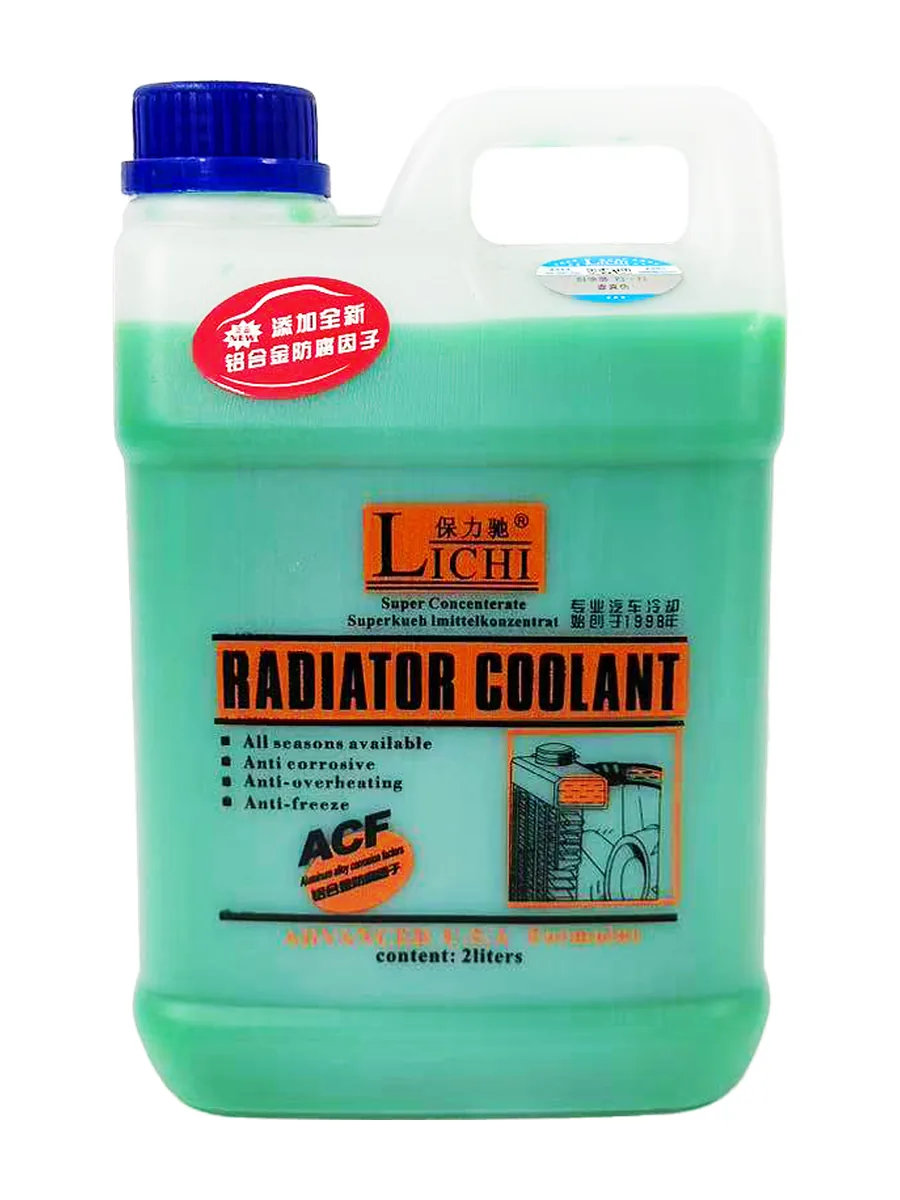 Coolant (Antifreeze)
Long-Life Engine Coolant
Reinforced anti-corrosion formula
Long-life radiator coolant with a reinforced anti-corrosion package, in a classic 2L bottle.
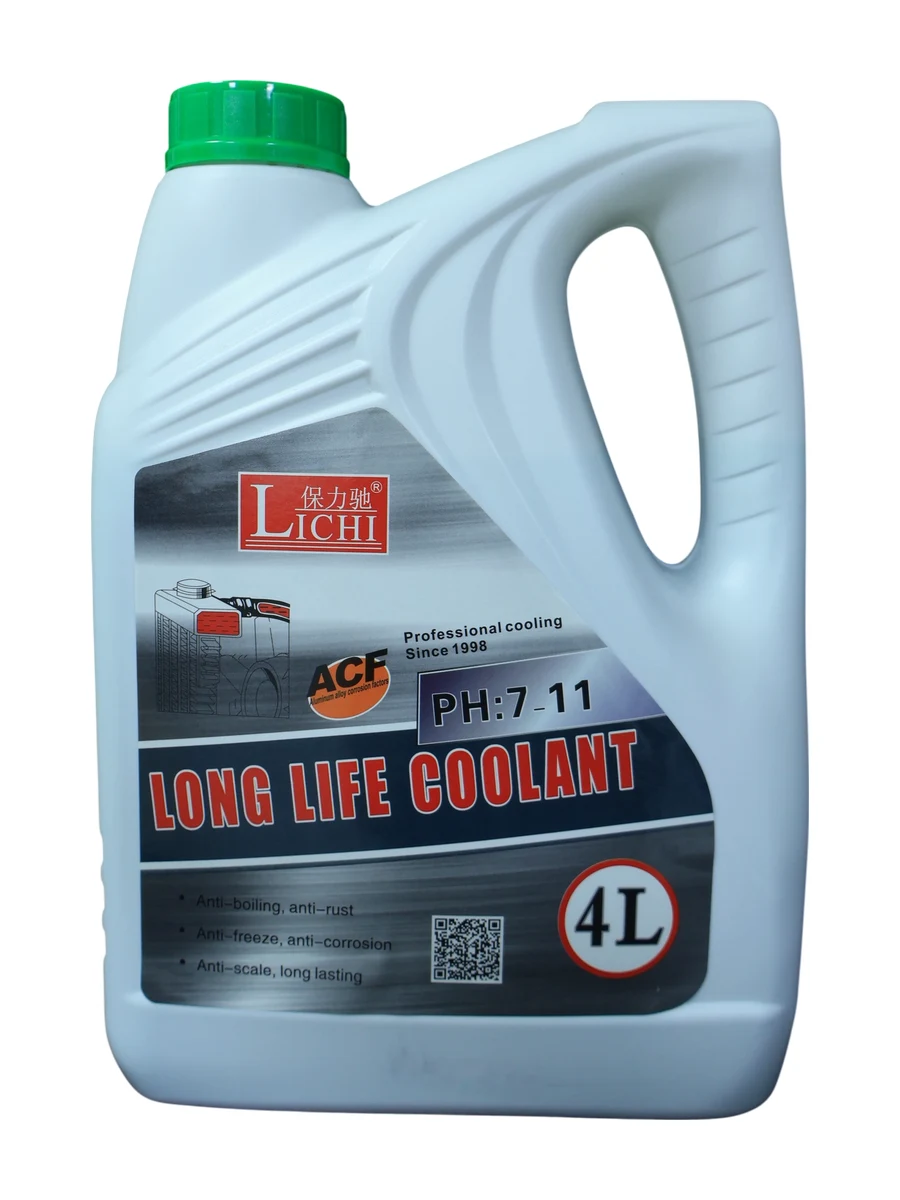 Coolant (Antifreeze)
Long-Life Engine Coolant — 4L Jug
Value 4L size for families & taxis
Long-life coolant in a 4L jug — one fill for most passenger engines, 6 jugs per carton.
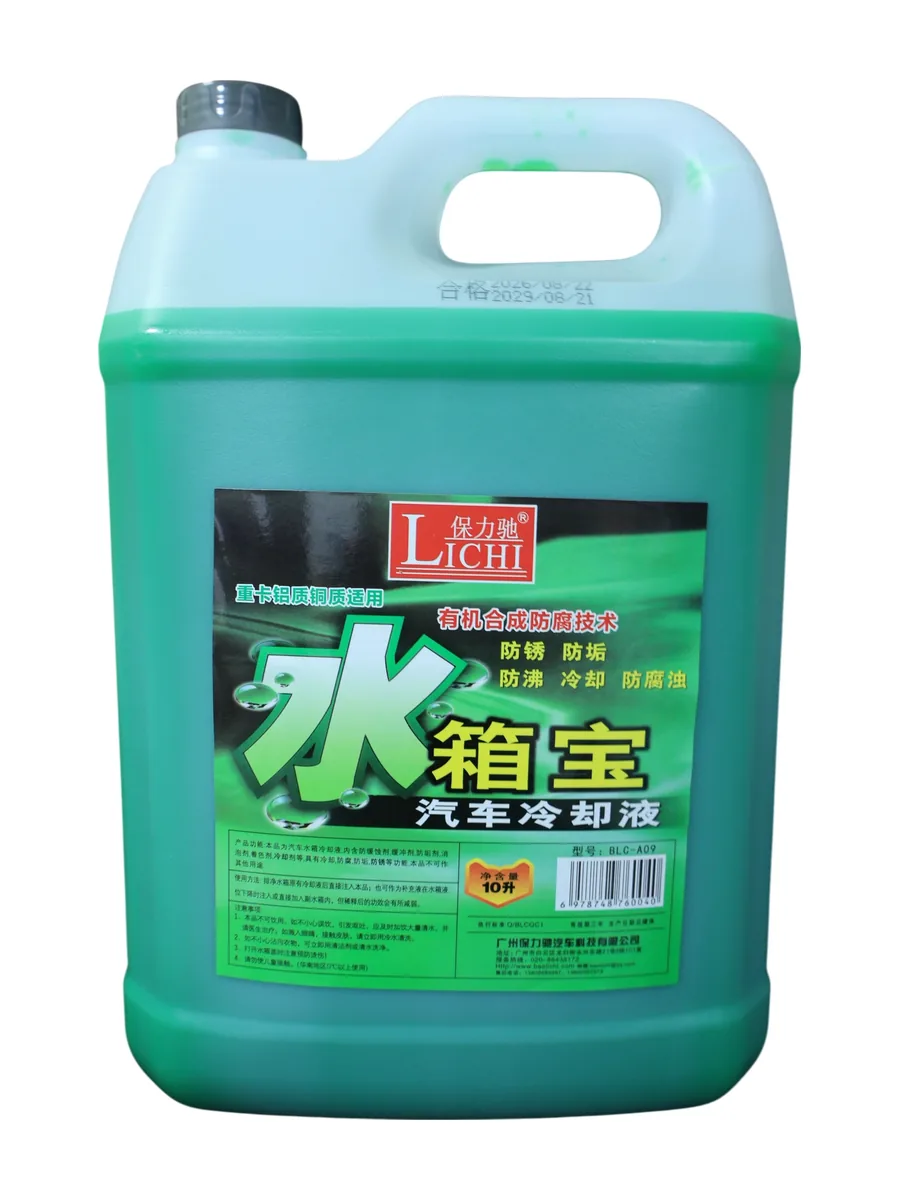 Coolant (Antifreeze)
Workshop Engine Coolant — Fleet Drum
Workshop-size drum for daily top-ups
10L workshop drum for service bays and fleet maintenance that refill coolant daily.
Common questions
Do we need the −45 °C grade in Nigeria?›
No, unless you are supplying vehicles that work in the highlands during the cold season. A −45 °C coolant spends glycol on freeze protection that never activates, and glycol is the expensive part. The 0 °C grade puts that cost into the inhibitor package instead.
What is the minimum order?›
Retail-ready cartons: 1,200 × 2 L bottles (100 cartons), 600 × 4 L jugs, or 400 × 5 L drums. Bulk drums: 100 units. Mixed containers combining coolant with washer fluid or brake fluid are accepted.
How long does SONCAP take?›
The timeline belongs to the conformity assessment body and your clearing agent, not to us. What we shorten is the front end: the product data, SDS and batch test reports are ready before you file, so the application does not sit waiting on the factory.
Can you print our own brand?›
Yes. Private label is available on every coolant SKU — your artwork, your carton, your language. We supply the batch test data that lets you sell it as a documented product rather than an unlabelled drum.
Send your destination port and volume
We reply with a graded recommendation, a loading plan and a price within one business day.
Other markets
- Kenya, Tanzania & UgandaHigh-altitude formulations for the East African plateau — where boiling point, not freeze point, is what fails first.
- Ghana, Côte d'Ivoire & SenegalHumidity is the enemy on this coast, not cold — a specification written for Accra, Abidjan and Dakar.
- South AfricaThe one African market that genuinely needs both — highveld altitude and inland winter frost, in the same vehicle.
- Brazil, Chile, Peru & ColombiaThree climates on one continent — Andean altitude that eats your boiling margin, a southern cone that genuinely freezes, and a coastal belt that does neither.
- Saudi Arabia, UAE & IraqAt 48 °C ambient the question is never freeze protection — it is how much boiling margin is left when the gauge already sits high.
- Türkiye, Israel, Lebanon & JordanOne region, two opposite specifications — an Anatolian winter that reaches −30 °C on one side, a Negev summer above 40 °C on the other.