A customer walks into your shop and asks for the coolant that never boils. A supplier shows a drum with a dramatic temperature figure on the label, says it lasts the life of the engine, and quotes four times the price of the conventional product you already sell. Whether that is a good purchase depends on far more than the number on the drum. This guide is written for importers, distributors, private-label buyers and fleet managers who are being asked to stock or recommend a waterless coolant. It separates the chemistry from the marketing, explains the heat-transfer compromise that nobody prints on the label, sets out what a proper conversion involves, and gives you a written question list for warranties and a worksheet for the real cost. It also states plainly what BOLITCH does and does not supply: our measured conventional grades cover 101–110 °C at atmospheric pressure, and we do not offer a waterless product or claim a waterless performance figure.
What waterless actually means
A conventional engine coolant is a mixture: glycol for freeze protection, water as the heat-carrying medium, and an inhibitor package that protects the metals in the system. A waterless coolant is formulated with little or no free water, usually around a glycol-based carrier and a different inhibitor system. That single change alters almost every property that matters in service. Suppliers of these products quote atmospheric boiling points far above a water-based coolant, and the chemistry genuinely does resist boiling at high temperature and low system pressure. But it does not follow that the engine runs cooler, that every vehicle is approved for it, or that it can be mixed with the fluid already in the system. Those are three separate questions, and only the first has a straightforward answer.
The phrase also gets used loosely in trade conversations. Some sellers call a high-glycol, low-freeze-grade product waterless when it still contains a meaningful fraction of water; others use the term for a genuine near-anhydrous formulation sold with an installation kit. Ask for the composition and the measured physical data on the technical data sheet, not the word on the label. If a supplier cannot tell you the base fluid, the water content, the operating temperature range and the fluids it is compatible with, you do not have a specification — you have a slogan.
| Property | Water-based coolant | Waterless formulation | What the buyer must check |
|---|---|---|---|
| Freeze protection | Set by glycol concentration and the grade you buy | Usually supplied as a single ready-to-use grade | Whether one grade covers your climate or two stocks are still needed |
| Boiling behaviour | Atmospheric boiling point measured at 101 °C for 0 °C grade, 109 °C at -35 °C and 110 °C at -45 °C across our line | Suppliers quote much higher figures; require the measured figure on their TDS | That a quoted figure is for the fluid, not for the engine or the system |
| Heat carrying ability | Water is the efficient heat carrier in the mixture | Less water means a weaker heat carrier at the same flow rate | Whether the radiator and pump were designed for the change |
| Viscosity | Lower, closer to water | Noticeably higher, especially cold | Cold-start flow and heater performance in your market |
| Compatibility | Follow the grade and inhibitor type on the label | Must not be casually mixed with conventional coolant | Written compatibility statement from both fluid suppliers |
| Service practice | Top up with the same grade, change on the published interval | Full drain and fill, dedicated top-up fluid, specialist disposal | Whether your workshops can actually follow the procedure |
The heat-transfer compromise nobody puts on the drum
Boiling point and heat transfer are different properties. Water is unusually good at carrying heat; glycol is there to stop freezing and raise the boiling point, but it is not as good a heat carrier as water. Remove most of the water and you gain resistance to boiling while reducing the fluid's ability to move heat from the cylinder head to the radiator. In a healthy system with a correctly sized radiator and a working water pump, the engine can still be kept in range — but the temperature difference across the system changes, and a marginal cooling system becomes more marginal, not less.
This is why the strongest sales argument for waterless coolant is often a system that was already struggling: an old radiator, a weak pressure cap, a clogged air side or a fan that never was adequate. The fluid may stop the boil-over, but the underlying restriction remains and the engine may simply run hotter without reaching a visible boil. For a fleet buyer the practical test is not whether the drum claims a high boiling point; it is whether the engine's normal operating temperature, heater output and top-tank temperature stay in the expected range after conversion, in the worst climate you actually serve. Record those numbers before and after. If the conversion fixes the symptom but not the temperature trend, you have sold a cover-up, not a repair.
What a waterless conversion actually involves
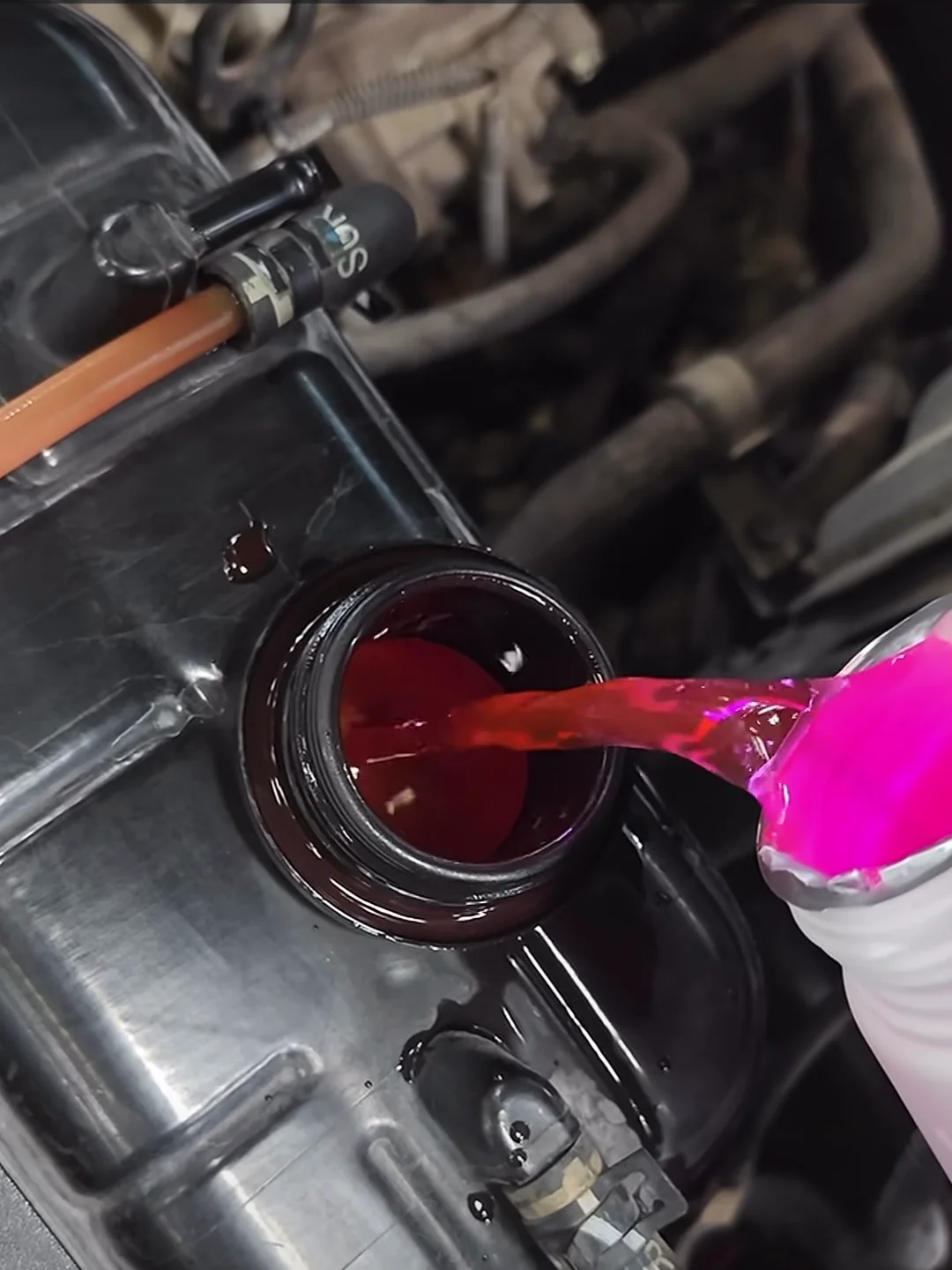
The most common buyer mistake is to imagine a waterless product as a premium top-up that can be poured into an existing system. It cannot. Residual water-based coolant dilutes the waterless fluid, undermines the very property the buyer paid for, and can create a compatibility problem in the inhibitor system. A proper conversion is a controlled procedure, and a workshop that quotes five minutes for it has not understood the job.
- 1Confirm the vehicle or engine is suitable in writing before buying the fluid; check the owner's manual and any written position from the manufacturer.
- 2Drain the system cold, including the block drain where fitted, and collect the old fluid for correct disposal.
- 3Flush with the compatible rinsing fluid specified by the waterless supplier, then drain again; do not assume plain water is an acceptable rinse.
- 4Inspect the pressure cap, hoses, water pump and radiator before refilling — fitting an expensive fluid into a leaking system wastes the entire investment.
- 5Fill slowly through the specified point, following the supplier's bleed procedure; trapped air is especially unhelpful in a high-viscosity fluid.
- 6Run to operating temperature, recheck the level after cooling, and record the before-and-after operating temperature and heater output.
- 7Label the system so the next technician does not top it up with a conventional product; give the customer the top-up fluid and the written rule.
That last step is where most field failures start. A vehicle converted this year will visit a different workshop in two years, and that workshop will reach for the usual bottle unless there is a clear label and a record in the service file. A distributor who sells the conversion without selling the labelling and the top-up discipline has created a callback waiting to happen. Ask your supplier for the label, the technician sheet and the customer handout as part of the sale, not as an afterthought.
Warranty and compatibility: get the answer in writing
No fluid seller can grant a vehicle warranty, and no reseller should repeat a blanket claim that a product is approved everywhere. Approval is granted by the vehicle or engine manufacturer, and it is usually tied to a named specification, a viscosity or a service practice. If a supplier says a waterless coolant is safe for every car, ask them to put the vehicle list and the written manufacturer position in the quotation. If they cannot, treat the topic as a specialist, niche sale rather than a line you can recommend to every customer who walks in.
| Question to ask | Why it matters | Evidence you should keep |
|---|---|---|
| Which vehicle and engine applications are approved? | A generic yes protects nobody | Named application list or written manufacturer position |
| What is the base fluid and water content? | Determines freeze behaviour, viscosity and compatibility | TDS with measured values, not a label claim |
| Can it be mixed with any conventional coolant? | Residual fluid is unavoidable in many real jobs | Written compatibility and flushing instruction |
| What top-up fluid must the customer keep? | Wrong top-up destroys the advantage and the record | Supplier's top-up SKU and a system label |
| How is the old fluid disposed of? | Disposal rules differ by market and by chemistry | Local disposal guidance and a workshop procedure |
| What happens to the cooling system warranty after conversion? | The complaint arrives at the importer, not the supplier | Written position from the party who warrants the system |
One more distinction matters commercially. A fluid supplier's own product warranty and the vehicle's cooling-system warranty are not the same document. A drum may carry a product quality guarantee while the vehicle maker still specifies a conventional fluid. If you sell both types of coolant, keep the shelves, the staff training and the customer records separate. The moment a converter and a conventional top-up are confused at the counter, you own the dispute.
The cost model: purchase price is only line one
Conventional coolant is sold per litre and, for a distributor, the comparison looks brutal: a waterless product can cost several times as much before the job starts. A fair comparison uses total cost of ownership, and it includes the flush, the labour, the disposal, the top-up bottle and the risk of comeback. It also includes what the customer is actually trying to buy. If the goal is to stop a recurring boil-over on a poorly maintained truck, the money may be better spent on a pressure cap, a clean radiator air side and a correct conventional grade. If the goal is to protect a low-use machine that sits in a hot shed for months, the higher fluid price may be easier to justify.
| Cost line | What to obtain | How it changes the comparison |
|---|---|---|
| Fluid volume | System capacity and the number of litres the conversion needs | A larger charge multiplies the price difference |
| Drain and flush | Workshop hours and the specified rinsing fluid | Often the biggest hidden cost in the first year |
| Hardware check | Cap, hoses, pump and core condition before filling | Premium fluid will not repair a failed component |
| Disposal | Local rules for the drained conventional fluid | Adds a fee in many markets |
| Top-up supply | Price and availability of the dedicated top-up fluid | A scarce top-up creates a service problem years later |
| Call-back risk | Who pays if the wrong fluid is added later | Assign the responsibility in writing at the point of sale |
Where a waterless coolant can be a sensible choice
None of this makes the product a bad one. It makes it a specialist product with a narrower fit than the label suggests. In our conversations with distributors, the applications that survive a careful cost review share three traits: the engine is out of production or unusually sensitive, the machine spends long periods idle or in storage, and an established workshop is willing to own the conversion procedure. Typical examples are below. Treat them as candidates to evaluate, not as a universal recommendation.
- Classic and collector vehicles that are stored for months and suffer from slow corrosion or freezing in an unheated shed.
- Standby generators and pumps that start rarely but must be ready in a heat wave, where a long-life fill reduces the chance of a neglected system.
- Specialist machinery whose manufacturer has issued a written approval for a waterless fluid and whose service network can support it.
- Dedicated race or demonstration vehicles where the operator accepts a specialist maintenance regime and measures temperatures after every session.
- Fleet trials on a small number of vehicles, run with before-and-after temperature logs and a clear exit plan if the numbers do not improve.
Where a conventional grade is usually the smarter buy
For most of the vehicles a general distributor sees, a correctly specified conventional coolant remains the better commercial answer. It is cheaper per litre, widely available for top-ups, supported by a familiar service practice, and offered in freeze grades matched to the climate. Our own conventional line is measured at atmospheric boiling points of 101 °C for the 0 °C grade, 109 °C for -35 °C and 110 °C for -45 °C, so the whole range sits in a 101–110 °C band. Those figures are measured values for our products, not a claim about any other fluid or a promise that boiling cannot occur in a pressurised system.
- Vehicles still under a manufacturer warranty that names a conventional coolant specification — stay inside the named specification.
- High-mileage fleets that need low-cost top-ups in remote workshops where a dedicated waterless bottle will not be stocked.
- Cold markets where a locally available freeze grade is the first requirement and one-size-fits-all fluid is a poor fit.
- Customers whose real problem is an old cap, an air-side blockage or a leaking hose; fix the hardware before upgrading the fluid.
- Private-label buyers building a core range for general resale, where shelf space is better spent on the grades that turn over every month.
Five questions to put into every request for quotation
If you are evaluating a waterless supplier, send the same structured request to every candidate. The answers are easy to compare in a spreadsheet and awkward to fake. Ask for measured data rather than adjectives, and keep the reply attached to the product file you will use when a customer asks a difficult question two years later.
- 1What is the base fluid, the approximate water content and the measured atmospheric boiling point on the TDS?
- 2Which vehicle or engine applications are approved, and can the written manufacturer position be supplied?
- 3What is the complete conversion procedure, including the rinse fluid, the fill volume and the bleeding method?
- 4Which top-up fluid must remain available to the customer, and what is its minimum order quantity and lead time?
- 5What are the disposal requirements for the drained fluid in our destination market, and who documents them?
What BOLITCH supplies — and what we do not claim
BOLITCH supplies conventional engine coolant as concentrate and ready-to-use in 1 L, 2 L, 4 L, 9 L and 10 L packs and in bulk drums, with freeze grades selected for tropical, temperate and severe-cold markets. Our measured atmospheric boiling points are 101 °C for the 0 °C grade, 109 °C for -35 °C and 110 °C for -45 °C, within a 101–110 °C whole-line band. We publish measured data and we do not claim certifications we do not hold. ISO, IATF, ASTM and GB references that appear in technical discussions are industry standards and test methods, not statements of BOLITCH certification.
Do you sell a waterless product?
No. We do not offer a waterless coolant and we do not publish a waterless performance figure. If your customer needs one, source it from a supplier who will provide the measured data and written application approval, and keep that product's service record separate from any BOLITCH coolant in the same workshop.
Can BOLITCH coolant top up a system that was converted to waterless?
Do not assume so. Waterless systems should be topped up only with the fluid specified for that conversion. Mixing a conventional coolant into a waterless fill defeats the reason for the conversion and may create an incompatibility problem. If you are unsure what is in a system, test or drain it according to the equipment maker's instruction rather than guessing.
Does dilution water matter for your conventional grades?
Yes. For concentrate, use low-conductivity water with controlled hardness and chloride, and keep a record of the water used. Hard or salty water introduces scale and ions that the inhibitor package then has to deal with. Our separate guide on dilution-water quality sets out the acceptance lines and a simple incoming check.
Which documents come with a shipment?
Technical data sheets (TDS) are ready to download and safety data sheets (MSDS) are available on request. Ask for the certificate of analysis, available on request; when supplied it reports the measured values for the lot you actually receive, which is the document worth keeping when a customer asks what is in the drum.
Ask for measured coolant data and a climate-matched quotation
BOLITCH supplies conventional coolant as concentrate and ready-to-use in 1 L, 2 L, 4 L, 9 L and 10 L packs and bulk drums for distributors, importers, private-label buyers and fleet operators, with freeze grades selected for tropical, temperate and severe-cold markets. TDS are ready to download and MSDS are available on request. Tell us your climate, pack sizes, monthly volume and whether you buy concentrate or ready-to-use, and we will send measured freeze-point and boiling-point data by grade, a sample batch COA, dilution-water guidance and a quotation for your first container. Visit bolitch.com or email sale@bolitch.com.