An importer buys a container of coolant concentrate to save freight, dilutes it with local water in a rented warehouse, fills private-label bottles, and ships the first pallet. Six weeks later the complaints start: a brown film in the reservoir, a heater matrix that no longer warms the cabin, a water pump weeping at the seal. The concentrate was within specification at the factory. The glycol came from the same lot the supplier has shipped for years. What changed was the water. This guide is written for distributors, importers, private-label buyers and fleet operators who dilute concentrate themselves or who buy ready-to-use coolant blended locally. It sets out why the water is half of the finished formula, where poor water enters an export supply chain, the dissolved salts that quietly undo a good inhibitor package, a written dilution-water specification you can paste into a purchase order, a fifteen-minute incoming check that costs almost nothing, and a mixing procedure that keeps every batch identical. None of it needs a laboratory and none of it asks you to claim a certificate you do not hold.
Why the water is half of the finished formula
A concentrate is the full additive package carried in glycol with essentially no water. A ready-to-use product is that same formula already cut to a fixed glycol ratio. At the common 50/50 dilution, roughly half of every litre in the drum is water that somebody added downstream of the blend plant. That water is not an inert filler. It is the heat-transfer medium, it sets the final freeze and boil behaviour together with the glycol ratio, and it carries the corrosion inhibitors into every corner of the system. Anything dissolved in it travels with the coolant for the whole service life. Calcium and magnesium arrive as scale on the hottest metal surfaces. Chloride arrives as an aggressive ion that attacks aluminium and solder. Suspended silt arrives as an abrasive that wears a pump seal. In other words, choosing a dilution water is a formulation decision, not a housekeeping detail. A buyer who specifies the concentrate down to the last additive but leaves the water to whoever happens to own a hose has specified only half of the product that reaches the customer. The practical consequence is straightforward: the water needs a written acceptance window, a named owner, and a test record just like the concentrate does.
| Role of the water | What a good water contributes | What a poor water introduces | Where the damage shows up first |
|---|---|---|---|
| Heat-transfer medium | High specific heat capacity, no insulating deposits | Dissolved minerals that precipitate on hot surfaces | Cylinder head passages and the radiator's narrow tubes |
| Sets final freeze and boil behaviour | A predictable glycol-to-water ratio that a refractometer can verify | Unknown dissolved salts that distort refractometer and hydrometer readings | Wrong grade on the shelf, wrong protection in the vehicle |
| Carrier for the inhibitor package | A neutral, low-ion vehicle that leaves the additives intact | Chloride, sulfate and residual chlorine that consume or destabilise inhibitors | Aluminium, solder seams and the water pump impeller |
| Circulating fluid under pressure | Clear liquid with no solids | Silt, rust particles and organic growth | Pump seal, heater matrix and thermostat |
The fourth row is the one most often missed in a price negotiation. A buyer comparing two concentrate quotations will ask about inhibitor chemistry, glycol purity and pack sizes, but rarely about who supplies the water and what is in it. When the finished product fails in the field, the customer does not care which half of the formula was at fault — the label on the bottle carries the blame. Treating water as a specified raw material is therefore the cheapest form of warranty protection available to a distributor, because it removes an entire class of disputes before the first pallet ships.
Where poor water enters an export supply chain
Water quality problems in this trade are almost never dramatic. Nobody deliberately fills a batch with sea water. They happen through ordinary shortcuts: a blending tank rinsed with tap water and left wet, a hose fed from a borehole because the municipal supply was interrupted, a ready-to-use product topped up at the warehouse to stretch a lot, or a subcontractor who assumed that clear water is clean water. Each of these is invisible in a sealed bottle and only becomes visible after thousands of heat cycles. The table below gives typical conductivity ranges as a rough field indicator, not as a measurement of any specific supply — the only number that matters for a shipment is the one you record yourself at the point of mixing.
| Water source | Typical conductivity | Typical concern | Verdict for coolant dilution |
|---|---|---|---|
| Municipal tap water | Roughly 200-800 microsiemens per centimetre, higher in hard-water regions | Calcium, magnesium, chloride, residual chlorine | Not suitable without treatment and a test record |
| Borehole or well water | Often 500-1500 microsiemens per centimetre or more | Iron, manganese, hardness, variable composition by season | Avoid; composition changes with rainfall and depth |
| Reverse-osmosis permeate | Commonly 10-100 microsiemens per centimetre | Membrane condition and storage hygiene determine the result | Acceptable when tested and stored in a sealed, clean tank |
| Deionised or distilled water | Usually below 10 microsiemens per centimetre when fresh | Picks up ions quickly from open tanks, hoses and dirty drums | Preferred, provided it is tested at the point of use |
| Rainwater or untreated surface water | Highly variable | Silt, organics, microbes, airborne contaminants | Never use |
What hard water and chloride actually do inside a cooling system
Hardness is mostly calcium and magnesium. When a hard dilution water is heated in a cylinder head, those salts come out of solution and bake onto the hottest metal as a pale, adherent scale. A thin layer is enough to insulate the surface that most needs to shed heat, which is why a system filled with a correctly formulated coolant can still run hot. Scale also detaches in flakes during a later flush and then blocks the narrow tubes of a radiator or heater matrix. Chloride is different and more insidious: it does not need to precipitate. It stays dissolved, penetrates the protective oxide film on aluminium, and sets up localised pitting that no visual inspection of a clear bottle will reveal. Solder seams and brass components in older radiators are similarly vulnerable. Sulfate and residual chlorine add to the load, while iron and silt act as abrasives in a pump that spins for thousands of hours. The result is a slow, cumulative failure that looks exactly like a bad coolant: brown sediment, falling pH, a weeping seal and a customer asking for a credit note.
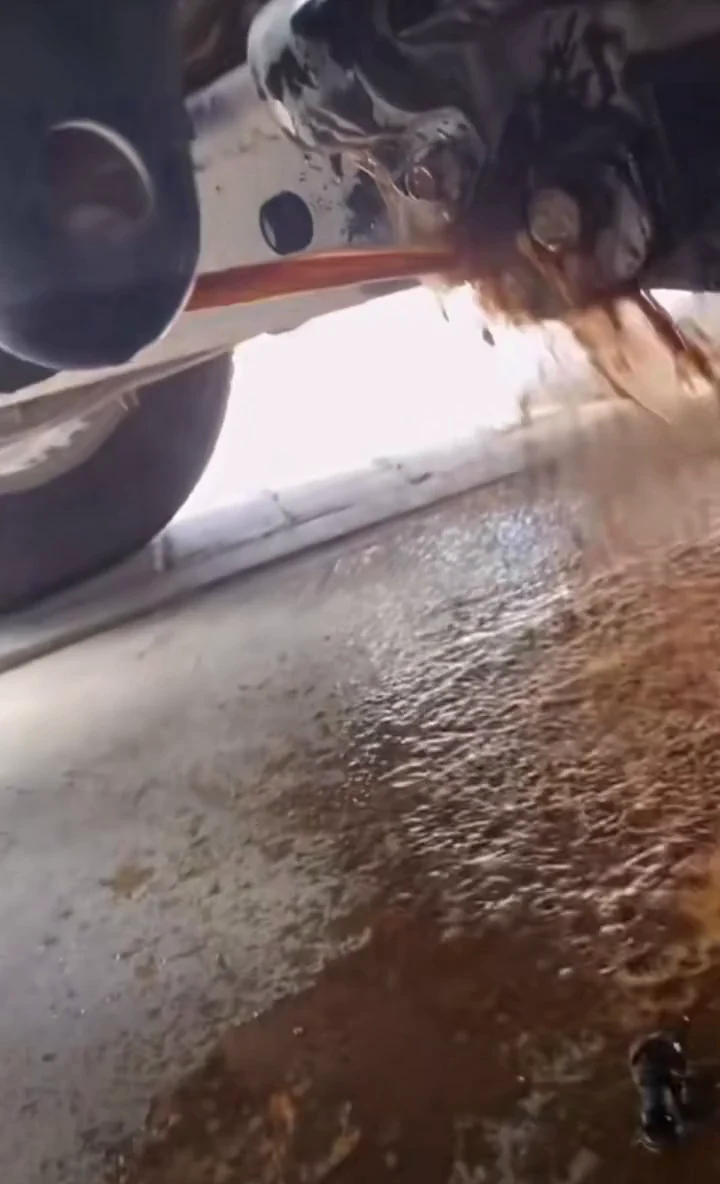
This is why the appearance of a freshly blended batch tells you almost nothing. A concentrate diluted with hard tap water can look bright, clear and perfectly on-colour, because the dye is doing its job and the salts are dissolved at room temperature. The damage begins only when the liquid reaches 90 degrees Celsius in a pressurised loop and keeps cycling for months. By then the batch has been sold, the pallet is gone, and the only remaining evidence is a photograph taken at the customer's workshop. The defence is not a better dye or a stronger claim on the label; it is a water test recorded before the first bottle was filled, and a retained sample of both the incoming water and the finished blend.
A dilution-water specification you can put in a purchase order
The following table is a set of buyer-specified acceptance limits commonly used for blending engine coolant from concentrate. They are a commercial agreement between a buyer and a blender, not a certification, not a regulatory limit and not a claim that any party holds an approval. The authoritative references for any specific product remain its technical data sheet and the vehicle manufacturer's specification; where those documents set tighter values, they take precedence. What matters commercially is that the numbers are written down, measured at the point of use, and attached to a batch code, so that a dispute two years later becomes a comparison of records instead of an argument about whose water was used.
| Parameter | Buyer-specified acceptance limit | How to check it at the point of use | What an out-of-limit result means |
|---|---|---|---|
| Conductivity at 25 degrees Celsius | At or below 100 microsiemens per centimetre; target 50 or lower | Rinse a conductivity pen with the sample, measure at stable room temperature, log the value | Dissolved ion load too high; reject or re-treat the water before blending |
| Total hardness as calcium carbonate | At or below 100 milligrams per litre; target 50 or lower | Hardness titration kit or test strip, same temperature and same sample volume each time | Scale risk on hot metal surfaces; do not dilute |
| Chloride ion | At or below 50 milligrams per litre; target 25 or lower | Chloride test strip or titration; record the lot of the strips | Pitting risk for aluminium and solder; reject |
| Sulfate ion | At or below 100 milligrams per litre | Test strip or laboratory check on a retained sample | Contributes to hard, adherent deposits |
| pH | Between 6.5 and 8.5 | Calibrated pH meter or narrow-range strip | Extremes can disturb the inhibitor balance |
| Appearance and odour | Clear, colourless, no visible sediment, no odour, no foam that persists | Fill a clean glass jar, hold it against white paper, let it stand for ten minutes | Silt, organics or contamination; investigate the storage tank |
Two practical notes keep these numbers honest. First, deionised water is aggressive and hungry: left in an open tank, connected through an unwashed hose or stored in a mild-steel drum, it will pick up ions within hours and can read far higher at the filler head than it did at the treatment unit. Always test at the point of mixing, not at the point of production. Second, a conductivity reading is a screening tool, not a chemical analysis — it tells you the total dissolved ion load but not which ions are present. A low conductivity reading does not by itself clear a water that may carry a small but harmful amount of chloride, which is why the chloride line is a separate check rather than an inference. Neutral, standard test methods exist for these measurements and are referenced here only as methods; nothing in this article states or implies that BOLITCH or any supplier holds an ISO, IATF, ASTM or GB certification.
A fifteen-minute incoming-water check
This is the routine worth enforcing at any warehouse that blends, repacks or tops up coolant. It needs a conductivity pen, a hardness kit, chloride strips, a pH strip, two clean glass jars and a permanent marker. It does not need a laboratory, and the whole sequence takes about fifteen minutes per delivery of water or per shift if water is produced on site.
- 1Identify the source in writing: treatment unit, tank number, delivery note or borehole, plus date and time. Never accept an unlabelled water container into the blending area.
- 2Rinse every sampling jar and every instrument probe three times with the water being tested. A residue of the previous sample is the most common source of a false reading.
- 3Let the sample reach a stable room temperature, ideally around 25 degrees Celsius, and measure conductivity. Record the exact value and the instrument's last calibration date.
- 4Run the hardness titration or strip, then the chloride strip, then a narrow-range pH strip, using the same sample volume and contact time each shift so results are comparable over months.
- 5Fill a clean glass jar, hold it against white paper and look for cloudiness, floating particles, colour or foam. Cap it and let it stand for ten minutes, then check for sediment at the bottom.
- 6Smell the sample cold and again after gentle warming in a closed jar. Any solvent-like, musty or sour odour is a reason to hold the batch and inspect the storage tank.
- 7Write the six results, the operator's name and the water batch or tank ID on a single sheet, then staple it to the blending record for the lots produced from that water.
- 8Retain a sealed 250 to 500 millilitre sample of the water and a sealed sample of the finished blend, both labelled with the same batch code, for the agreed shelf-life period.
The retained samples are the part that pays for itself. If a customer reports scale or corrosion eighteen months later, a blender with a sealed water sample and a sealed finished-product sample can settle the question by testing both against the agreed limits, rather than arguing from memory. A blender without them has no defence at all. This is a documentation habit, not a certificate, and it costs almost nothing: two jars, a marker and a shelf.
How to mix a batch without creating a new problem
Good water can still be ruined by bad handling. The objective is a homogeneous blend at the exact glycol ratio stated on the label, made in equipment that adds nothing to the liquid. Mix in a dedicated, clean vessel rather than in the vehicle, and verify the result before a single bottle is filled. The sequence below assumes a concentrate being diluted to a target freeze grade; the target ratio itself comes from the product technical data sheet and the climate of the destination market.
- 1Clean and dry the blending tank, all hoses, the pump and the filling heads. Rinse with the accepted dilution water, not tap water, and drain fully before charging.
- 2Calculate the batch from the target glycol percentage by volume, not by weight and not by eye. Write the calculated volumes of concentrate and water on the batch sheet before anything is poured.
- 3Charge part of the water first, add the concentrate under gentle agitation, then make up to the final volume with the remaining water. This limits foaming and avoids a concentrated layer sitting against the tank wall.
- 4Agitate until the liquid is uniform, then let it stand briefly for entrained air to break. Do not whip it into a foam; persistent foam is a sign of over-agitation or contamination.
- 5Verify the finished blend with a refractometer set for the glycol type, and cross-check conductivity and pH against the values expected for that grade and that formula. Record all three readings.
- 6Draw a clear-glass sample and check appearance against a retained reference sample from a previously approved batch. Any layering, flocculent material or colour shift means hold the lot.
- 7Only then fill, cap and code the bottles, applying the same batch code used on the water sheet, the blend sheet and the retained samples.
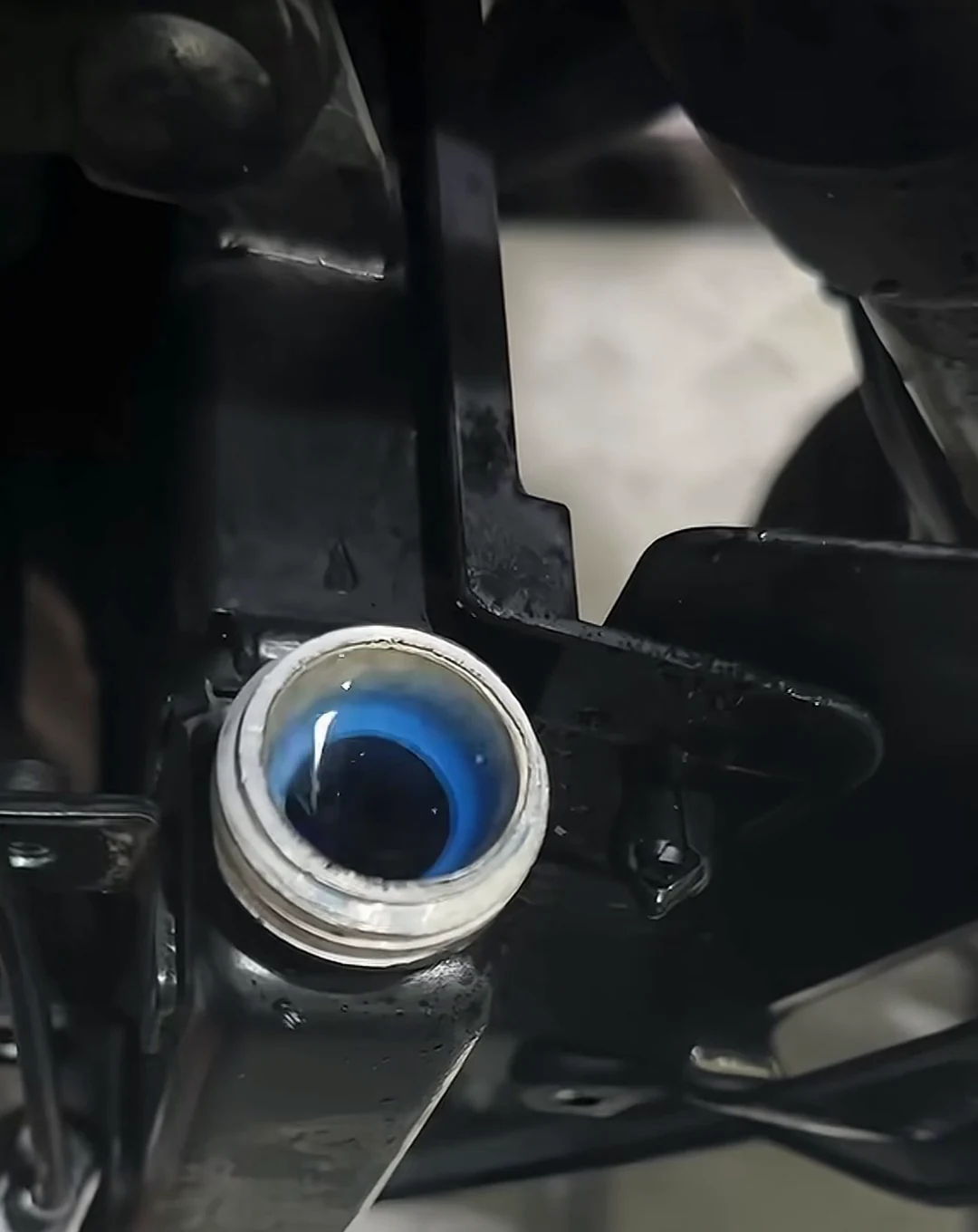
Two shortcuts cause more trouble than any other. The first is mixing inside the vehicle by pouring concentrate into the radiator and then topping up with a hose: the ratio becomes a guess, the water is uncontrolled, and trapped air is almost guaranteed. The second is stretching a batch by adding extra water to hit a volume target, which quietly moves the freeze and boil points away from the label claim. Both are invisible at the point of sale and both are easily detected later with a refractometer. If your dealers or workshops dilute on site, give them the same one-page mixing sheet and a refractometer rather than leaving the ratio to judgement.
Ready-to-use or concentrate: who owns the water
The choice between buying a ready-to-use product and blending concentrate locally is often presented as a freight calculation. It is also a decision about who carries the water-quality risk, and that is worth making explicit in the contract. The table below separates the commercial and technical consequences; the underlying trade-off between freight weight and mixing error is covered in our separate guide to concentrate versus ready-to-use coolant.
| Supply model | Who controls the dilution water | Main commercial advantage | Risk the buyer must manage |
|---|---|---|---|
| Ready-to-use, blended at the factory | The manufacturer, under its own batch records | Zero mixing error at the point of sale; simplest shelf claim | Higher freight weight per litre of protection |
| Concentrate blended at the buyer's warehouse | The buyer, under its own written water specification | Lower freight weight, flexible freeze grades from one lot | Water quality, mixing accuracy and retraceable batch records |
| Concentrate blended by a third-party toll blender | The toll blender, but the label still carries the buyer's brand | No capital investment in blending equipment | Requires an audit, a water spec in the agreement and retained samples held by both parties |
For a private-label buyer the third row deserves particular attention. When a toll blender uses poor water, the end customer sees the buyer's brand on the bottle, not the blender's name. A supply agreement should therefore name the water source, attach the acceptance limits as an annex, require a test sheet per blend lot, require written notice before any change to the water treatment or blending site, and state which retained sample is tested when a dispute arises. None of this needs legal theatre; it needs two pages of plain numbers that both sides can read.
Reading the numbers on a finished batch
A finished blend is easier to judge than the water that went into it, because the glycol ratio is measurable with a hand-held refractometer. But each tool answers a different question, and confusing them is how a bad batch gets released. Use the table as a release checklist: a batch is only cleared when all five lines agree with the value expected for that grade and that formula.
| Check | What it actually tells you | What it cannot tell you |
|---|---|---|
| Refractometer reading | Glycol concentration and therefore the expected freeze grade | Whether the water carried chloride, hardness or silt |
| Conductivity of the finished blend | That the ion load is consistent with an approved batch of the same formula | The exact inhibitor chemistry or the individual ion species |
| pH and reserve alkalinity trend | That the inhibitor package is in its expected alkaline window | The glycol ratio; a cheated blend can still show a plausible pH |
| Clear-glass appearance and odour | Layering, flocculent material, sediment or contamination introduced during handling | Dissolved salts that will only precipitate under heat |
| Retained sample comparison | That this lot matches a previously approved lot of the same grade | Anything at all, if no approved reference lot was kept |
Boiling point is not a water-quality test
Buyers sometimes try to infer water quality from the boiling-point figure on a specification. That does not work. The measured boiling point describes the behaviour of a correctly made coolant of a given freeze grade in an open container, before a pressure cap adds its service margin. Our line is stated by freeze grade: a 0 degree Celsius grade measures about 101 degrees Celsius, a minus 35 degree Celsius grade about 109 degrees Celsius, and a minus 45 degree Celsius grade about 110 degrees Celsius, so the whole line sits in the 101 to 110 degrees Celsius band. Those figures say nothing about the dissolved salts in the dilution water, and a higher boiling point will not protect a system that is scaling up from hard water. Keep the two topics separate in a specification: the boiling-point band is a product property, while conductivity, hardness and chloride are incoming-water acceptance checks.
| Line in the specification | Category | Where it is verified |
|---|---|---|
| Boiling point by freeze grade, 101-110 degrees Celsius across the line | Property of the finished coolant | Measured data on the technical data sheet, by grade |
| Freeze grade from the refractometer reading | Property of the finished blend | Batch release check before filling |
| Conductivity, hardness, chloride and sulfate limits | Acceptance limits for the incoming water | Incoming-water sheet, at the point of mixing |
| pH window and retained-sample period | Process controls agreed between buyer and blender | Blending record and the sample shelf |
Six purchase-order lines that prevent the argument
The cheapest warranty programme is a short annex. Add these lines to the purchase order or supply agreement for any concentrate that will be diluted downstream, and ask for the records with the first container rather than after the first complaint.
- Name the permitted water source and attach the incoming-water acceptance table as a signed annex, with units, test methods and the sampling point stated.
- Require one incoming-water test sheet per blend lot, bearing the same batch code as the finished bottles, with conductivity, hardness, chloride and pH recorded as numbers rather than pass ticks.
- Specify the target glycol ratio by volume for each freeze grade and require a refractometer reading on the finished blend before filling, with the measured value written on the batch sheet.
- Require a sealed retained sample of the incoming water and of the finished blend for each lot, held for the agreed shelf-life period, and state who holds each one.
- State that any change of water source, treatment unit, blending site or hose and tank setup requires written notice and a fresh set of test values before the next lot ships.
- Confirm that technical data sheets are ready to download and safety data sheets are available on request, and that label wording, warning pictograms and language are checked against destination-market rules before printing.
None of these lines adds a cent to the unit price, and all of them are measurable. A supplier who can produce the sheets on request is telling you something more useful than any marketing adjective on a carton: that the water, the ratio and the batch are under control. A supplier who cannot produce them is asking you to carry the risk of a variable you never agreed to.
Frequently asked questions
Is distilled or deionised water really necessary, or is boiled tap water enough?
Boiling kills microbes but leaves every dissolved mineral behind, and it actually concentrates them slightly as water evaporates. Hardness and chloride are dissolved ions, not living organisms, so boiling does nothing to remove them. Use deionised, distilled or properly maintained reverse-osmosis water, tested at the point of mixing. If none is available, the honest options are to buy a ready-to-use product blended under the manufacturer's controls, or to arrange treated water delivery — not to substitute the nearest tap.
Can I judge the water by a conductivity pen alone?
No. Conductivity is an excellent screening tool for total dissolved ion load and for catching a tank that has gone wrong, but it does not identify which ions are present. A water with modest overall conductivity could still carry enough chloride to matter for aluminium and solder. Keep the chloride check as a separate line, and treat the conductivity reading as a consistency check against previously approved batches rather than as a full chemical analysis.
A lot was already blended with ordinary tap water. What should we do now?
Hold the lot. Test the finished blend for concentration, pH and conductivity, compare it against a retained sample from an approved batch, and check a clear-glass sample for sediment after standing. Photograph and document everything before any product moves. Depending on the results and the product technical data sheet, the options are usually rework under controlled conditions, downgrading to a non-critical use, or disposal — a decision that must be made from measurements, not from how the liquid looks. Then fix the incoming-water check so the same lot cannot be made again.
What should we ask a new toll blender before the first container?
Ask for the water source, the incoming-water test sheet from a recent lot, the treatment unit's maintenance record, the blending and refractometer procedure, the batch-coding rule, and two retained samples you can compare. Then put all six purchase-order lines from this guide into the agreement. A blender who already keeps these records will produce them in a day; the answer itself is a useful audit of how the finished product will be made.
Request coolant specs, TDS and a dilution-water checklist
BOLITCH supplies coolant as concentrate and as ready-to-use product in 1 L, 2 L, 4 L, 9 L and 10 L packs and in bulk drums for distributors, importers, private-label buyers and fleet operators, with freeze grades selected for tropical, temperate and severe-cold markets. Technical data sheets (TDS) are ready to download and safety data sheets (MSDS) are available on request. Tell us the markets you serve, whether you blend locally or buy ready-to-use, your water source, the pack sizes you resell and your monthly volume, and we will send the measured freeze-point and boiling-point data by grade, the dilution and water-quality guidance for your formulation, a one-page incoming-water and batch-release checklist you can hand to your blender, and a quotation for your first container. Visit bolitch.com or email sale@bolitch.com.