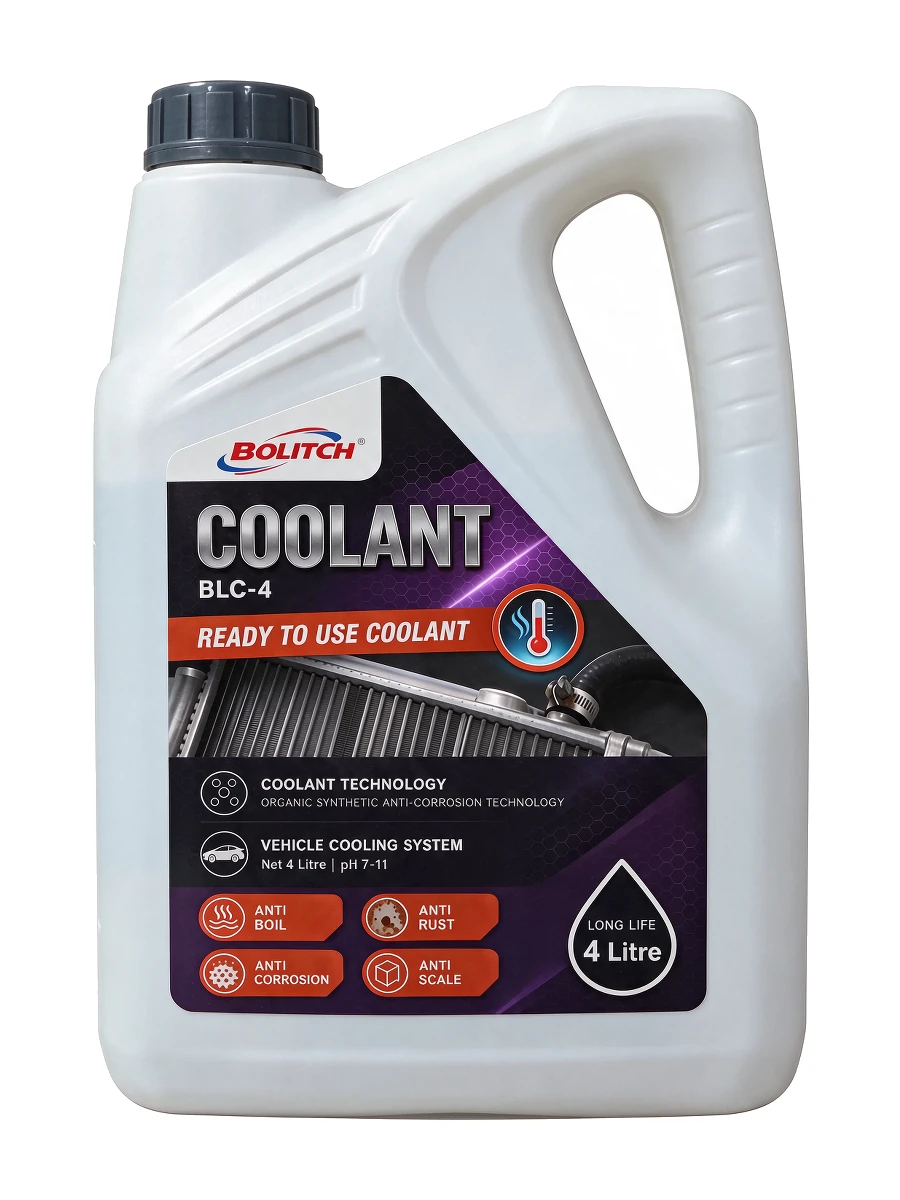
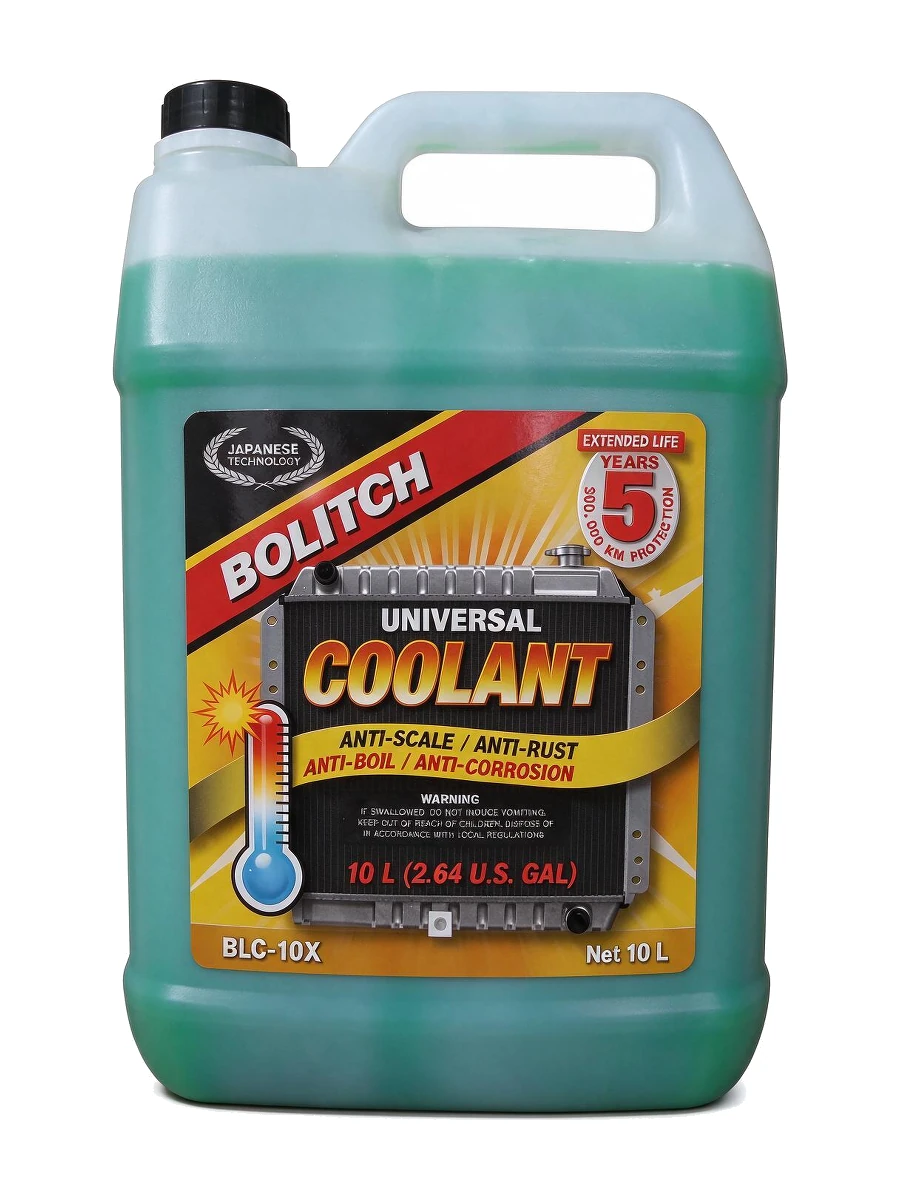
Long life is the most expensive word on a coolant label. A buyer who sees 5 years / 300,000 km on a jug mentally stops budgeting for a coolant change for half a decade, and a distributor who prints that number on a private-label carton has, in effect, promised it to every workshop down the chain. The trouble is that the claim is almost never the thing a supplier is asked to prove. It arrives as a line of marketing copy, gets copied into a quotation, and only becomes a problem two years later when a fleet reports brown fluid, a pitted water pump or a heater core that has started to weep. By then the container is long gone, the batch paperwork is in a folder nobody can find, and the argument is about who said what rather than what was actually in the bottle. This guide is written for importers, distributors and private-label buyers who have to decide whether a service-life claim is a specification or a slogan. It sets out what the number actually promises, the four layers of evidence that should sit behind it, how to read the data without a chemistry degree, the checks you can run yourself after the container lands, and the wording that turns a marketing line into something you can hold a supplier to. None of it requires a laboratory of your own — it requires asking for the right documents in the right order, and knowing what a weak answer looks like.
What a service-life claim actually promises
A service-life figure is not a warranty and it is not a fixed expiry date. It is a statement that, under a defined set of conditions, the inhibitor package in the fluid will keep protecting the metals in the cooling system for a stated period of use. Change any of the conditions and the clock changes with them. Four variables matter. The first is time in service rather than time on a shelf: a sealed, correctly stored jug is stable for years, but the moment the fluid is in a hot, aerated, pressurised loop the inhibitor starts being consumed. The second is distance and duty cycle: 300,000 km of steady highway running is a very different load from 300,000 km of stop-start urban delivery work with long idling in a tropical climate. The third is system condition: a sound pressure cap, no air pockets, no oil ingress and no ongoing leak. The fourth is what the owner adds afterwards — repeated top-ups with plain water dilute both the glycol and the inhibitor and sharply accelerate the rate at which the fluid ages. A credible supplier states the boundaries alongside the number. A supplier who quotes five years without naming the duty cycle, the top-up rules or the system assumptions has not given you a specification; they have given you an adjective.
| Claim field | What a serious supplier states | Weak answer |
|---|---|---|
| Time and distance | 5 years / 300,000 km under normal service, with the duty cycle named | Just 'long life' or '5 years' with no conditions |
| Duty cycle | Passenger-car and light-commercial normal use; severe duty handled separately | No distinction between highway and stop-start or high-idle work |
| System assumptions | Sound pressure cap, no leaks, no oil ingress, correct concentration | Silent on the condition of the cooling system |
| Top-up rule | Top up with the same product, or distilled water plus a concentration check | 'Top up with water anytime' |
| Boil point by grade | Atmospheric boil point stated per freeze grade within the 101–110 °C band | One round number applied to every grade |
The four layers of evidence behind the claim
Treat the claim as the roof of a structure. It only holds if four layers of documentation sit underneath it, and a supplier who can produce one layer but not the others is asking you to take the rest on trust. Ask for the whole stack before you approve a sample, not after you have paid for a container. The order below is also the order that makes the answers checkable: chemistry first, then measured performance, then batch consistency, then what happens in real vehicles.
- 1Formulation and inhibitor disclosure. You do not need a trade-secret recipe, but you do need the inhibitor family named — conventional inorganic (IAT), organic acid (OAT), hybrid (HOAT) or silicate-organic (Si-OAT) — plus which engine metals the package is designed to protect. 'Long-life formula' is not a chemistry. Without the family you cannot judge compatibility, mixing rules or how fast the inhibitor should deplete.
- 2Corrosion and materials data. Metal protection is measured with laboratory corrosion methods such as the glassware corrosion test (ASTM D1384), the aluminium heat-rejection test (ASTM D4340) and simulated-service rig tests. These are test methods used to compare products on the same footing — not certifications we claim and not approvals we hold. Ask for measured values against the metals in your market's vehicle parc: cast iron, aluminium, copper, brass, solder and steel, rather than a pass/fail tick.
- 3Batch analytical data. A certificate of analysis (COA) per production lot carrying freeze point, pH, reserve alkalinity, density or specific gravity, appearance and boil point. One glossy 'typical values' sheet is a brochure; a COA tied to the batch code on the jug is evidence.
- 4Consistency across lots. Ask for three consecutive lots of the same grade. A claim about five years is meaningless if the numbers wander between batches. Freeze point, pH and reserve alkalinity should sit in a tight band, and any reformulation should be declared and re-validated before it reaches your carton.
- 5In-service or endurance evidence. Long-term fleet monitoring, rig endurance runs, or documented field sampling at fixed intervals, with the acceptance limits stated up front. What you want to see is the inhibitor trend over time — pH and reserve alkalinity drifting slowly rather than collapsing — plus a record of the condition of the metals after the run.
One more point on wording. Test methods and industry standards are useful precisely because they let you compare two suppliers' numbers on the same scale. Citing a method is not the same as claiming a certification, and no document in the stack should be read as an approval or a licence. If a supplier answers a data request with a logo or a badge rather than measured values, keep asking for the values. An importer who builds a file of comparable measurements has something far more useful in a dispute than a folder of certificates.
Reading the numbers without a laboratory
You do not need to be a chemist to tell a defensible data set from a thin one. Read it for three things: whether the number is measured rather than quoted, whether it is tied to a batch, and whether the method and conditions are named so the result could be repeated. A freeze point of −37 °C means little without the concentration and the test method; a pH of 8.7 means little without the date of the test and whether it was measured on concentrate or ready-to-use fluid. The most common weakness is not a wrong number — it is a number with no context that could be reproduced. The second most common is a single perfect batch. Ask for the last three, and ask what happens when a value falls outside the band. A supplier with a real quality system has a written answer to that question; a supplier who is improvising will change the subject.
| Metric | What it actually proves | What a weak answer looks like |
|---|---|---|
| Freeze point | Glycol concentration is in the right band for the labelled grade | One figure reused for all grades; no method stated |
| Atmospheric boiling point | The grade sits in the correct 101–110 °C band by freeze grade | A single round number applied to every formulation |
| pH | The fluid is in the alkaline window where the inhibitor works | A value with no date, no method, no acceptance range |
| Reserve alkalinity | How much acid-neutralising capacity is left to protect metals | Omitted entirely — the single most common gap |
| Density / specific gravity | A quick cross-check on concentration, with temperature noted | Used alone to 'prove' freeze point |
| Appearance and odour | No phase separation, floaters or contamination at fill | No incoming-inspection record at all |
| Batch code linkage | Every jug maps to the COA you were sent | A COA exists but the code on the bottle does not match |
Read the three COAs side by side rather than one at a time. What you are looking for is a narrow spread: freeze point within a degree or two of the label, pH inside the same window each time, reserve alkalinity in the same band. A supplier who holds those steady over three lots is demonstrating process control, which is the only thing that makes a five-year promise plausible. A supplier whose pH swings from 8.2 to 10.1 between lots is telling you the blending step is not under control, and no amount of marketing will fix that in service. If you are buying a private-label line, this comparison is also the moment to ask what happens when the additive source changes: a formulation change should trigger fresh corrosion and compatibility data, and you should be told before it reaches your carton.
Why the inhibitor package is the whole claim
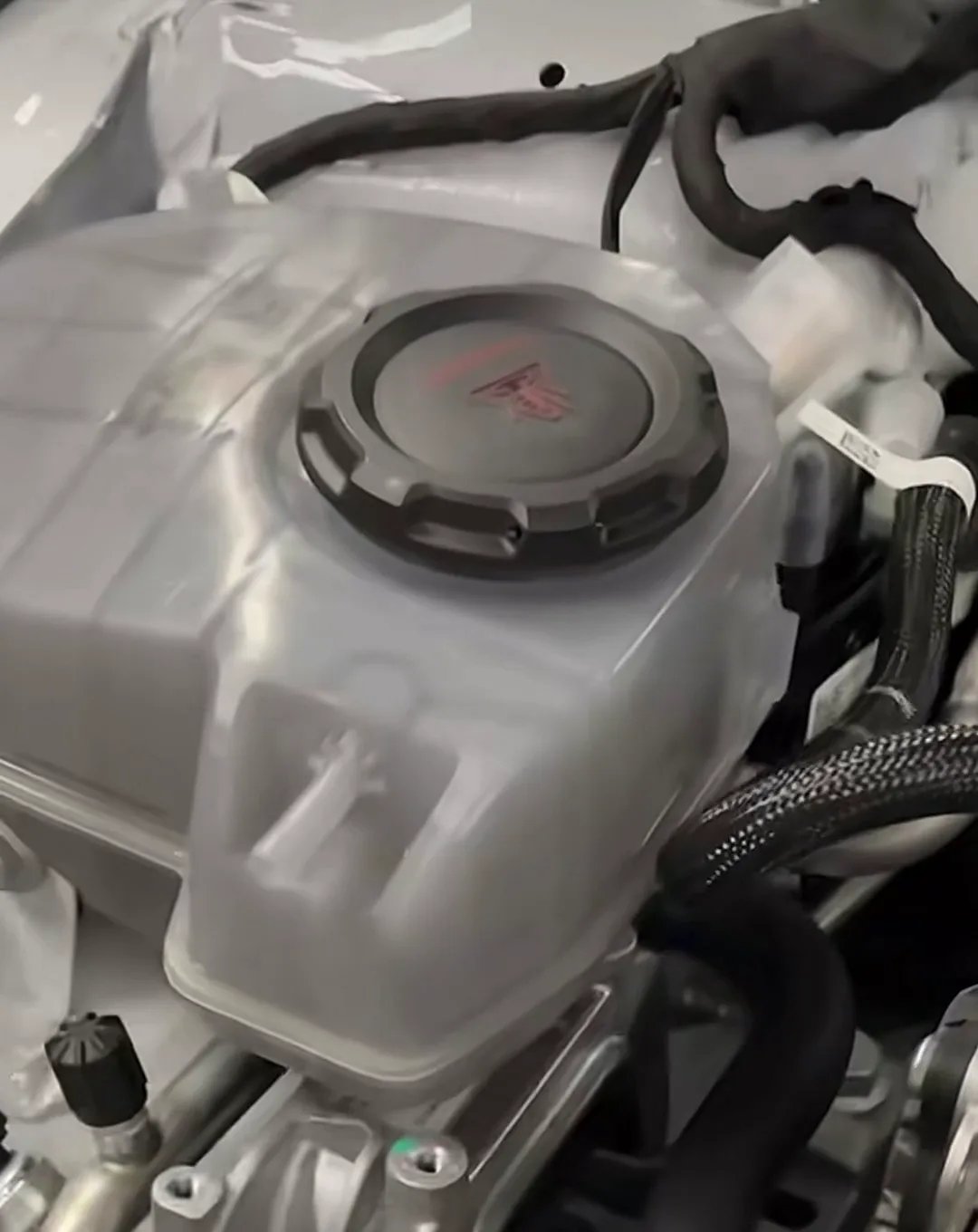
Freeze protection does not wear out. Glycol stays glycol; a correctly made −37 °C grade will still protect against freezing years later, which is exactly why a refractometer reading on its own can be so misleading. What wears out is the inhibitor package — the small dose of organic acids, silicates, phosphates or other chemistry that keeps cast iron, aluminium and solder from corroding in a hot, oxygenated loop. Every thermal cycle, every aeration event and every gulp of hard top-up water spends a little of it. Once it is depleted, the fluid can still show the right freeze point on a refractometer while the engine behind it starts to rust. That is the single most important idea to take into a service-life discussion: the claim is about corrosion protection over time, not about cold weather. Two cheap field measurements track it. pH shows whether the fluid is still in the alkaline window where the inhibitor works, and reserve alkalinity shows how much acid-neutralising capacity remains. Both are measured by an industry-standard titration method (commonly referenced as ASTM D1121) — a measurement standard, not a certification claim. Read them together, at intake and then at fixed intervals, and you have a trend line instead of a guess.
- Take a sample from the reservoir, not from a freshly opened jug — you want to know what is circulating, not what left the factory.
- Record three things every time: batch code, date, and the reading. A number without a batch is useless twelve months later.
- Measure at a consistent temperature; a warm sample reads differently from a cold one and creates false alarms.
- Use a refractometer for concentration and a pH strip or meter for condition — neither instrument substitutes for the other.
- Keep a retained sample from each lot in a sealed, labelled bottle so a dispute can be settled by re-testing rather than arguing.
A pre-order verification checklist
Turn the above into a one-page routine you run before any first order, and again whenever a supplier changes a formulation, a plant or a packaging line. It takes a week of emails, not a laboratory budget. The point is not to catch a dishonest supplier — most are simply unused to being asked — but to find out how a supplier behaves when a number is questioned. A factory that answers in measured values, with batch codes attached, is a factory you can build a five-year product line on. One that answers with adjectives is not.
| Check | Pass condition | If it is missing |
|---|---|---|
| Inhibitor family named on the TDS | OAT / HOAT / Si-OAT / IAT stated, with metals protected | Treat 'long-life' as marketing only |
| Corrosion test values | Measured metal weight-change data, method named | Request values, not a pass badge |
| Three consecutive COAs | Freeze point, pH, reserve alkalinity, density, boil point in a tight band | Do not approve the first container |
| COA tied to batch code | The code on the jug matches the certificate | Fix traceability before shipment |
| Service-life boundaries written down | Duty cycle, top-up rule, system assumptions stated | Write them into the supply agreement yourself |
| Retained-sample policy | Sealed sample per lot, labelled and dated | Create your own log at intake |
| Reformulation notice | Advance notice plus fresh validation data | Make it a contract clause |
- 1Request the technical data sheet and the last three batch COAs before you approve a sample; note the batch codes.
- 2Compare the three COAs for spread, not just for compliance with the label.
- 3Ask one deliberately specific question — for example, what the reserve alkalinity acceptance range is, and what happens if a lot falls below it.
- 4Put the claim and its boundaries into the supply agreement, together with the document set that ships with each lot.
- 5At intake, sample, log and retain. Repeat the readings at a fixed interval on a few vehicles in your own market.
Put the claim into the contract
Documents prove what was made; an agreement decides what happens when it is not. For a private-label or distribution line, the service-life statement belongs in the technical annex with its conditions attached, not on the carton artwork alone. Specify the grade, the inhibitor family, the measured value ranges that define an acceptable lot, and the test methods used to measure them. State that each shipment carries a COA bearing the same batch code that appears on the bottle, that a safety data sheet is available on request and that the technical data sheet is ready to download. State that any change to the additive package, base glycol or blending site requires written notice and fresh corrosion and compatibility data before it ships. Finally, agree what a dispute looks like: which retained sample is tested, at which point in the supply chain, and against which agreed limits. None of this needs legal theatre. It needs two pages of plain numbers that both sides can read, so that a complaint two years from now becomes a measurement instead of a negotiation. The clause that saves the most arguments is the simplest one: no formulation change without notice and re-validation.
After the container lands: verify it yourself
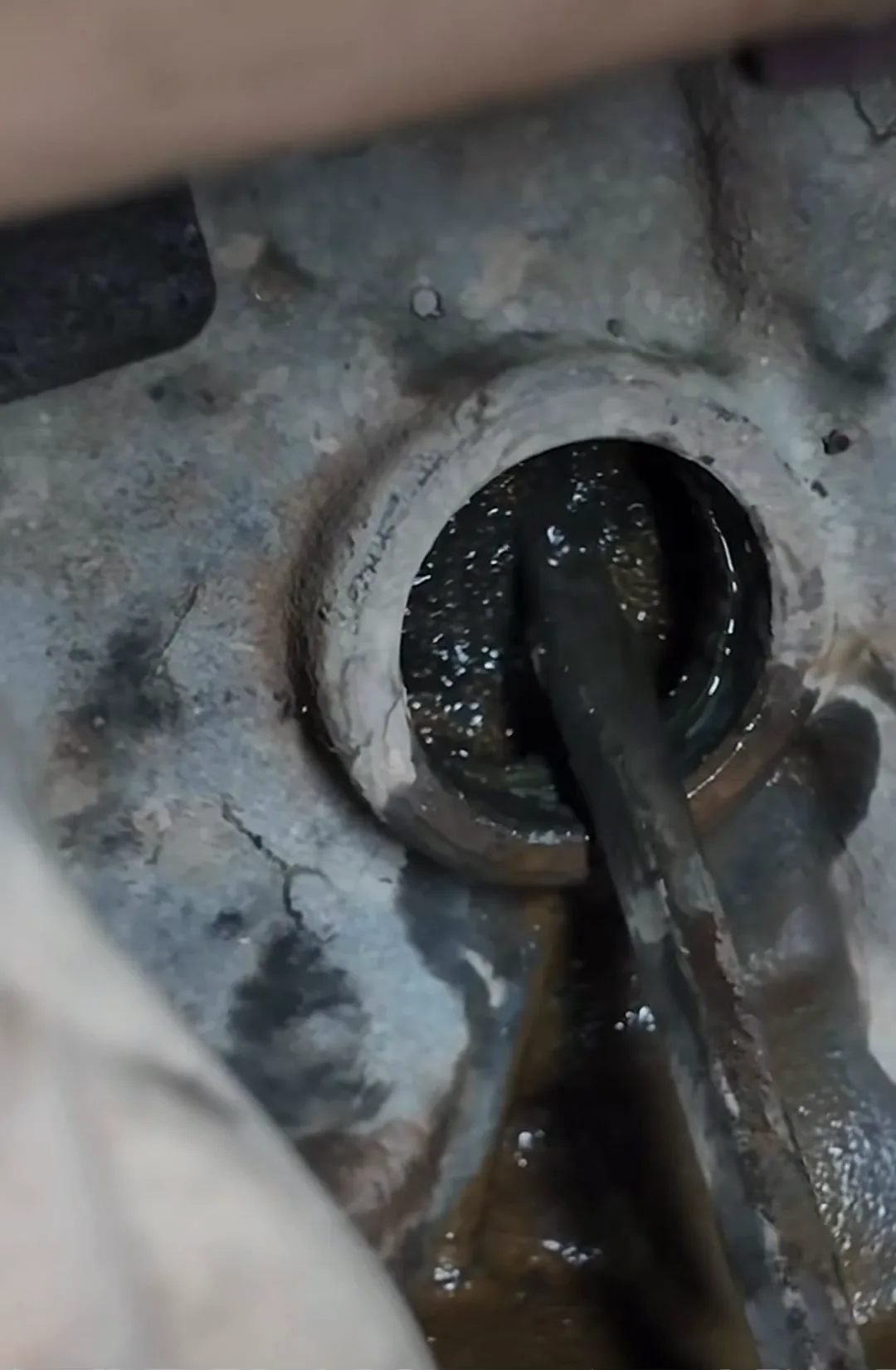
Your own checks matter because they are the only ones you fully control. At intake, pull samples across the shipment rather than from the top pallet, check the batch codes against the COAs, and log appearance, freeze point, pH and reserve alkalinity with the date and the ambient temperature. Keep a sealed retained sample from each lot. Then pick a handful of vehicles in your own market — a couple of fleet vans, a workshop demo car, one high-idle delivery vehicle — and sample them on a fixed schedule. You are not trying to run a research programme; you are looking for a trend. A fluid whose pH and reserve alkalinity drift down slowly and evenly is behaving as a long-life product should. One that drops sharply, or that varies wildly between vehicles on the same batch, is telling you something about the system or the product that a brochure never would. Feed those readings back to the supplier with the batch codes attached. A partner who wants the next order will study them; one who does not will change the subject.
- Sample across pallets, not just the easiest bottle to reach.
- Photograph the label and batch code at intake so the paperwork has a visual record.
- Log the same three fields every time: batch, date, readings.
- Share the trend with the supplier at each review, and keep the retained samples sealed.
Frequently asked questions
| Question | Short answer |
|---|---|
| Does a 5-year claim mean no coolant changes for five years? | It means the fluid is specified for up to 5 years / 300,000 km under the stated normal-service conditions; system faults and water top-ups shorten it. |
| Is a refractometer reading enough to prove the fluid is still good? | No. It confirms glycol concentration and freeze point, not the condition of the inhibitor package. Pair it with pH and reserve alkalinity. |
| Do I need third-party certificates? | Ask for measured values tied to a batch and a named test method first. A certificate without values is not something you can compare or re-test. |
| What if the supplier only has one COA? | Ask for three consecutive lots. Process control over time is the evidence behind a long-life claim. |
| Can I print the claim on my private-label carton? | Only after the boundaries and the document set are agreed in writing, and the label can be traced back to a batch. |
What to do with this on your next inquiry
The next time a quotation arrives with a long-life line on it, resist the temptation to argue about the number. Ask for the four layers instead: the inhibitor family, the corrosion values, three consecutive COAs and the field or endurance evidence. Ask what the number assumes, and ask what happens when a lot falls outside the band. The replies will tell you more about the supplier than the claim ever did, and they will give you a file you can hand to a workshop, a fleet buyer or an inspector without translating adjectives into facts. That file is what turns a commodity jug into a product line you can defend for five years.
Request coolant test data, TDS and batch COA
Safety data sheets are available on request and product specification sheets (TDS) are ready to download for every coolant grade. Tell us your climate mix, monthly volume and whether you need private label, and we will send the formulation sheet, measured batch values, boil-point data by freeze grade and a sample plan for your first container. Visit bolitch.com or email sale@bolitch.com.