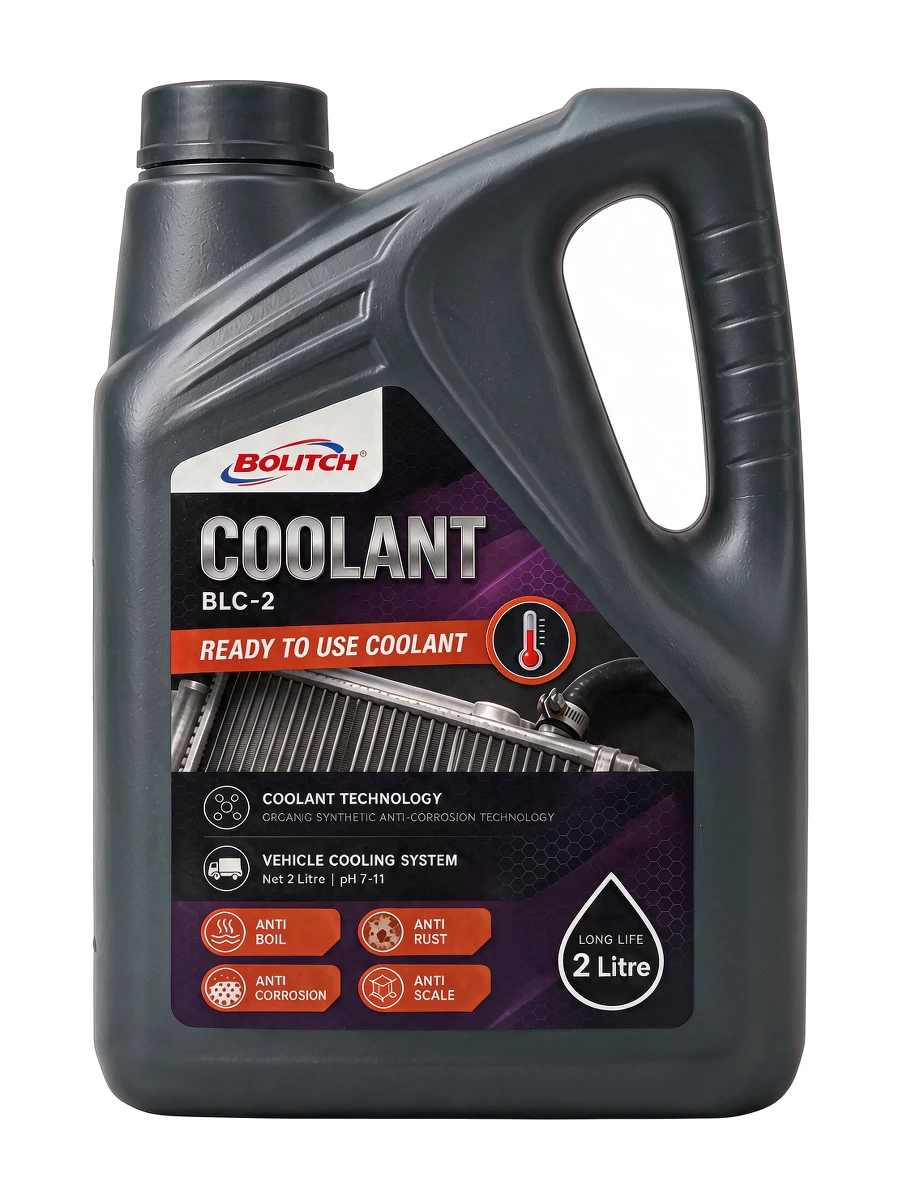
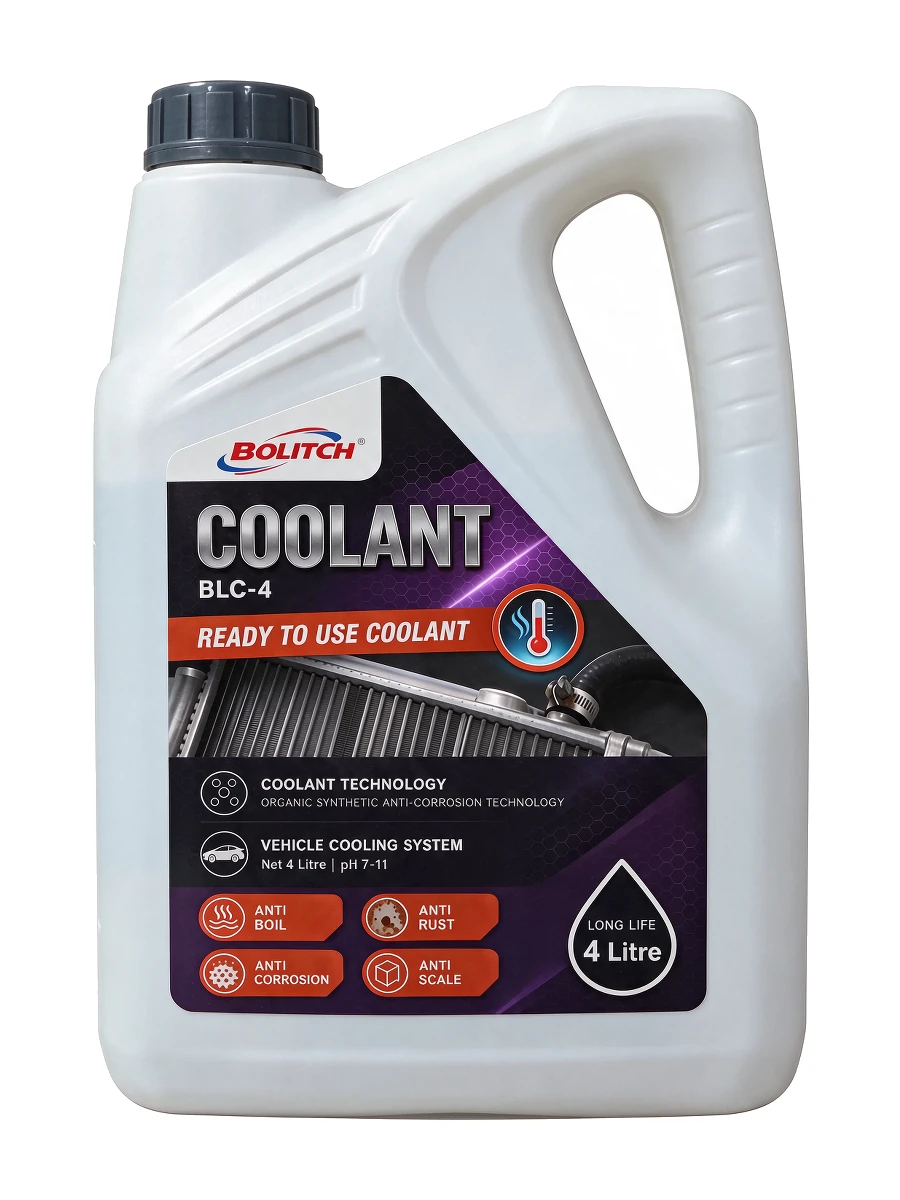
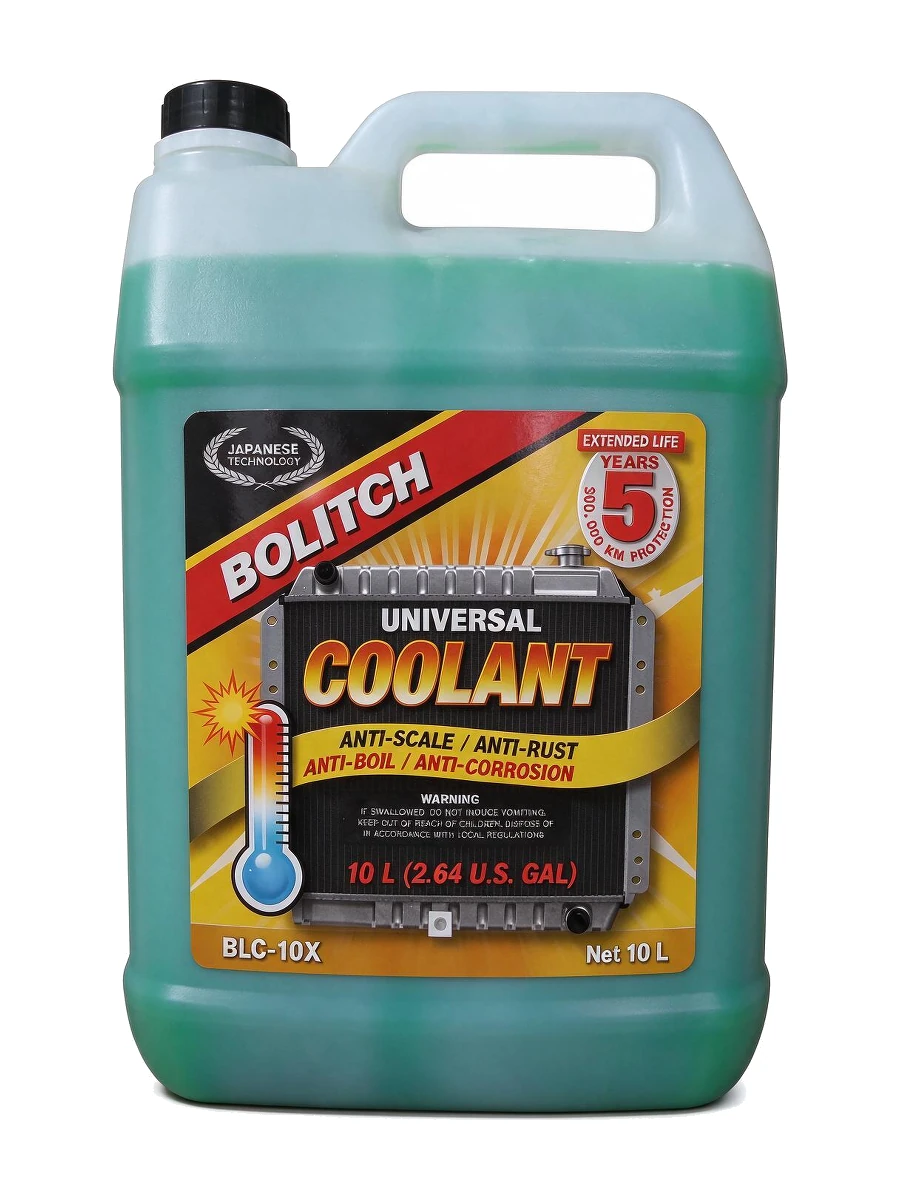
Two buyers can order 'long-life coolant, -35°C, 4L' from the same factory and receive products that their own safety teams judge very differently, simply because the purchase order never said which glycol the liquid is built on. Ethylene glycol and propylene glycol both depress the freezing point of water and both carry an inhibitor package, but they are not interchangeable. They differ in toxicity, in low-temperature viscosity, in the concentration needed to reach a stated freeze grade, in raw-material cost, and — most painfully for importers — in the refractometer scale used to verify them. This guide is written for distributors and importers who have to put a base-fluid line into a specification, answer a customer's EHS questionnaire, or work out why an arrival test does not match the COA. It covers what the base fluid actually decides, when the premium for a propylene glycol formulation is justified, the four failure modes that turn up at the container door, and a checklist you can paste into your next purchase order.
What the base fluid actually decides
A finished coolant is mostly water plus a glycol, with a small but expensive inhibitor package, a dye and a few housekeeping additives. The glycol fraction and the water fraction set the freeze point and the atmospheric boiling point together. The inhibitor package protects aluminium, cast iron, copper, brass, solder and steel. The dye does nothing except help a mechanic see the level and tell one bottle from another. On our ethylene-glycol grades the measured atmospheric boiling points run from 101°C for a 0°C grade to 109°C for a -35°C grade and 110°C for a -45°C grade, so the whole line sits in the 101–110°C band. Those numbers belong to the concentration, not to a marketing phrase, and they should be confirmed on the grade's TDS rather than assumed from a front label.
Changing the base fluid does not remove any of those requirements. A propylene glycol coolant still needs corrosion inhibitors, still needs the right dilution water, still needs a service interval, and still needs a batch COA. What changes is the relationship between the volume of glycol in the mix and the protection you get, how the liquid behaves when it is cold, what a safety officer will ask to see, and which scale your field instruments must be read on. Treat the base fluid as a line item in the specification, exactly like the freeze grade or the pack size.
| Property | Ethylene glycol (EG) base | Propylene glycol (PG) base | What it changes for an importer |
|---|---|---|---|
| Acute toxicity if swallowed | Higher; spills and open containers need controlled handling and clear warnings | Lower acute toxicity, which is why it is specified where incidental exposure is a concern | Drives the EHS questionnaire, the warning text on the label and the MSDS content. Never write 'harmless' or 'food grade' on a coolant |
| Freeze-point depression at a given volume fraction | More efficient; most published freeze-grade charts assume it | Less efficient; reaching the same label grade generally needs a different concentration | Do not reuse an EG dilution chart on a PG formulation. The COA, the label and the measured freeze point must agree |
| Viscosity when cold | Lower; pours and pumps more easily in a cold warehouse | Higher, particularly at low temperature; slower decanting and harder cold circulation | Affects filling-line settings, winter decanting and small-bottle usability in cold markets |
| Boiling behaviour | Grade-dependent; our measured band is 101–110°C by freeze grade | Grade-dependent; take the figure from the supplier's measured TDS | Never copy an EG boiling-point claim onto a PG product card |
| Raw-material cost and availability | The volume default, with the broadest supply base | Typically higher cost and a narrower supply base | Changes the quotation, the MOQ and the lead time. Ask before you promise a price |
| Refractometer reading | Read on the ethylene glycol scale | Read on the propylene glycol scale | Using the wrong scale produces a systematic error that looks exactly like a bad batch |
| Environmental handling | Standard spill and disposal procedures | Often chosen where incidental release or biodegradability is part of the brief | Still governed by local rules; confirm the destination market's requirements before quoting |
| Inhibitor package | Required | Required | Neither base fluid protects metal on its own, and neither replaces a long-life additive system |
Why ethylene glycol is the default in most export markets
Open a catalogue from almost any coolant producer and the standard ready-to-use and concentrate grades are ethylene glycol based. That is not an accident, and it is not a quality ranking. It is a consequence of four practical facts that matter more to a container buyer than to a chemist. The following list is the honest answer to give a customer who asks why the standard line is priced the way it is.
- Cost per litre of protection: EG delivers more freeze-point depression per unit volume, so less glycol is needed to hit a given grade.
- A mature supply chain: drums, tankers and concentrates are widely available, which shortens lead times and makes repeat orders predictable.
- Cold handling: lower viscosity means fewer problems in unheated warehouses, on filling lines and for a mechanic pouring a 1L bottle in winter.
- A large installed base: most vehicle makers' service literature, most workshop refractometers and most fleet maintenance routines were written around EG formulations.
- Documentation is standard: safety data, transport classification and label warning sets are well understood by importers and customs brokers in most markets.
The familiar long-life claim of 5 years or 300,000 km belongs to a complete formulation — base fluid, inhibitor chemistry, water quality and a service discipline — not to the glycol alone. If you change the base fluid, you cannot carry a service-life statement across by copy and paste. Ask for the measured data behind the claim, the way you would for any other grade, and keep the answer to the exact formulation you are buying.
When a propylene glycol specification is worth the premium
There are real markets where a buyer will pay more for a propylene glycol base, and they are almost always driven by the consequences of a spill or of incidental contact rather than by engine performance. If your customer's procurement department has a restricted-substance list, or if their insurer asks what happens when a bottle is knocked over in a loading bay, the base-fluid line will be the first thing they read. The situations worth pricing are these.
- 1Vehicles and equipment operating inside food, beverage or pharmaceutical plants, where a leak could reach a production area.
- 2Sites with children or animals nearby — school buses, campus shuttles, zoo and park service vehicles, municipal fleets in public spaces.
- 3Airport ground-support equipment and warehouse fleets where coolant is handled by many short-term operators and spills are hard to control.
- 4Underground or enclosed operations where ventilation is limited and any fluid release stays in the work area.
- 5Tenders and framework contracts that explicitly name the base fluid in the technical specification, or that require a lower-toxicity option in the bill of materials.
Two cautions belong in every quotation. First, lower acute toxicity is not the same as harmless, and it is never a licence to describe a coolant as food grade, drinkable or safe for discharge; the MSDS and the destination market's rules govern that language. Second, a lower-toxicity base does not remove the need for corrosion inhibitors, a correct concentration or a service interval. If the buyer's real concern is worker safety, the better answer is often a closed handling procedure, a sealed container and a written spill plan alongside the formulation.
Four ways an order goes wrong when the base fluid is not written down
Almost every base-fluid dispute we have seen follows one of four patterns. None of them is a chemistry failure. All of them are specification failures that could have been prevented by one extra line in the purchase order, and all of them are expensive to fix after a container has cleared customs.
| Failure mode | What triggers it | What it costs | How to prevent it |
|---|---|---|---|
| EHS rejects the delivery | The order says only 'coolant -35°C'; the receiving safety team expects a PG base and finds an EG warning label | Quarantined stock, relabelling, a return freight claim and a lost first order | Name the base fluid in the PO, the proforma invoice, the label text and the COA |
| Arrival test disagrees with the COA | A refractometer calibrated or read on the EG scale is used on a PG formulation, or vice versa | A false 'watered down' accusation, emergency retesting and a damaged supplier relationship | State the base fluid on the COA and confirm the instrument scale with the lab before sampling |
| Two grades mixed in one system | A workshop tops up an EG-filled system with a PG product, or the two arrive under similar dye colours | Concentration readings become uninterpretable and the inhibitor balance is unknown | Use distinct dye colours and label codes, and write a no-mixing rule into the reseller's handout |
| Marketing claim outruns the paperwork | A distributor advertises 'non-toxic' or 'eco' without an MSDS or a measured data sheet to support it | Complaints, tender disqualification and a forced recall of printed packaging | Approve label and advertising wording against the MSDS and the destination market's rules before printing |
Notice that three of the four are paperwork problems. A container can be chemically perfect and still fail commercially because a document used a different word, an instrument used a different scale, or a sales page promised something the data sheet never said. This is why the base fluid belongs in the commercial documents, not just in the formulation sheet.
How to write the base fluid into a purchase order
A useful specification is short, unambiguous and testable on arrival. Copy the lines below into the technical annex of the order and delete nothing: each one closes a gap that otherwise gets filled by assumption. Ask your supplier to confirm the annex in writing on the proforma invoice, so the document that customs sees and the document the warehouse receives say the same thing.
- 1Base fluid: write 'ethylene glycol' or 'propylene glycol' explicitly. Never leave it as 'glycol' or 'coolant base'.
- 2Product form: ready-to-use or concentrate, with the target dilution ratio if it is a concentrate.
- 3Freeze grade: the exact label grade for the destination climate, plus the measured freeze point to be reported on the COA.
- 4Inhibitor system: the technology family and any fleet-specific requirements such as nitrite for wet cylinder liners.
- 5Dye colour and label language: one colour per base fluid, and the destination market's required languages.
- 6Packaging and identification: pack size, closure type, batch number format, production date and a stated shelf life.
- 7Documents: TDS ready to download, MSDS available on request, batch COA with freeze point, pH, reserve alkalinity, density and appearance.
- 8Evidence: a retained-sample plan stating how many samples, how long they are kept and who pays for a retest if a dispute is opened.
If the buyer has not decided on the base fluid yet, say so in the annex and ask for a decision before production rather than after. Switching a batch from one glycol to another is a formulation change, not a label change: it affects the concentration setpoint, the COA values, the refractometer scale and the safety documentation. Treat it as a new specification with its own sample approval.
Arrival inspection on the first container
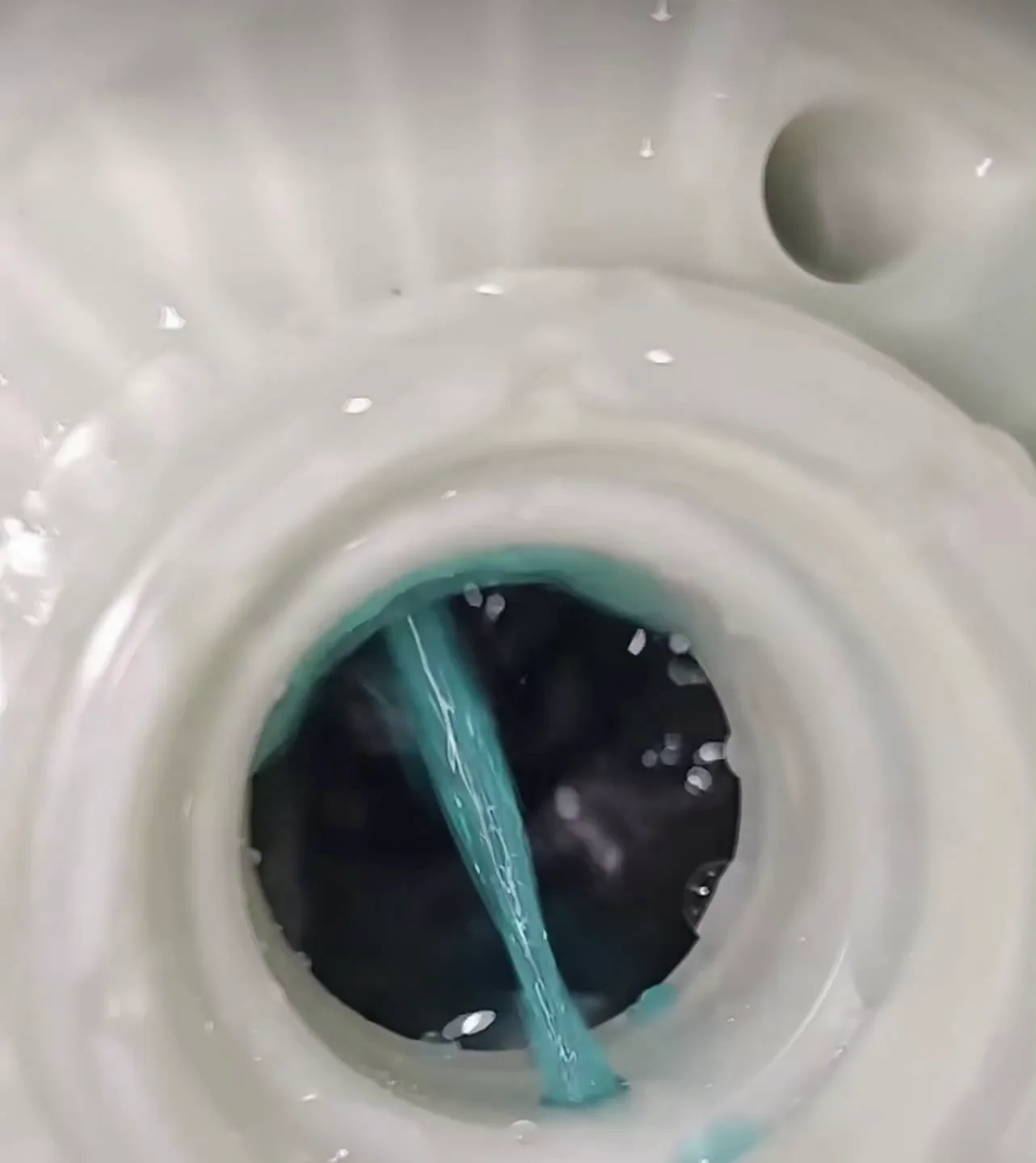
The first container of a new specification deserves a documented inspection even when the supplier is trusted. Draw samples from several cartons rather than one, record the ambient temperature alongside every reading, and photograph the drum or bottle before it is opened. Appearance tells you about contamination, layering and age; it tells you nothing about which glycol is in the liquid. That answer comes from the COA, the TDS and a refractometer set to the correct scale.
| Check | Method | Pass condition | If it fails |
|---|---|---|---|
| Base fluid stated on documents | Compare PO, proforma invoice, label, TDS and COA | The same base fluid is named on all five | Quarantine the lot and request a corrected COA before release |
| Freeze point / concentration | Refractometer set to the correct glycol scale, at a recorded sample temperature | Within the tolerance agreed in the specification | Retest with a second instrument and open a retained-sample review |
| Appearance in a clear glass sample | Draw from three different cartons, hold to light | Clear, no layers, no floating flakes, no sediment | Photograph, seal the sample, and ask for a batch investigation |
| pH and reserve alkalinity | Test strip or meter, read against the COA window | Inside the range stated on the COA | Do not top up or blend; hold the batch and request the batch record |
| Odour | Smell the sample at room temperature, never from a hot system | No solvent or sour/fermented note | Seal and retain; unusual odour is a contamination flag |
| Packaging integrity | Inspect closures, drum walls, cartons and batch codes | No swelling, weeping, missing codes or mixed batch numbers | Photograph the pallet before unloading and file a transit claim if needed |
Keep the inspection sheet with the retained samples. If a customer complains six months later, the question will not be whether the coolant was good in the factory; it will be what the liquid looked like when it arrived and what the paperwork said at that moment. A dated photograph and a signed reading settle that argument far faster than an email thread.
Dilution water decides the final numbers
Whether you buy a concentrate or a ready-to-use product, the water in the mix is the other half of the specification. Hard water brings calcium and magnesium that deposit on hot surfaces; chloride and sulphate accelerate corrosion; and an unknown water source makes a measured freeze point impossible to reproduce. If you blend locally, qualify the water first and keep a record of its conductivity and hardness. If you buy ready-to-use, ask the supplier what water quality they use and how it is controlled batch to batch.
- Use deionised or distilled water for any on-site dilution, and keep the conductivity reading in the blend record.
- Never use tap water, well water or collected rainwater to bring a concentrate up to volume.
- Do not judge concentration by colour intensity; dye strength varies by batch and says nothing about glycol percentage.
- Do not mix an EG formulation and a PG formulation in the same system, or in the same blending tank.
- Record the freeze point, the sample temperature and the instrument scale together, so the reading can be reproduced later.
This is also where the boiling-point conversation belongs. A -35°C label is not a boiling-point guarantee; the atmospheric boiling figure follows from the concentration and it sits at 109°C for our -35°C ethylene-glycol grade, against 101°C for a 0°C grade and 110°C for a -45°C grade. If a customer in a hot market is buying on boil-over margin rather than on freeze protection, say which grade and which measured figure you are quoting, and keep that figure out of any PG product card unless the TDS supports it.
Pricing and MOQ: what actually moves the number
Buyers often expect a propylene glycol version to be the same price with a different label. It is not. The differences are structural rather than a markup, and explaining them early avoids a painful repricing after the sample has been approved. The table below is deliberately qualitative: we do not publish unit prices here, because the real number depends on grade, pack size, order volume and the destination market.
| Cost driver | Standard EG grade | PG version | Effect on the offer |
|---|---|---|---|
| Base-fluid raw material | Volume-priced, widely stocked | Typically higher and less widely stocked | Higher cost per litre; the gap moves with the market, so re-quote at order |
| Concentration setpoint | Standard chart for the label grade | Different setpoint to reach the same freeze grade | More glycol per litre of finished product; affects the batch formula |
| Production changeover | Running grade, no line flush | Usually a dedicated batch with a cleaned line | Higher practical MOQ and a longer lead time for a first order |
| Documentation and labels | Existing TDS, MSDS and artwork | Separate safety text, artwork and COA template | One-time artwork and review cost; plan it before printing |
| Inventory risk | Fast-moving stock in most markets | Slower turnover in price-driven markets | Agree a first-order volume you can actually sell through |
A sensible first order is one that clears a real customer commitment rather than a full container of a specification nobody has approved. Ask for a sample, put it through the same incoming inspection described above, have the end customer's safety team sign off on the MSDS wording, and then scale the volume. The most expensive PG order is the one that has to be relabelled after arrival.
A ten-minute decision checklist for distributors
- 1Ask the end customer whether their EHS or tender documents name a base fluid; get the exact wording in writing.
- 2If no base fluid is named, confirm that the standard ethylene glycol grade is acceptable before you quote.
- 3Write the chosen base fluid into the PO, the proforma invoice, the label text and the COA template.
- 4Ask for the grade's TDS and the MSDS, and check the warning language against the destination market's rules.
- 5Confirm the refractometer scale your warehouse or customer will use, and put it on the inspection sheet.
- 6Agree the freeze-point tolerance, the pH and reserve alkalinity window, and the retained-sample plan.
- 7Check whether the dye colour and label code differ from your existing EG grade, to prevent a workshop mix-up.
- 8Approve a pre-production sample and keep it sealed next to the inspection sheet for the life of the stock.
Frequently asked questions
Can I mix an EG coolant with a PG coolant in the same system?
Do not plan to. Both liquids can circulate, but mixing makes concentration readings unreliable because a refractometer scale assumes one base fluid, and it leaves you with an inhibitor balance nobody has validated. If a system has already been topped up with the other base, treat it as an unknown system: drain, flush with qualified water, and refill with one documented formulation. The same rule applies in a blending tank.
Does a propylene glycol coolant last as long as an ethylene glycol one?
Service life comes from the whole formulation, not from the glycol. A 5 years / 300,000 km claim is only meaningful for the exact formulation that was tested and documented, with the right water and a system that is kept sealed and topped up correctly. If a supplier offers a long-life PG product, ask for the same evidence you would ask for on an EG product: measured corrosion data, pH and reserve alkalinity windows, and a batch COA. Do not transfer a claim from one base fluid to the other by assumption.
Why did my refractometer disagree with the COA?
Before assuming a bad batch, check three things: the instrument scale (EG, PG or battery acid), the sample temperature, and whether the sample was taken from a system that had been topped up with plain water. A scale mismatch gives a consistent offset across every sample in the lot, which is the classic signature. Recalibrate with distilled water, read against daylight, and record the ambient temperature with the number.
Is propylene glycol coolant automatically safer for a food plant?
No. Lower acute toxicity is one input into a site risk assessment; it is not a food-grade designation and it does not make a coolant suitable for contact with product, people or drains. The MSDS, the site's spill plan, the local rules and the customer's own restricted-substance list decide that. Use the base fluid to answer a documented requirement, not as a marketing adjective.
What should I ask for if a customer demands 'low toxicity coolant'?
Ask them to convert the phrase into a line in the specification: which base fluid, which sections of the MSDS they need, which warning statements their label must carry, and whether their tender names a test method or a restricted-substance list. Then request a PG sample, the TDS, the MSDS and a batch COA, and run the incoming inspection before committing to a container. A vague safety requirement is the most common cause of a rejected first shipment.
Request base-fluid options, TDS and a batch COA
Technical data sheets (TDS) are ready to download for every coolant grade, and safety data sheets (MSDS) are available on request. Tell us your destination climate, the base fluid your customer requires, the engine families you serve, the pack sizes you resell and your monthly volume, and we will send the measured freeze-point and boiling-point data by grade, the pH and reserve alkalinity windows we report on each batch, the dilution guidance for your water quality, and a retained-sample plan for your first container. Visit bolitch.com or email sale@bolitch.com.