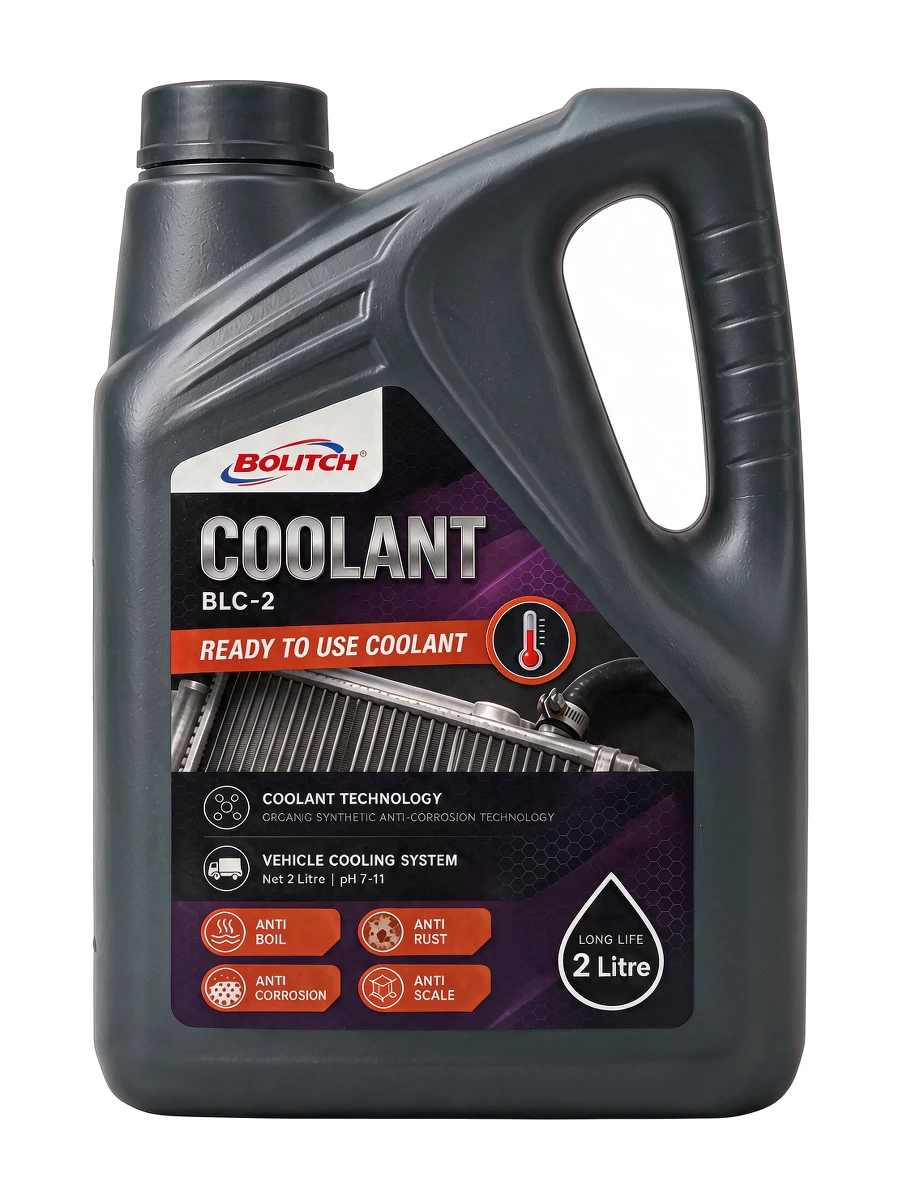
A buyer once showed us a container of coolant and a single number on a hydrometer: 1.072. He had been told that this one figure proved the product was a minus-25 degree Celsius grade, and he wanted to know why our label and our test data disagreed. The short answer is that density and freeze point are related, but they are not the same measurement, and the gap between them is where importers get into trouble. This guide explains what a specific-gravity reading can and cannot tell you, what moves it around, and the simple checks that give you a defensible answer before you release a container.
None of this requires a chemistry degree. It requires knowing which instrument answers which question, and writing the acceptance limits into the contract before a dispute starts. That is the whole point of a receiving programme: not to win an argument later, but to make the number on the hydrometer only one input among several.
What specific gravity actually measures
Specific gravity is the ratio of the density of your coolant to the density of water at a reference temperature. A hydrometer floats higher or lower in the liquid; a density cup weighs a fixed volume; a digital density meter measures oscillation. All three answer the same narrow question: how much mass is packed into a given volume right now. They do not measure freezing behaviour directly.
The reason buyers reach for them is that, in a simple two-component mixture of monoethylene glycol and water, density tracks concentration, and concentration tracks freeze point. Add more glycol and the liquid gets denser and the freeze point drops — up to a point. That relationship is real and useful, which is why a hydrometer can be a decent quick screen. The problems start when the mixture is not simple, or the temperature is not controlled, or the reading is treated as proof rather than a hint.
Reason 1: temperature moves the reading
Density is temperature-dependent. Warm liquid expands, so the same coolant occupies more volume and reads lower on a hydrometer; cold liquid contracts and reads higher. A hydrometer is normally calibrated at a stated reference temperature — commonly 20 degrees Celsius — and a reading taken at 35 or 40 degrees Celsius in a hot warehouse will be off by an amount that can easily span one commercial freeze grade.
This is not a laboratory curiosity. Containers sit on a quay, in a truck, or in a warehouse that sees a 20-degree swing between morning and afternoon. A drum sampled at midday and the same drum sampled at dawn can give two different numbers without a single drop of product changing. If your receiving sheet records a density but not the liquid temperature, the number is not repeatable and it is not defensible in a claim.
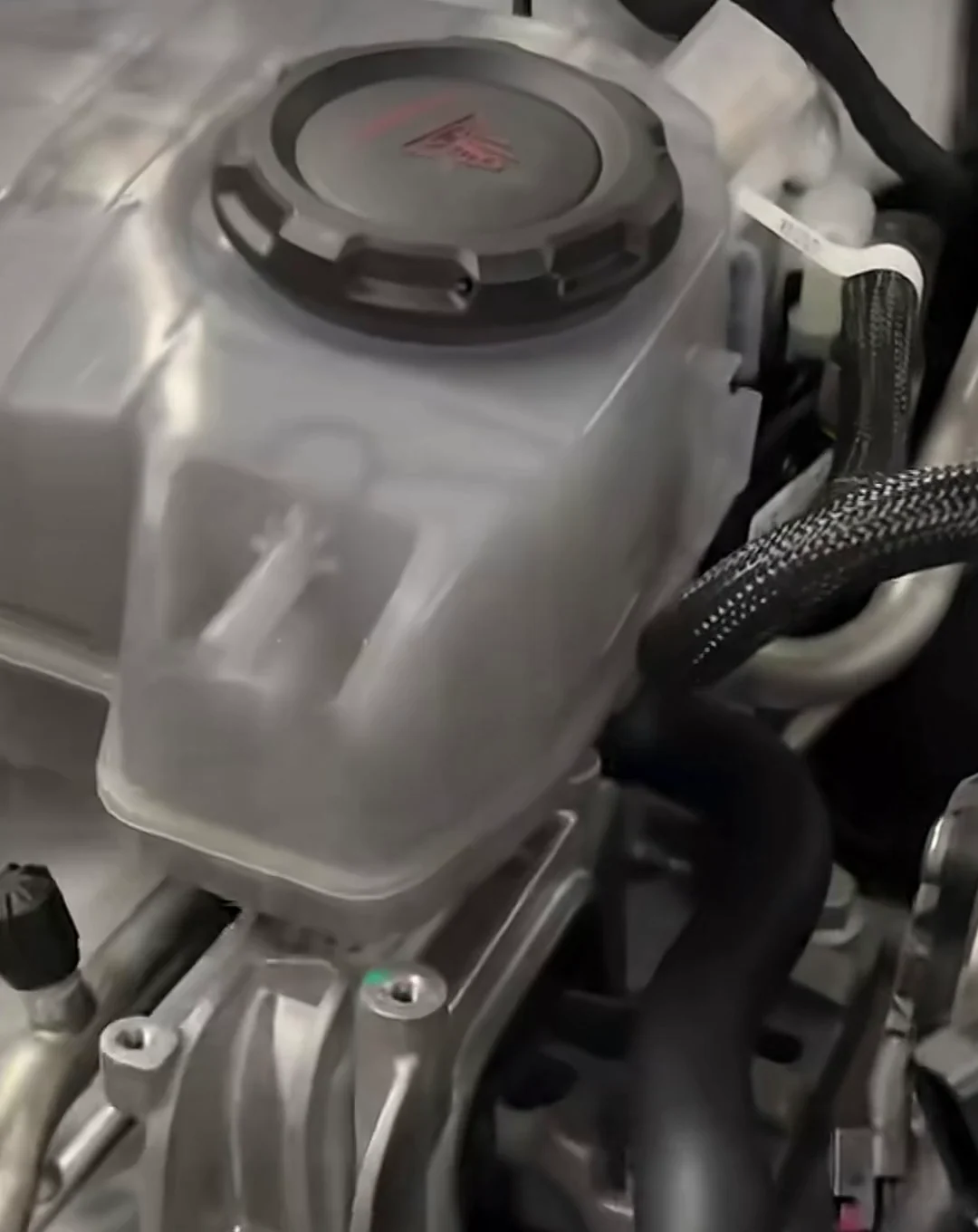
The expansion tank in the photograph is a good reminder of the same physics at work in the vehicle: coolant level rises as it warms. Technicians know never to judge level or concentration on a hot engine — the same discipline applies to a hydrometer reading at the warehouse.
Reason 2: glycol type changes the density-to-freeze relationship
The conversion tables printed on cheap hydrometers assume monoethylene glycol in water. Change the base fluid and the curve moves. Propylene glycol, for example, has a different density than ethylene glycol at the same freeze protection, so a table calibrated for one will misreport the other. A reading that says 'minus 25' on an ethylene-glycol scale can correspond to a materially different freeze point if the drum contains a propylene-glycol formulation.
This matters most in private-label and multi-origin sourcing, where two suppliers may both sell a 'minus 25' product but arrive with different base fluids. If your team uses one hydrometer table for everything, the two drums will look identical on paper while behaving differently in a cold market. Ask the supplier which glycol the table assumes before you trust the conversion.
Reason 3: additives and contamination distort density
Real coolant is not just glycol and water. It carries an inhibitor package, dyes, surfactants and, in some formulations, antifoam and stabilisers. These shift density slightly. On their own the shifts are small, but they are enough to matter when a buyer is trying to separate a premix grade from a concentrate, or arguing about the last few degrees of freeze protection.
Contamination shifts density much more. A drum with a little water ingress reads lighter; one with a heavier fluid mixed in reads denser. Dielectric or conductivity checks can flag a genuine contamination event, but a density reading alone cannot tell you whether a high number means 'more glycol' or 'someone tipped in the wrong liquid'. That distinction is exactly the one that decides whether a batch is released or rejected. It also matters over the product's life: a long-life coolant rated for 5 years or 300,000 km depends on a stable inhibitor package, and a small additive or water imbalance shortens that service interval even when the opening density reading looked perfect.
Hydrometer vs refractometer vs freeze-point test
Three tools are commonly confused. A hydrometer (or density cup) measures density and hence infers concentration. A refractometer measures the refractive index of the liquid, which also tracks concentration but responds differently to temperature and to contaminants. A freeze-point test — a controlled cooling test or a calibrated freeze-point apparatus — measures the actual onset of crystallisation. Only the third answers the question 'at what temperature does this freeze' directly.
| Method | What it measures | Best used for | Main blind spot |
|---|---|---|---|
| Hydrometer / density cup | Density relative to water | Fast screening of a consistent formulation | Temperature, glycol type, additives, contamination |
| Digital density meter | Density with tight temperature control | Repeatable lab screening when corrected | Still infers concentration, does not measure freezing |
| Refractometer | Refractive index, converted to concentration | Workshop and field concentration checks | Dyes/contaminants can bias reading; needs calibration |
| Freeze-point apparatus | Actual crystallisation onset | Dispute resolution and acceptance testing | Slower, needs trained operator and controlled conditions |
None of these tools is a certification. Reference methods such as ASTM D1121 for reserve alkalinity or density-based procedures appear in specifications as ways to run a test; naming a method does not mean a supplier holds an approval. Ask for measured values on a batch COA and state your own acceptance limits.
A repeatable way to check a shipment
The point of a receiving routine is repeatability. Use the same tool, the same sampling position and the same temperature condition every time, then log the result next to the batch code. Below is a sequence that works at a warehouse dock without a full laboratory.
- 1Confirm the product name and freeze grade on the carton and the batch code against the COA before opening anything.
- 2Let the sample reach a stable, recorded temperature — do not test liquid straight from a hot truck.
- 3Sample across pallets, not from the single easiest drum; draw from a clean, dry container.
- 4Take a density reading and record the liquid temperature beside it; apply the correction if the instrument requires it.
- 5Cross-check concentration with a second method (refractometer or a lab freeze-point test) for the first lot of a new supplier or grade.
- 6Photograph the label, the batch code and the reading together, then file the sheet with the retained sample.
Five mistakes that cost importers money
- Treating a single hydrometer number as proof of grade, with no temperature or method recorded.
- Using an ethylene-glycol conversion table on a propylene-glycol or unknown-base product.
- Reading a hot sample after a long drive and comparing it to a reference taken at 20 degrees Celsius.
- Ignoring a small water or cross-fluid contamination because the colour 'still looks right'.
- Buying on a density figure alone, without a COA, a retained sample and an agreed retest rule.
Every one of these is avoidable with a written procedure and a cheap thermometer. The cost of a hydrometer is trivial; the cost of rejecting a container on a bad reading — or releasing one that fails in a cold market — is not.
What to write into the purchase order
Good contracts remove ambiguity before it becomes an argument. For coolant, that means naming the grade, the base-fluid family, the test method, the sampling rule and the retest path. Keep it to one page so the warehouse team will actually use it.
| Clause | What to specify | Why it matters |
|---|---|---|
| Freeze grade | Stated grade with target freeze point | Sets the acceptance target |
| Base fluid | Monoethylene glycol or propylene glycol | Selects the correct conversion table |
| Test method | Named method for density and for freeze point | Both parties measure the same way |
| Sampling | Number of drums, cold/stable condition, across pallets | Makes the result repeatable |
| Retest path | Who pays, which lab, which retained sample | Decides a dispute quickly |
FAQ: specific gravity and freeze point
Can a hydrometer tell me the freeze point directly?
No. It measures density. On a known ethylene-glycol premix at a controlled temperature, density correlates with concentration and concentration correlates with freeze point, so the converted number is a useful estimate. It is not a direct freeze-point measurement and it should not be the sole basis for accepting or rejecting a batch.
Why does the same drum read differently at different times?
Because density changes with temperature. A warm drum reads lighter and a cold drum reads denser. If you record the liquid temperature and apply the instrument's correction, the readings will agree. Without a temperature record you cannot compare them.
Is a refractometer better than a hydrometer?
For field concentration checks a refractometer is usually faster and less temperature-sensitive than a floating hydrometer, but it still reports concentration, not freeze point, and dyes or contaminants can bias it. For a dispute, use a controlled freeze-point test on a retained sample.
What does a boiling-point number tell me here?
Very little about freeze point. The 101–110 °C band by freeze grade is about boil-over protection at operating temperature. Keep it in the technical file as a separate spec, and do not use it to judge winter protection.
How does this affect private-label buyers?
It makes base-fluid disclosure essential. If your supplier changes from ethylene to propylene glycol, or switches additive package, the same hydrometer number can describe a different freeze point. Lock the base fluid and formulation in the specification and require a COA per batch.
The short version
A hydrometer is a good screening tool and a bad judge. Density is affected by temperature, glycol type, additives and contamination, so a single number cannot prove a freeze grade. Record the liquid temperature, sample consistently, confirm the base fluid, cross-check with a second method for new lots, and put the sampling and retest rules in the purchase order. If you want a coolant whose grade is backed by measured data and clear guidance your team can repeat at the dock, the BOLITCH range and its TDS are a sensible place to start.
Ask for grade data and a receiving checklist
BOLITCH supplies conventional coolant as concentrate and ready-to-use in 1 L, 2 L, 4 L, 9 L and 10 L packs and bulk drums for distributors, importers, private-label buyers and fleet operators, with freeze grades for tropical, temperate and severe-cold markets. TDS are ready to download and MSDS are available on request. Tell us your climate, pack sizes, monthly volume and which grades you buy, and we will send measured freeze-point and boiling-point data by grade, the correct conversion guidance, a sample batch COA and a quotation for your first container. Visit bolitch.com or email sale@bolitch.com.