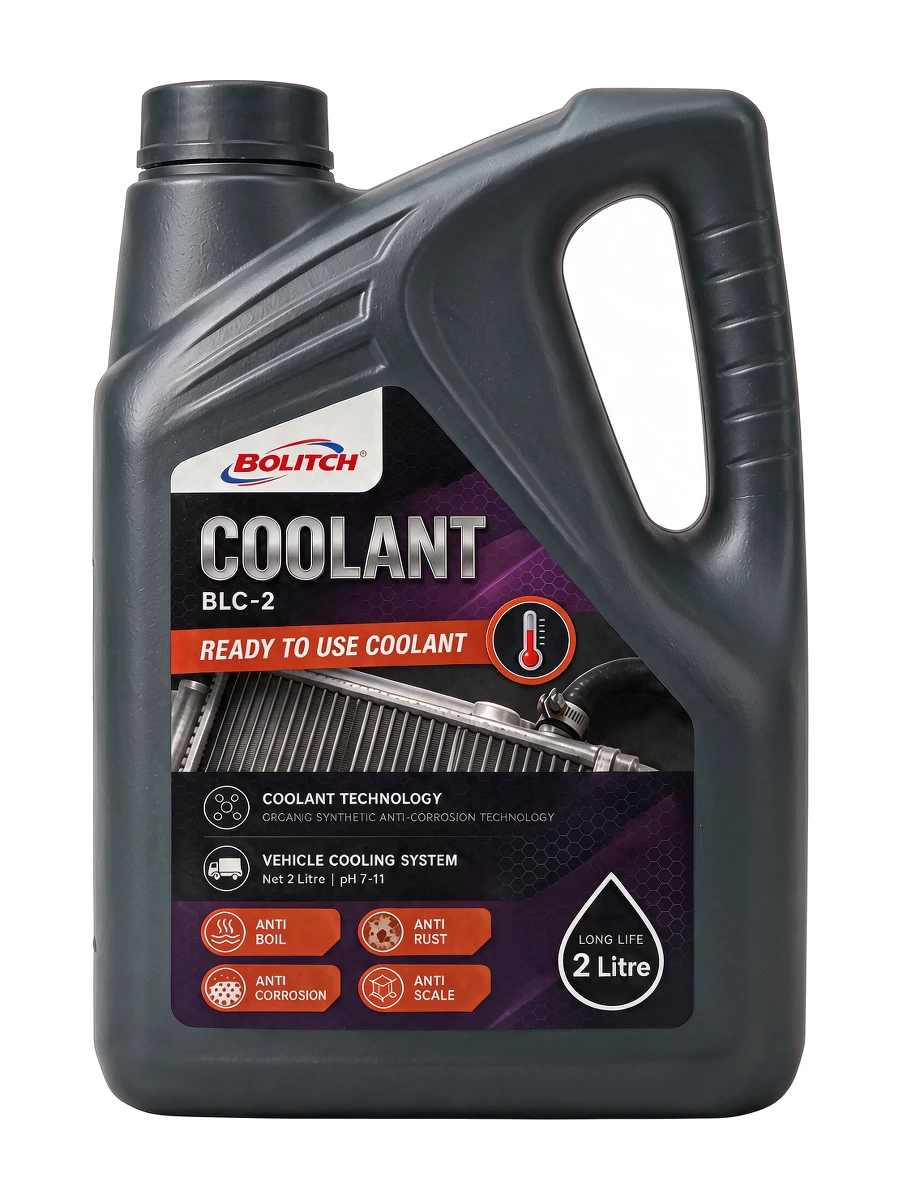
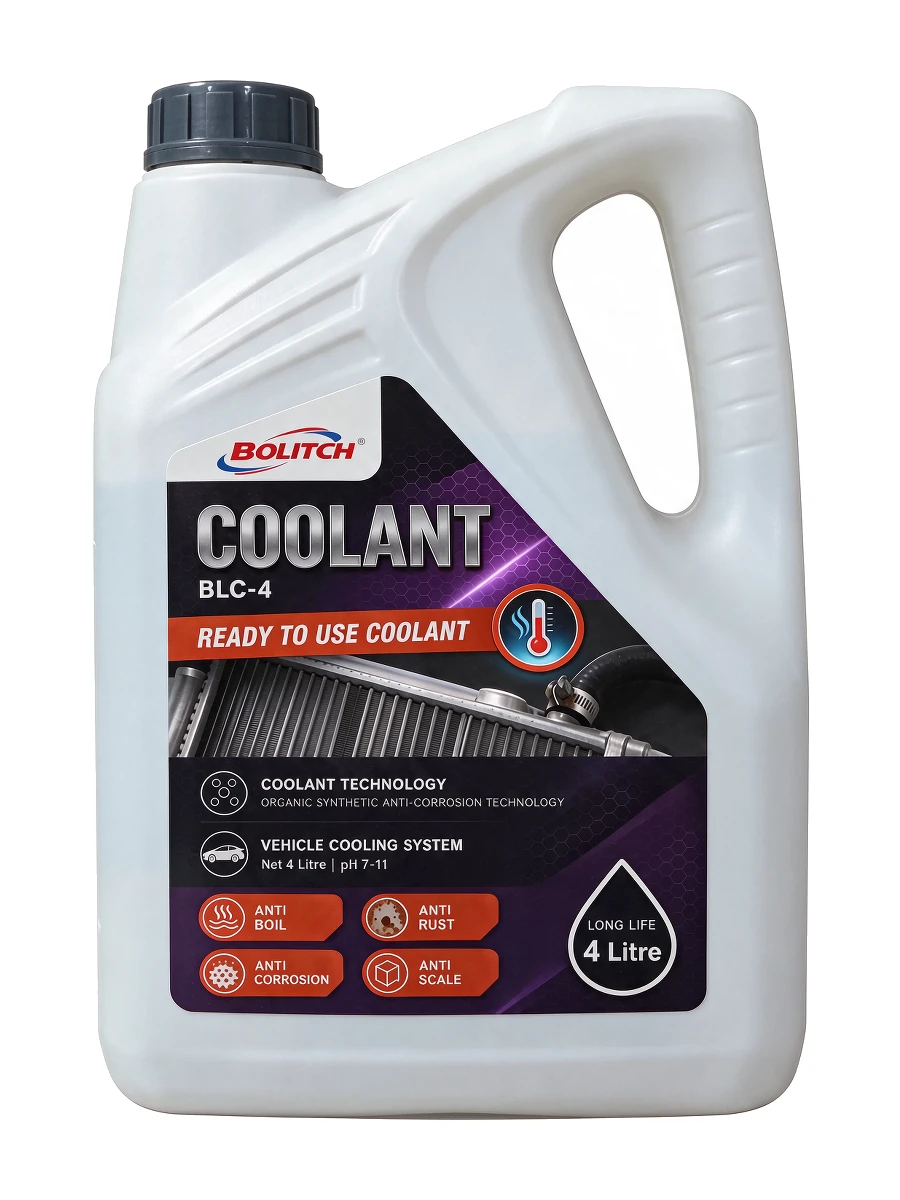
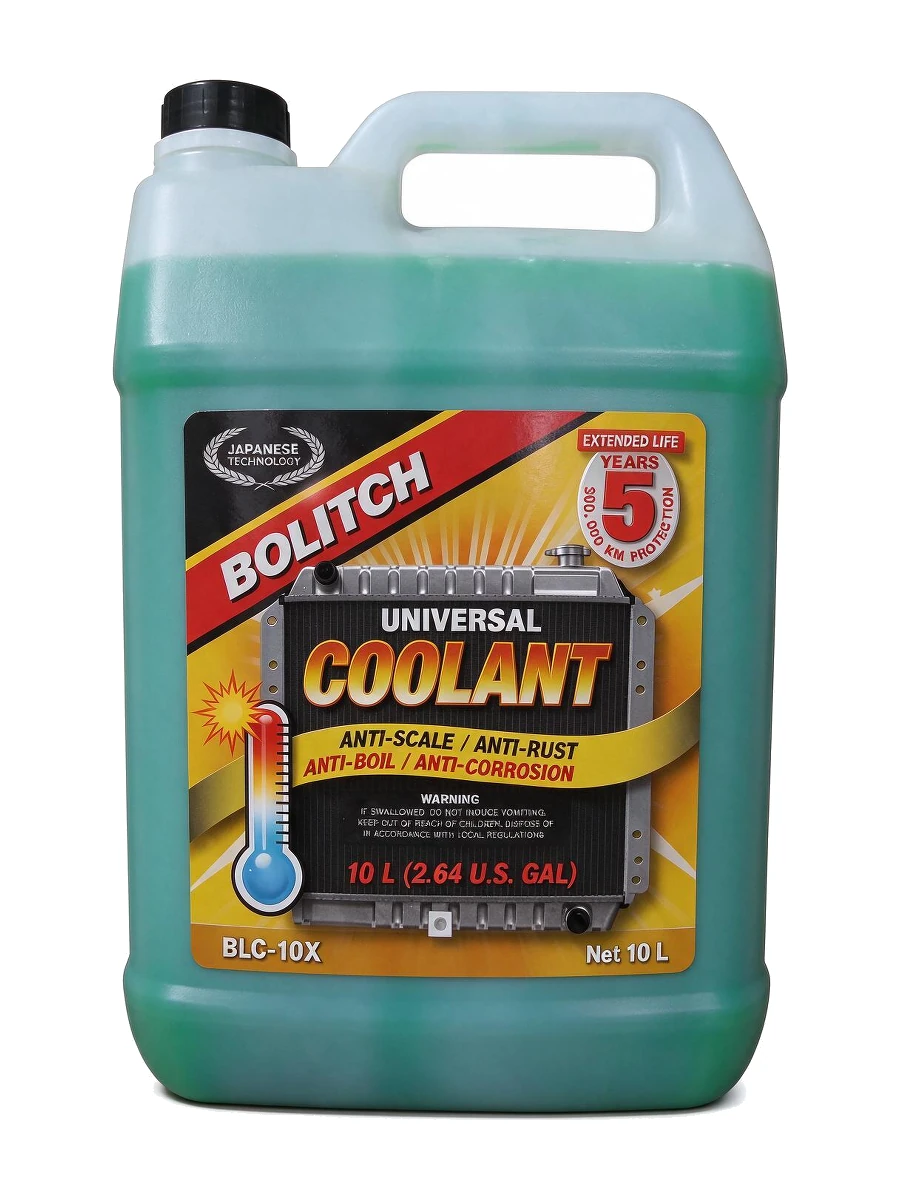
Two coolant quotes land in your inbox on the same morning. Both say 'long-life coolant, -35°C, 4 L, 1,000 cartons'. One is noticeably cheaper per litre. The instinct is to assume the cheaper factory is more efficient, or the dearer one is padding the number. Neither assumption survives a proper read of the quote. A per-litre coolant price is not one number with a margin attached. It is five separate cost lines stacked together, and each line moves for a different reason. This guide is for importers, distributors and private-label buyers who want to know which line they are actually negotiating, so they can compare like with like instead of chasing a headline figure that will follow them into warranty claims twelve months later.
We publish no price list in this article, and every relationship described below is structural rather than a quotation. That is deliberate: a number without its specification, pack, Incoterm and volume is not a price, it is a placeholder. What we can do is show you where the money goes, which parts of it are legitimate cost, which parts are negotiable, and which parts are simply being hidden until after you have signed.
The five lines inside every per-litre quote
Read any serious quote from the bottom up and you will find the same five layers: the base fluid, the inhibitor package, the packaging, the filling operation, and the losses and overhead that sit around all four. A buyer who negotiates only the final number is negotiating all five at once, usually without knowing it. A buyer who can name the lines can ask targeted questions — and targeted questions are the only kind a factory answers precisely.
| Cost line | What actually sets it | What you can verify | Common buyer mistake |
|---|---|---|---|
| Base fluid | Glycol type and concentration; grade required by the market | Freeze point and boiling point by grade on the TDS | Paying for a colder grade the market never uses |
| Inhibitor package | Chemistry family and treatment level | Reserve alkalinity and corrosion values on the batch COA | Treating every 'long-life' label as equal |
| Packaging | Pack size, resin, closure, carton and labelling | Unit dimensions, carton count, gross versus net weight | Comparing a 1 L shelf price with a drum price |
| Filling | Metering accuracy, line changeovers, batch coding | Fill tolerance and batch-to-batch spread | Ignoring short fills as a quality issue |
| Losses & overhead | Residual fluid, changeover waste, documents, freight basis | Incoterm, pallet pattern, quoted net weight | Assuming the quote includes costs it excludes |
The table is worth reading twice because it explains most quote disputes. When a supplier says 'our price is higher because we use better fluid', ask which line. Better base fluid should show up as measured freeze and boiling points. Better inhibition should show up as reserve alkalinity and corrosion results. If the number is higher but neither document changes, you are not buying a better litre; you are paying for a better story.
Line 1 — base fluid: concentration is the cost
Base fluid is the largest single input in most coolant quotes. Two things set its cost: which glycol the product is built on, and how much of it is in the container. Ethylene glycol based fluid and propylene glycol based fluid are not interchangeable inputs, and the choice should be made on specification and market requirements, not on price alone. Concentration is the more common lever. A colder freeze grade means more glycol and less water in every litre, and that shows up in the quote. It also shows up in performance — but not in the way many buyers assume.
Boiling point follows the same grade logic and should be quoted by the measured figure for the grade you are actually buying. Our conventional line is measured at 101°C for the 0°C freeze grade, 109°C for the -35°C grade and 110°C for the -45°C grade, giving a published range of 101–110°C across the line. A supplier who quotes one boiling point for every grade is either simplifying for marketing or has not measured by grade. Either way, that is a question worth asking before you compare prices.
| Freeze grade | Measured boiling point | Typical climate use | What you are paying for |
|---|---|---|---|
| 0°C | 101°C | Tropical and hot climates where freeze protection is not the job | Corrosion protection and boil-over margin, not winter protection |
| -35°C | 109°C | Temperate markets with occasional cold snaps | A balance of glycol content, flow and heat transfer |
| -45°C | 110°C | Severe cold and high-altitude markets | Maximum freeze margin; verify storage and handling in winter |
The practical conclusion is uncomfortable but useful: paying for -45°C fluid in a market that never sees frost is not quality, it is waste. Conversely, saving money by shipping a 0°C grade into a cold market creates a freeze damage claim that dwarfs the saving. Read the climate first, then read the price.
Line 2 — the inhibitor package: cheapest to cut, costliest to recover
If one line in a coolant quote is tempting to shave, it is the inhibitor package. It is invisible in a bottle, invisible on a label, and difficult for a buyer to check at the counter. It is also the line that decides whether the cooling system survives the service interval. A package is a family of corrosion inhibitors plus a reserve that gets consumed slowly as the fluid ages. Treat it as a budget, not a certificate: once spent, the fluid stops protecting even though it still looks like coolant.
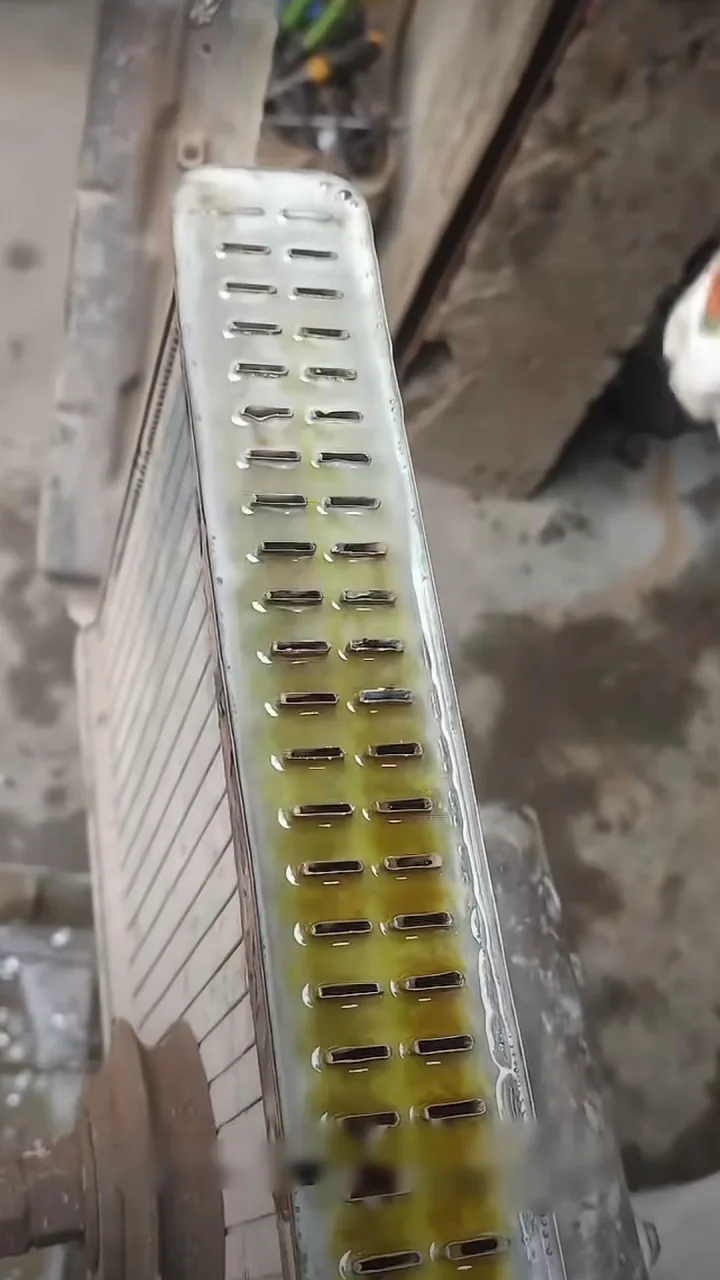
That photograph is the reason this line deserves its own row on a quote. The passages were not destroyed by a single hot day; they were slowly compromised by fluid that had lost its reserve alkalinity. The repair cost lands on your customer, the reputation cost lands on you, and neither appears in the per-litre saving that won the order.
So how do you check a line you cannot see? Ask for a batch COA, not a brochure, and look at reserve alkalinity alongside freeze point and pH. Then ask for three consecutive batches, because one good certificate proves one good day. A supplier who can produce three tight COAs is telling you the treatment level is controlled; a supplier who sends a single 'typical values' sheet is telling you very little.
Line 3 — packaging: a cost decision disguised as a container
Packaging is the most visible line and the most frequently misread. Buyers compare a small retail bottle with a bulk drum, see a large per-litre gap, and conclude the drum is the same product sold cheaper. It is not the same commercial job. Every pack carries resin, a closure, a label, a carton, a pallet position and a set of handling steps, and those costs do not scale linearly with volume.
| Pack | Where it belongs | Main cost driver | What to check before quoting |
|---|---|---|---|
| 1 L / 2 L | Retail shelf, walk-in trade | Closure, label, carton count, shelf presentation | Unit dimensions and carton quantity in writing |
| 4 L | Workshop, small fleet | Resin and handle, carton format | Net versus gross weight; pallet pattern |
| 10 L | Fleet, contract account | Jug resin, stackability, dispensing | Whether a pump is needed at the customer site |
| 208 L drum | Plant, mine, large fleet | Drum, freight basis, handling equipment | Incoterm, drained weight, returnable option |
The right way to read this table is by channel, not by cheapest litre. A retail buyer needs a container that can be carried, understood and stacked on a shelf. A workshop needs a pack that survives a busy month without going half-empty and contaminated. A fleet needs continuity and a documented batch. If your order mix spans all three, one pack size will never be optimal, and the quote that pretends otherwise is hiding a cost somewhere else.
Line 4 — filling: the controlled neck
Filling is where the quote meets physics. Metering equipment, line speed and changeover discipline decide how much of each litre actually reaches the container and how tightly each unit matches the one before it. A controlled fill is not a marketing phrase: it means the neck is clean, the level is repeatable and the batch code on the jug maps back to a specific mixing run.
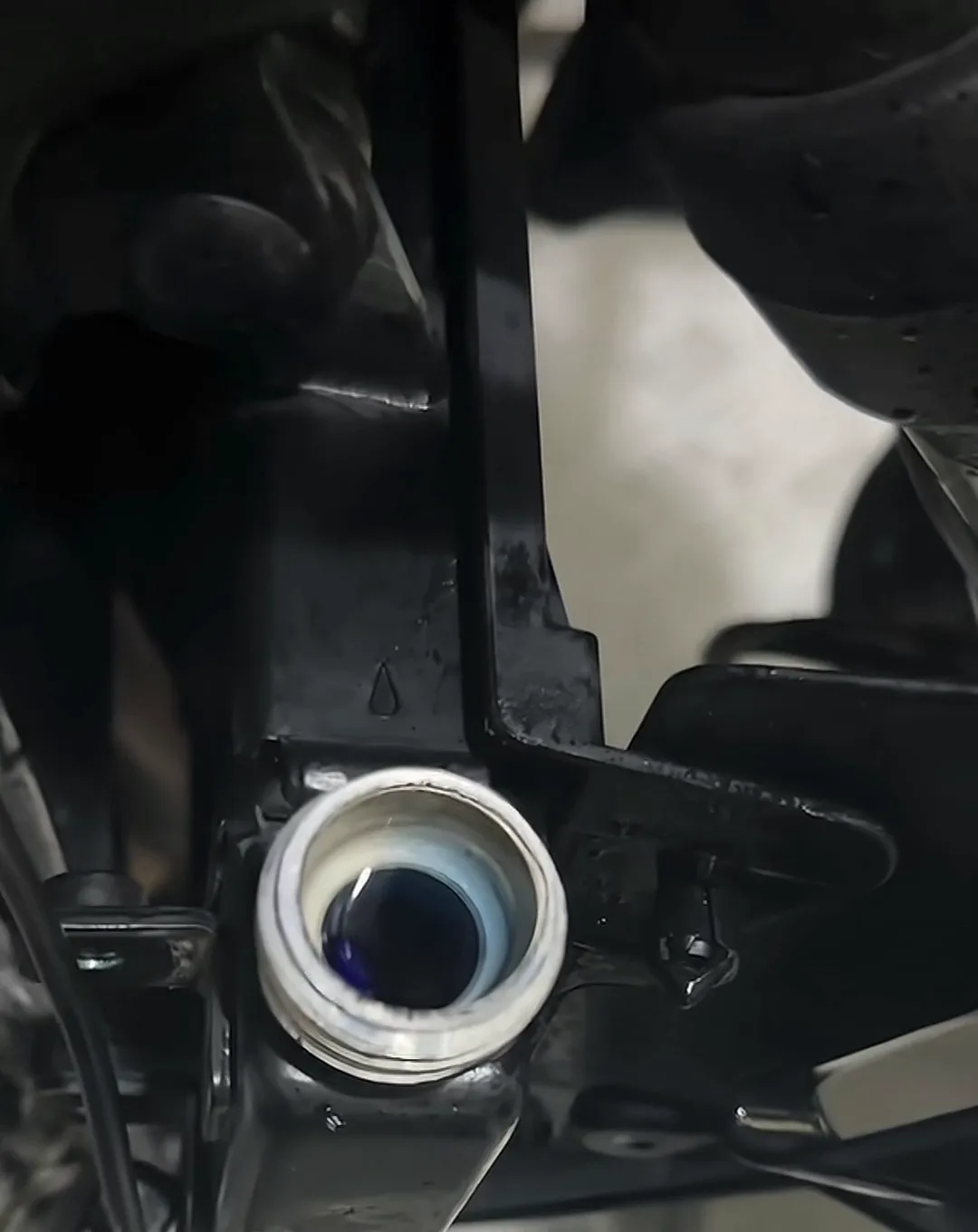
The frame above is a useful mental check when you visit a supplier or review a line video. Look at the neck, the repeatability of the level, and whether the operator is working to a documented target rather than an eyeballed one. A plant that controls this step can explain its fill tolerance. A plant that cannot will usually compensate by putting slightly more fluid in every container — and quietly charging you for it.
Changeovers matter too. Every time a line switches grade, freeze point or private-label artwork, there is residual fluid, cleaning and a first-off check. Importers who order many small grades across one container are paying for those changeovers even if no line on the quote says so. Consolidating grades is often the fastest way to lower a landed cost without touching the chemistry at all.
Line 5 — losses, freight and the line that never appears
The final layer is the one that creates the most unpleasant surprises: residual fluid left in lines and tanks, weight that is freighted but never sold, documentation, and the basis on which freight is quoted. Net weight and gross weight are not the same number, and a quote that shows only one of them is incomplete. Ask for both, plus the carton dimensions and pallet pattern, before you compare two landed costs.
Incoterms belong in this conversation too. A price that looks attractive on an FOB basis can stop looking attractive once you own the freight, insurance and port handling. This is not an argument for one term over another; it is a reminder that a per-litre number without a named term is not comparable. Put the term next to the price in every spreadsheet you build.
How to compare two quotes that look the same
- 1Normalise the basis: same Incoterm, same currency, same volume, same destination port.
- 2Match the specification: freeze grade, measured boiling point and base fluid type, not just the marketing name.
- 3Request the documents: a TDS for every grade and a recent batch COA showing freeze point, pH, reserve alkalinity and appearance.
- 4Separate the pack from the fluid: convert each quote to a net-litre price at the same pack format before comparing.
- 5Ask about changeovers and residual: how many grades, how many artwork versions, and how the first-off is checked.
- 6Write the answer into the next RFQ so the supplier must quote the same structure next time.
Five questions to put in every RFQ
- Which glycol is the base fluid, and which freeze grades are measured rather than quoted?
- What are the measured boiling points by grade, and are they on the TDS?
- What reserve alkalinity range should appear on three consecutive batch COAs?
- What are the exact unit dimensions, carton count, net weight and gross weight for each pack?
- Which Incoterm, pallet pattern and changeover conditions are included in the quoted figure?
What a cheap litre can actually cost you
A saving that survives the spreadsheet but disappears at the customer's workshop is not a saving. A litre that is short on inhibitor protection comes back as a flush, a radiator core or a lost account. A litre that is short in the container comes back as a reconciliation argument with the warehouse. A grade that was never needed ties up cash in stock that moves slowly. None of these show up in the per-litre column, which is exactly why the cheapest quote is often the most expensive one to run.
Three questions buyers ask us
Can you just send the lowest price?
Only if the specification, pack, term and volume are fixed first. Otherwise the lowest number is a different product in a different container on different terms. Tell us the market climate, target grades, pack sizes, monthly volume and whether you buy concentrate or ready-to-use, and we will quote a structure you can compare.
Why does the same grade quote differently?
Because the grade name is only one of five lines. Two suppliers can quote the same -35°C fluid and differ on inhibitor treatment, pack resin, carton specification, filling tolerance and freight basis. Ask for the documents named above and the difference will usually become visible on paper.
Do you publish a price list?
No, and we would treat any undirected price list with caution. A coolant price without a specification and a term is a placeholder, not a commitment. We send measured grade data, a TDS that is ready to download, MSDS on request, a sample batch COA and a quotation built around your actual container.
The short version
A per-litre quote is five lines, not one: base fluid, inhibitor package, packaging, filling, and losses with freight. Normalise the term and pack, then verify the fluid with grade data and consecutive COAs. The line that looks cheapest to cut is usually the one that costs most downstream. If you want a quote built line by line, with measured freeze and boiling points by grade and a clear RFQ structure, BOLITCH is ready to work through your first container.
Ask for a line-by-line coolant quotation
BOLITCH supplies conventional coolant as concentrate and ready-to-use in 1 L, 2 L, 4 L, 9 L and 10 L packs and bulk drums for distributors, importers, private-label buyers and fleet operators, with measured freeze grades for tropical, temperate and severe-cold markets. TDS are ready to download and MSDS are available on request. Tell us your climate, freeze grades, pack sizes, monthly volume, Incoterm and whether you buy concentrate or ready-to-use, and we will send measured freeze-point and boiling-point data by grade, a sample batch COA, pack dimensions and a quotation for your first container. Visit bolitch.com or email sale@bolitch.com.