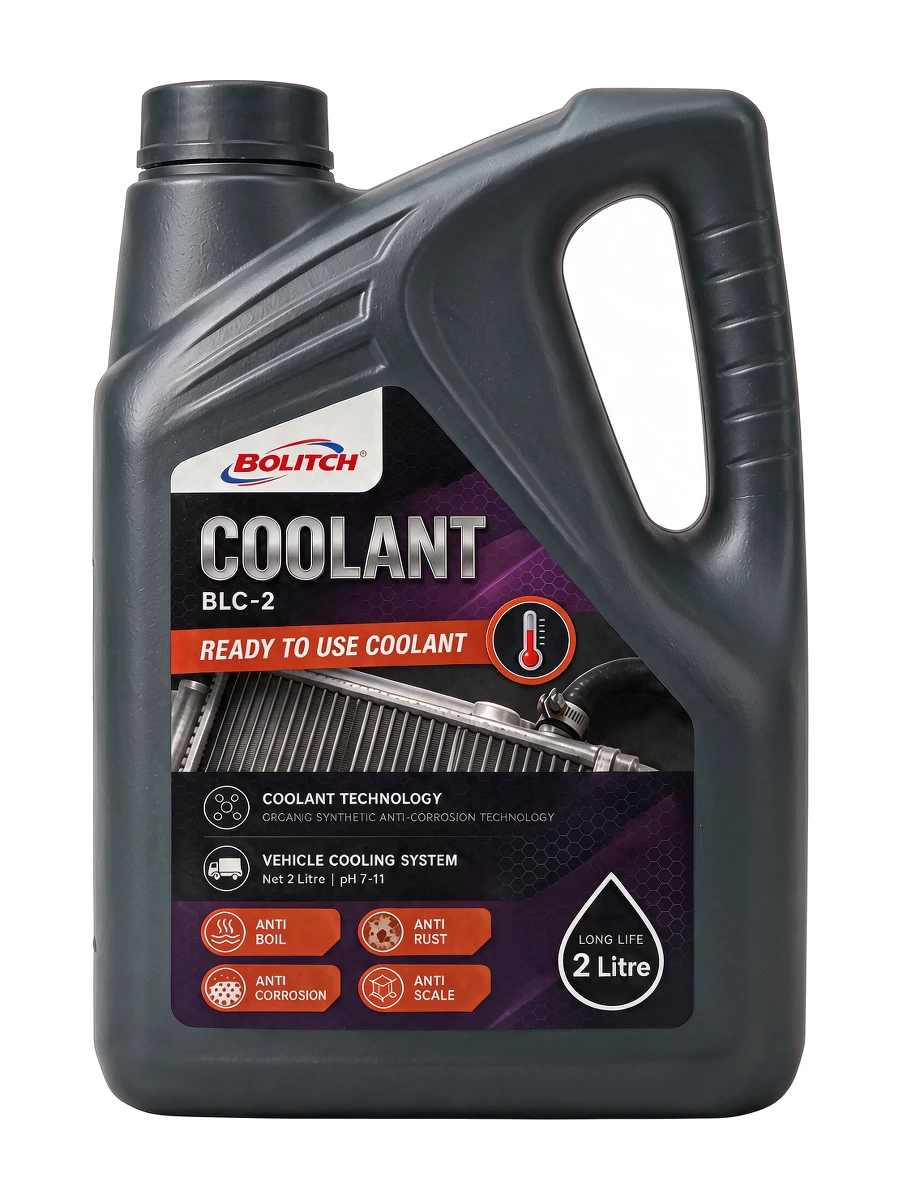
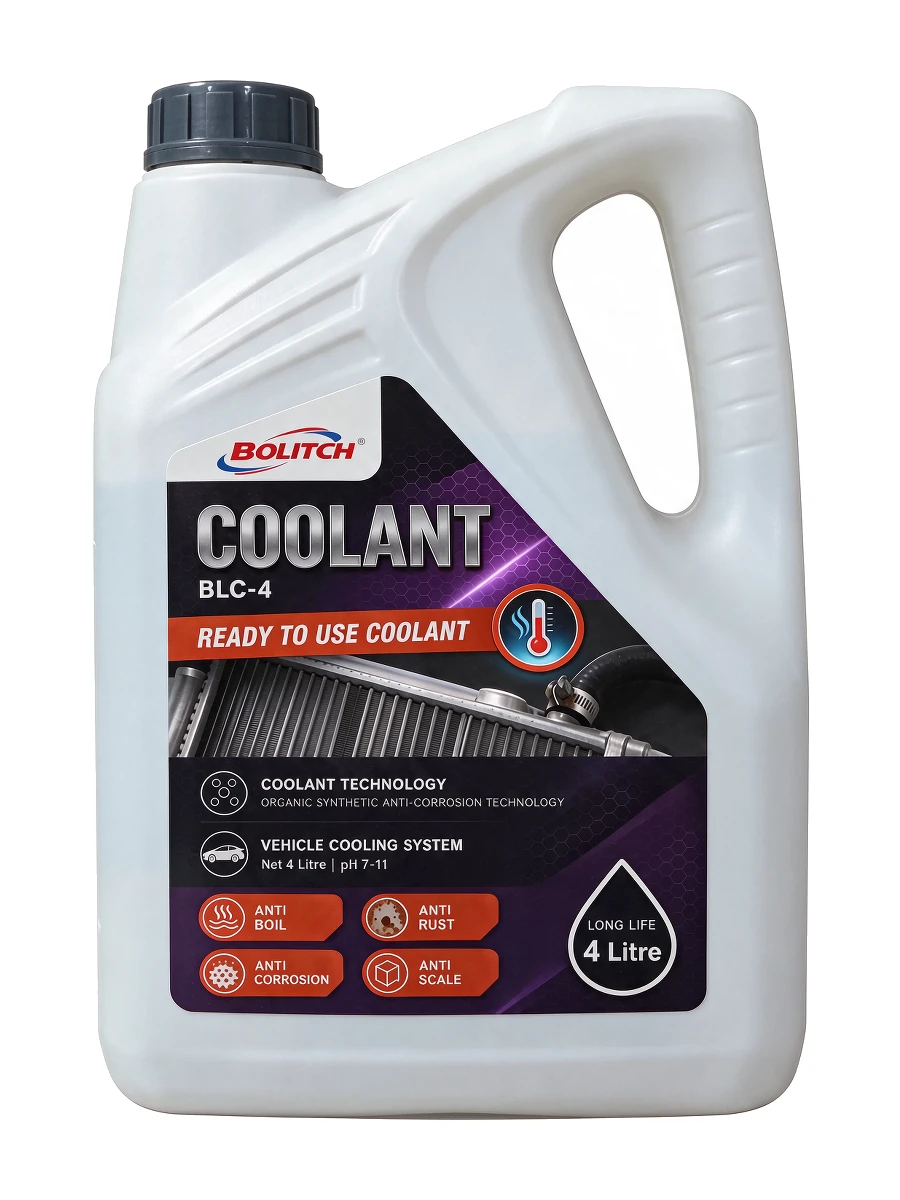
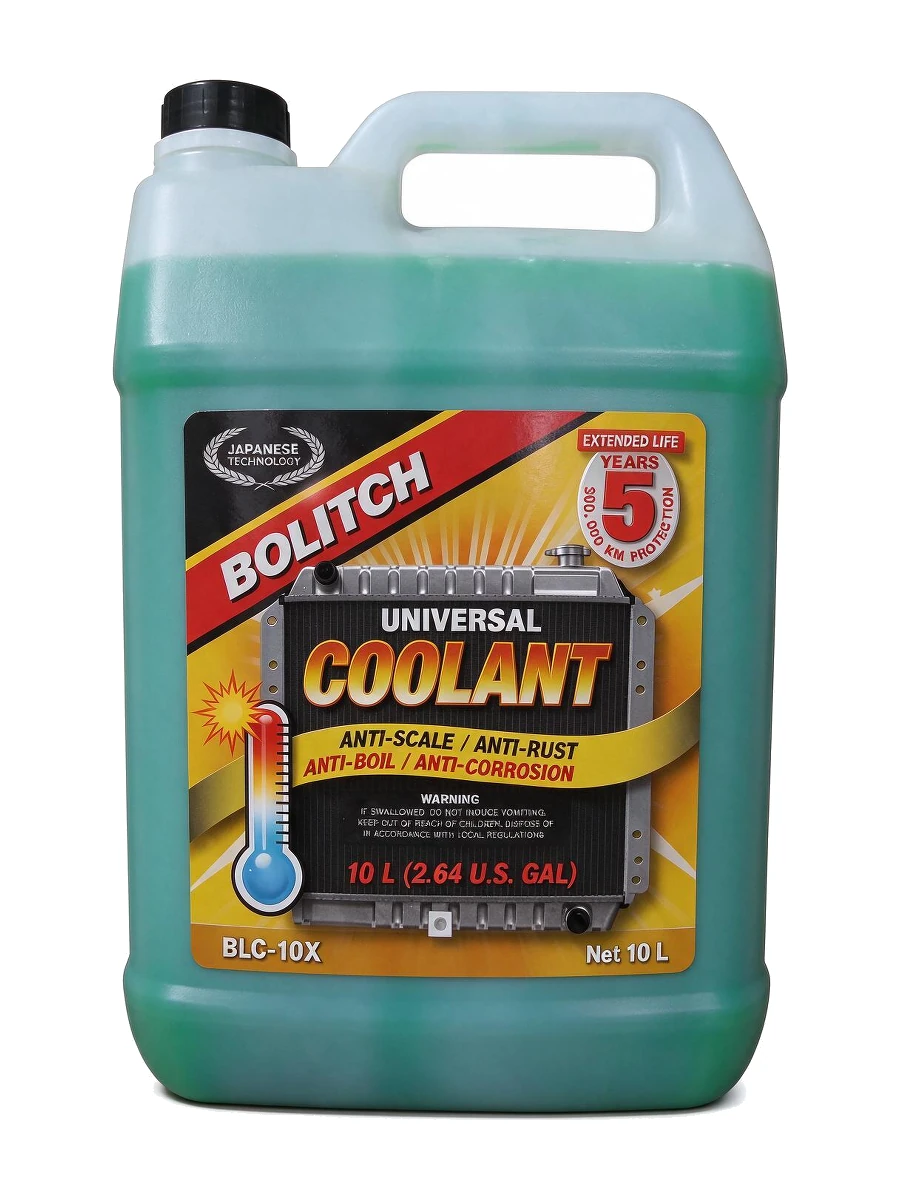
The container lands, the customs file is clean, and the paperwork says the product passed at the plant. Then the warehouse manager opens one carton and finds a jug with a damp label and a faint brown rim at the cap. Nobody can agree whether to put the batch away or hold it. Incoming inspection is the point where an importer stops trusting documents and starts verifying goods. This guide is written for distributors, importers, private-label buyers and fleet operators who receive coolant by the pallet or the container. It sets out what to check before a drum is opened, what a five-minute visual and smell test can and cannot tell you, which three low-cost instruments turn a suspicion into a defensible decision, and how to build a claim file in ten minutes. It applies to concentrate and ready-to-use coolant in every freeze grade; it needs no laboratory, and it does not ask you to claim a certification you do not hold.
Why the receiving dock is your last control point
A supplier audit checks how a factory says it works. A certificate of analysis checks what one sample measured on the day it was taken. Neither says anything about the specific pallet that has just been unloaded after a long sea journey. Cartons get crushed, drums sit in the sun at a transhipment yard, caps loosen on rough roads, and a mislabelled grade can be loaded when two production lots run back to back. Those failures are not rare exceptions; they are the ordinary risks of moving liquid in containers across climates. If you release goods straight to the shelf, you have no baseline to argue from when a customer calls six weeks later about a cloudy reservoir. A receiving check gives you three things at once: a snapshot of the goods as received, a timestamped record of the batch identity, and a clean boundary between factory faults and anything that happened in your own warehouse. That boundary is what makes a claim recoverable.
| What you see | Likely cause | Risk if released | First action |
|---|---|---|---|
| Damp or peeling label, batch code unreadable | Water ingress in transit or a relabelled carton | Wrong grade traced to the wrong lot; no recall control | Photograph, isolate the pallet, request the packing list and batch register |
| Cap weeping, sticky neck, crust at the seal | Loose torque or a damaged liner, agitation in transit | Leakage in the customer's store; low level in service | Do not open other units; weigh a sample jug to check net loss |
| Brown film, dark sediment, floating flakes | Contamination, wrong base fluid or inhibitor fallout | Complaints about corrosion and blocked heater cores | Hold the lot, draw a clear-glass sample, run the three checks below |
| Two batch codes in one carton | Mixed pallet assembled at the loading dock | Inconsistent product; traceability impossible | Re-pallet by code and reconcile with the packing list before release |
| Grade on the carton differs from the order | Picking error at the plant | Wrong protection for the climate; boil-over complaints | Reject the line item in writing and ask for a correction before sale |
Before you open anything: packaging, labels and batch identity
The first pass takes two minutes and needs no instrument. Work from the outside in. Check that cartons are dry and square, that shrink wrap is intact, and that the pallet pattern matches the packing list. Then compare three identifiers on every carton you sample: the product name, the freeze grade, and the batch or production code. The grade matters commercially. A carton marked 0 °C is a tropical product; a -35 °C or -45 °C grade is a different blend with different freeze and boil behaviour. Our measured atmospheric boiling points are 101 °C for the 0 °C grade, 109 °C for -35 °C and 110 °C for -45 °C, so the whole line sits in a 101–110 °C band. If the carton says one grade and the liquid tests like another, stop: do not average the two and do not relabel on site.
- 1Count cartons per pallet and match the total to the packing list before the truck leaves.
- 2Photograph each pallet from two angles including the batch code, and store the images with the purchase order number.
- 3Look for wet stains, crushed corners and stretched wrap — signs of water ingress or re-handling.
- 4Check that the grade marked on the carton matches the grade on your order, not just the brand.
- 5Copy the batch code into a receiving sheet with the date, container number and seal number.
- 6Pull one unopened unit per batch as a retained sample, label it with the same code and keep it sealed on the shelf for the life of the batch.
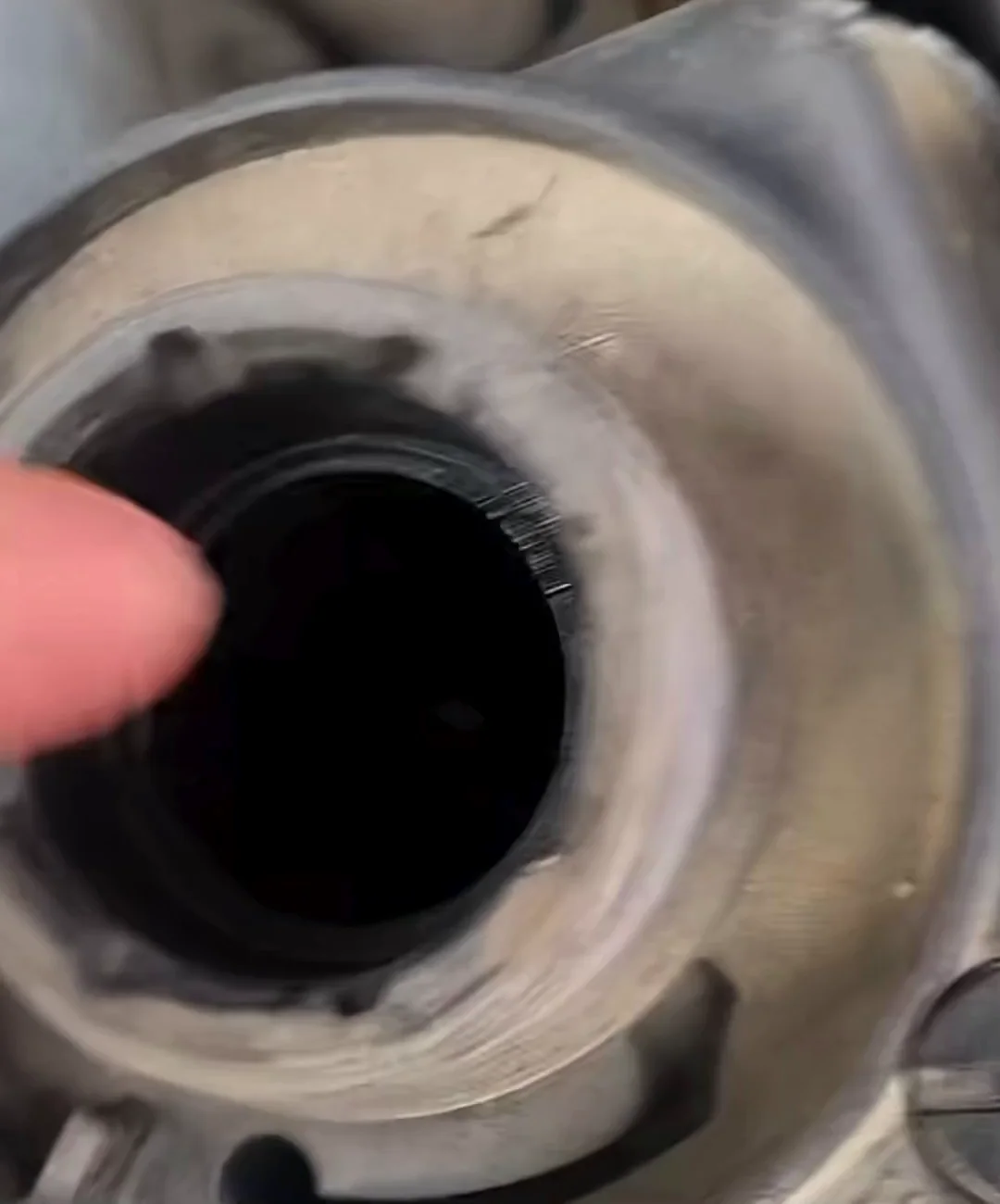
Only after the exterior is recorded should you open a container. Open it deliberately: wipe the neck first, break the seal once, and look at the rim and the liquid surface under a light. The rim tells you about storage and seal condition; the surface tells you about the fluid itself. What you see here is not a test result — a dark rim can be harmless dye residue — but it decides whether you need to test at all.
A five-minute visual and odour test
Pour a small amount into a clear glass jar, about a third full, and give it a minute. Colour alone proves very little: coolant is dyed for identification, and green, red, blue or pink says nothing about condition by itself. What matters is uniformity and clarity. Swirl the jar and watch the sides. Look for separation into layers, gelatinous clumps, stringy flocculent, grit that settles fast, or an oily sheen that is not the dye. Then smell it — wafted, never inhaled deeply. A sharp acidic or burnt odour is a reason to hold the lot even if the liquid looks acceptable. Advanced oxidation, a wrong additive package or contamination with another fluid all announce themselves here before any instrument is switched on.
| Observation in the jar | What it usually means | Decision | Confirm with |
|---|---|---|---|
| Uniform colour, clear, no sediment after standing | Normal appearance for the grade | Release, subject to instrument checks | Refractometer and pH strip |
| Two layers or a gel at the bottom | Incompatibility, water ingress or additive fallout | Hold the lot | Retained-sample comparison and a lab test |
| Stringy flocculent or a floating film | Microbial growth or oil contamination | Hold and sample | Conductivity pen, then a lab test |
| Fast-settling grit | Dirt in the fill line or a damaged container | Hold the affected units | Inspect other cartons from the same pallet |
| Sharp acidic or burnt smell | Overheated or chemically degraded fluid | Reject pending test | Batch COA and an independent lab result |
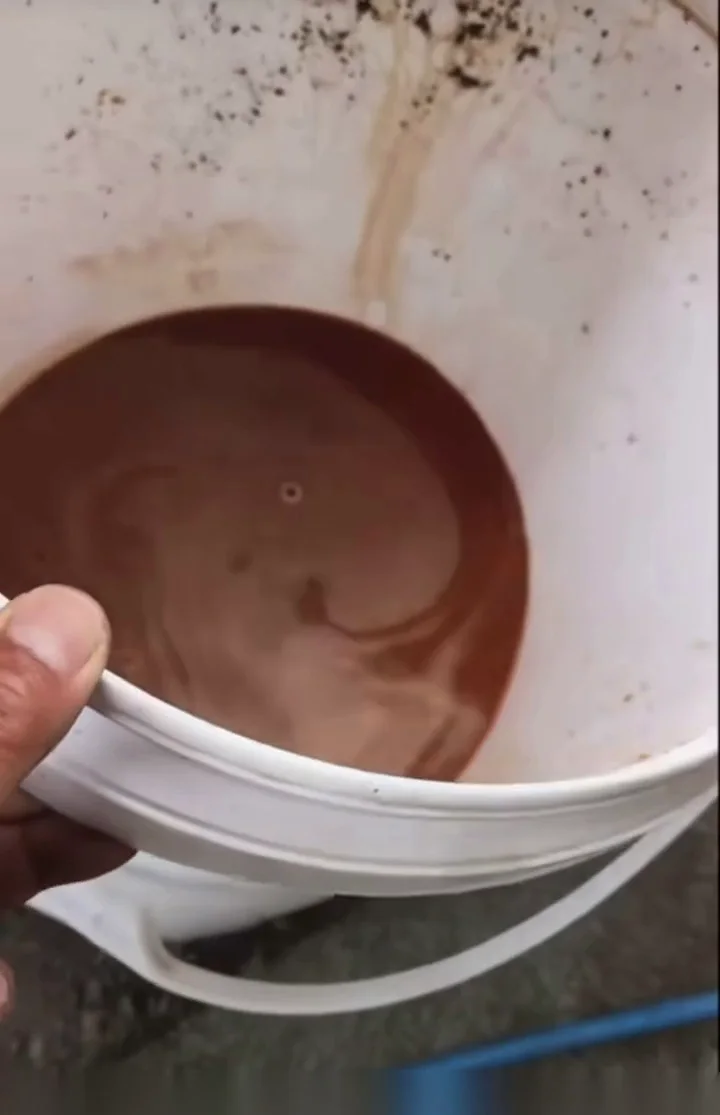
Discoloration deserves a special mention because it is the most common reason for a dispute and the least reliable on its own. Brown, muddy fluid can be a badly degraded product — or it can be a perfectly good fluid that has done its job in an engine. Context decides. In a sealed, unopened jug straight off a new container, a brown, muddy appearance with suspended fines is never normal and the lot should be held. In a drain sample from a vehicle that has run for years, the same appearance is evidence of a neglected system, not necessarily of the current product. Keep those two situations in different files.
Three low-cost tools that turn a suspicion into evidence
A visual check raises a question; instruments answer it. You do not need a laboratory at the dock. Three inexpensive tools cover the decisions that matter. A refractometer reads glycol concentration and gives you the freeze point, which should match the grade on the carton. A pH strip tells you whether the inhibitor package is still in its expected band. A conductivity pen catches ionic contamination that discolouration alone cannot identify: a concentrate with a high reading may have been cut with cheap salts or tap water. None of these tools proves a full specification on its own, and a hydrometer or density-only method is especially easy to misread when temperature and additives shift the result. Treat them as a filter: when all three pass, release; when one fails, hold and send a sample out.
| Tool | Reading | It proves | It does not prove |
|---|---|---|---|
| Refractometer | Freeze point / glycol % | Concentration matches the claimed grade | Inhibitor condition or contamination |
| pH strip | pH band | The fluid is not strongly acidic or over-alkaline | Remaining inhibitor life (that needs reserve alkalinity) |
| Conductivity pen | µS/cm | Unusual ionic content is present | Which ion exactly, or whether the fluid is safe to use |
| Hydrometer (not as the sole test) | Specific gravity | A rough concentration indication at reference temperature | Freeze point when hot, cold or additive-loaded |
- All three pass and the labels match: release the batch and file the receiving sheet.
- One reading out of band: hold the pallet, keep the retained sample sealed, and request the batch COA.
- Two or more readings out of band, or any separation, gel or odour: reject the line item and start a claim.
- Never blend a suspect lot with good stock to average a reading — that spreads the defect and destroys traceability.
Build the claim file in ten minutes
A claim is only as good as its evidence. The supplier needs to know exactly which batch failed, under what conditions, and what you measured; without that, the conversation becomes an argument about photographs. Take the six items below at receiving, not after the customer complains. Keep them in one folder named with the container and batch number. If the supplier wants to defend the lot, a complete file lets them do it quickly — and a supplier who cannot explain a batch with a COA and a retained sample is telling you something useful about the next one.
- 1Photograph the pallet, the carton and the jug from two angles with the batch code legible.
- 2Copy the batch COA into the file and note the date and the person who received it.
- 3Record the seal and container numbers, the unloading date and the warehouse temperature.
- 4Fill the receiving sheet: grade, carton count, visual reading, and refractometer, pH and conductivity values.
- 5Seal and date the retained sample; keep a second jar for any independent test.
- 6Write the decision — release, hold or reject — with the name of the person who made it.
Test every batch, or only the first container?
Every batch at receiving, not every jug. A new supplier or a new grade deserves a full check on the first three containers; after that, a one-carton-per-batch check plus the three instruments is a reasonable standing routine. Reduce frequency only after several clean batches, and restore it immediately after any complaint.
Can I reject a lot just because the liquid is brown?
Not on colour alone. Brown fluid in a sealed new carton is a reason to hold and test, because it can indicate contamination or degradation. Brown fluid drained from an old engine says something about that engine. In both cases the decision should rest on measurements and the retained-sample comparison, not on a photograph of colour.
Does a COA remove the need for incoming inspection?
No. A COA reports what one sample measured at the plant. It does not cover what happened during loading, a long hot voyage or storage at the destination. Keep the COA in the file, then verify the goods you actually received. If the COA and your readings disagree, that disagreement is the most valuable thing in the file.
Who pays for an independent lab test?
That is a commercial term and should be agreed before the first order. A common arrangement is that the buyer pays for routine dock checks and the supplier covers an independent test when a batch fails its own COA. Put the threshold, the sampling method and the lab-selection rule in the contract; do not leave them to be negotiated after a dispute.
Request a coolant receiving checklist and batch documents
BOLITCH supplies coolant as concentrate and ready-to-use in 1 L, 2 L, 4 L, 9 L and 10 L packs and in bulk drums for distributors, importers, private-label buyers and fleet operators, with freeze grades selected for tropical, temperate and severe-cold markets. Technical data sheets (TDS) are ready to download and safety data sheets (MSDS) are available on request. Tell us the grades you import, your pack sizes, your receiving process and your monthly volume, and we will send the measured freeze-point and boiling-point data by grade, a sample batch COA with the fields explained, a one-page incoming-inspection sheet you can hand to your warehouse team, and a quotation for your first container. Visit bolitch.com or email sale@bolitch.com.