A distributor in East Africa is about to place his fourth container of coolant. His supplier offers a simple question: why keep paying for thousands of small jugs and cartons when a flexitank in a 20-foot container can carry 20,000 litres of the same liquid? On a price-per-litre sheet the bulk option looks dramatically cheaper. Six weeks later the buyer is describing a brown, cloudy sample, a pump that will not prime and a claim that nobody can settle, because nobody wrote down whose tank the liquid passed through. This guide is written for importers and fleet buyers deciding between flexitank, intermediate bulk container (IBC) and drum. It explains where the saving actually comes from, which risks move onto your side of the scale, and the checks that make a bulk shipment safe to accept.
Two boundaries before we begin. First, this article is about export format, not about grade selection or engine behaviour; the freeze-grade ladder and the boiling-point margin are covered in the linked guides. The only performance numbers used here are the ones we publish by grade: a 0 °C freeze point pairs with a boiling point of about 101 °C, a -35 °C grade with about 109 °C, a -45 °C grade with about 110 °C, and the whole line sits in a 101–110 °C band depending on grade. Second, we do not quote a price in this guide and we do not claim certifications we do not hold. We supply coolant in 1 L, 2 L, 4 L, 9 L and 10 L packs, in drums and in bulk; which format is right depends on your volume, your unloading equipment and your tolerance for risk, not on a single number on a quote.
Three formats, three different risk profiles
The words are often used loosely, so fix them first. A drum is a reusable steel or plastic container, commonly around 200 litres, sealed at the plant and traceable to one batch. An IBC is a cuboid tank in a metal cage, typically around 1,000 litres, also filled and sealed at the source. A flexitank is a large flexible bladder installed inside a standard 20-foot container, filled at the plant or at a depot and discharged through a valve at the destination. They are not versions of the same package. They differ in who touched the liquid, how many times it changed containers, how a sample can be retained, and whether a single problem affects one unit or the entire shipment.
| Format | Typical unit | Who seals it | Blast radius of one problem | Best fit |
|---|---|---|---|---|
| Small pack (jug + carton) | 1–10 L | Plant, per unit | One carton | Retail, workshops, mixed orders |
| Drum | ~200 L | Plant, per drum | One drum | Distributors, mid-volume fleets |
| IBC | ~1,000 L | Plant, per tank | One tank | Fleet depots with handling gear |
| Flexitank | ~20,000 L | Plant or depot, one bladder | The whole container | High-volume single-grade buyers |
Read the 'blast radius' column carefully, because it is the column most buyers ignore. With drums, a contaminated or weeping unit is isolated: you set it aside, open the next drum, and the claim is measured in one unit. With a flexitank, one contaminated bladder or one bad unloading connection can affect the entire 20,000 litres. There is no 'next drum' to fall back on. Bulk concentrates both the saving and the downside into a single decision, which is why the format question is really a question about how much variance your operation can absorb.
Where the saving actually comes from
Bulk is not cheaper by magic. The saving is a stack of small, identifiable items, and once you name them you can check whether they are real in your case. The biggest is packaging: a flexitank replaces thousands of jugs, caps, labels and cartons. Second is filling labour and line changeovers: one bulk fill instead of thousands of discrete fills. Third is dead weight: you are not shipping plastic and cardboard across an ocean and then paying to dispose of them. Fourth is the empty-return problem: drums and IBCs that are not reused have to be broken down or stored, which costs money at the destination. Where a buyer has a reliable high-throughput unloading setup, all four are genuine.
| Cost line | Drum / small pack | Bulk (flexitank / IBC) | Who usually pays |
|---|---|---|---|
| Primary packaging | Per jug and carton | One bladder or tank | Embedded in the product price |
| Filling labour | Many discrete fills | One metered fill | Supplier, then passed on |
| Freight on packaging | Plastic and board shipped and disposed of | Minimal | Importer via freight |
| Unloading equipment | Manual or pallet jack | Pump, valve and trained operator | Importer |
| Retained sample | One unopened unit is easy | Must be drawn at transfer | Importer |
| Contamination exposure | One unit affected | Whole shipment affected | Whoever owns the transfer |
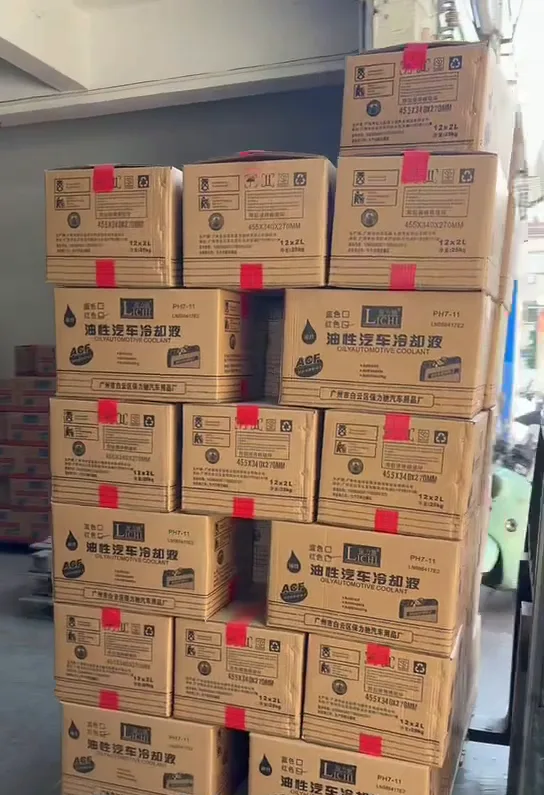
The picture makes the trade-off visible. Those cartons carry more packaging cost than a bladder, but each one is a self-contained, labelled, traceable unit with a batch code on the box. If a customer opens one and finds a problem, the other units on the pallet are still clean evidence. A bulk shipment has no equivalent small unit: once the valve is opened, the entire lot shares whatever condition the bladder and the receiving tank are in. That is the price you pay for the packaging saving, and it is worth paying only when your downstream handling is disciplined.
Contamination and water: the risk that never appears on a quote
This is the part of the bulk decision that a price sheet cannot show. A drum is sealed at the plant and stays sealed until your customer breaks it. A flexitank passes through more hands: it is installed, filled, transported, connected to a pump, disconnected and drained. Every connection is a chance for air, moisture, residue or the previous cargo to enter. Coolant is particularly unforgiving of water and ionic contamination — a small amount of the wrong liquid can shift the inhibitor balance and push conductivity up, which is exactly the failure mode a sealed small pack avoids. The inhibitor package that gives a long-life product its service life is a chemistry that assumes the liquid arriving in the engine is the liquid that left the plant.
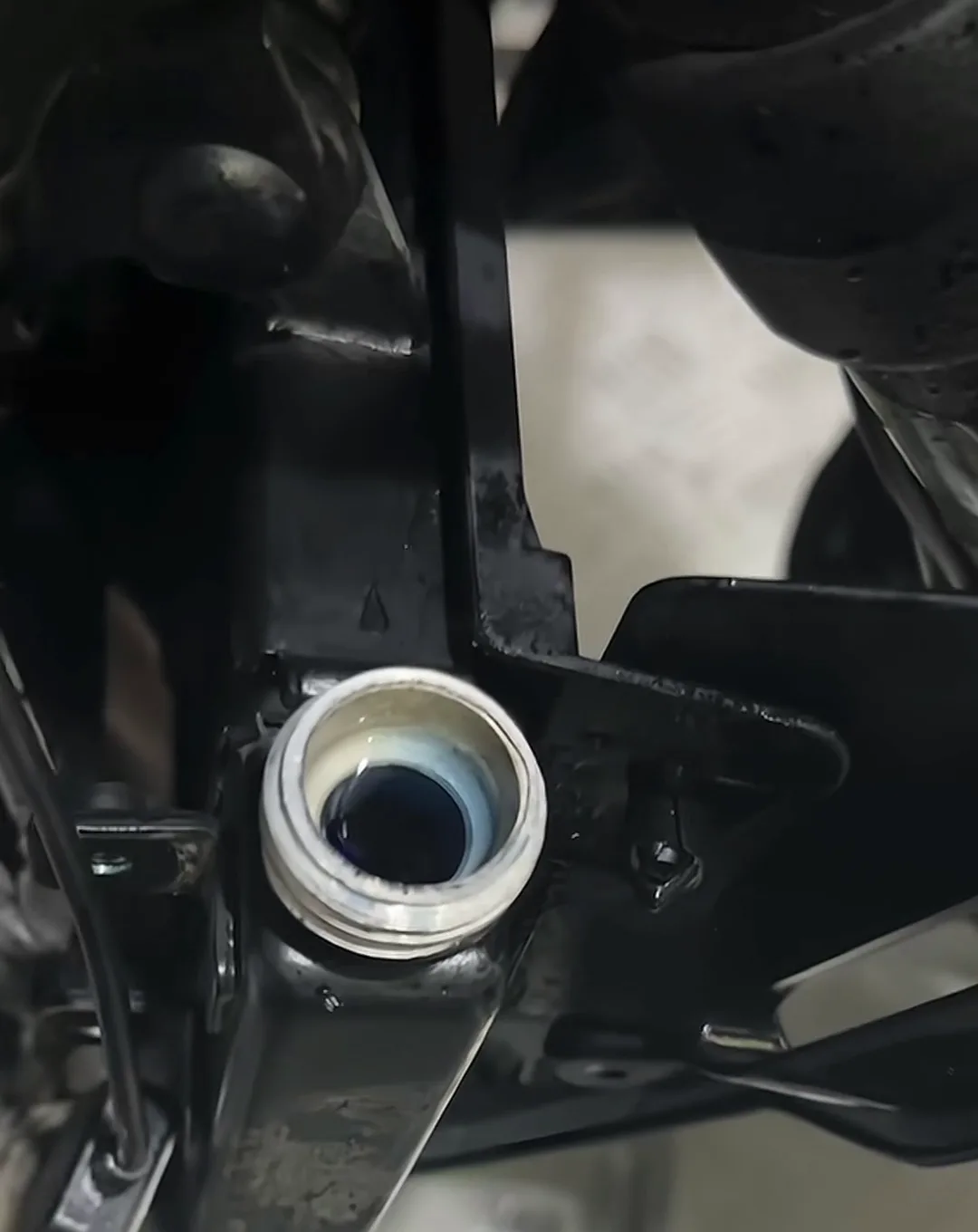
Controlled filling is where a credible bulk chain starts. Ask the supplier to confirm how the bladder or tank was cleaned before filling, what was filled into it immediately before, and whether the fill was metered and recorded against a batch document. A pump line that last carried a different fluid and was not properly cleaned is a contamination story waiting to happen. If the supplier cannot answer these questions in writing, the per-litre saving is not a saving — it is an unpriced risk being transferred to your warehouse.
Before the valve opens: a bulk unloading checklist
A bulk shipment is accepted at the moment of transfer, not when the paperwork is checked at the office. Run this sequence at the valve, with the receiving tank in view, and record each step against the batch document. It takes twenty minutes and prevents most of the disputes that otherwise surface weeks later.
- 1Confirm the container and seal numbers against the packing list before anything is connected; photograph the seal in place.
- 2Ask for the batch code, production date and the grade that was filled, and match them to the bill of lading and the TDS.
- 3Inspect the outside of the bladder or IBC and the receiving tank for residue, odour, water or a previous product.
- 4Draw a sample from the receiving tank before transfer if it is empty, then again from the first liquid through the valve.
- 5Measure conductivity and pH on those two samples with a pen and strips; a jump between them points to a dirty line or tank.
- 6Use a refractometer after the liquid reaches ambient to check glycol concentration against the grade on the document.
- 7Retain a sealed sample from mid-transfer, labelled with date, batch and container number, as the reference for any later claim.
- 8Photograph the connection, the valve, the receiving tank and the retained sample together, then sign the unloading record.
Handling, shelf life and the paperwork to demand
Bulk changes the storage clock as well. A sealed drum has a stated shelf life you can read on the label; a bulk tank in a depot has a clock that starts when it was filled, not when it arrived at your door. Ask for the manufacturing date and the stated shelf life for the exact lot, and rotate by that date, not by delivery date. Keep bulk stock in a controlled temperature band and away from direct sun — the same heat-exposure rules that apply to a container of cartons apply to a tank, with less packaging to buffer the change. Never blend a fresh batch into a partly used tank without recording it, because from that moment the tank no longer corresponds to any single batch document.
- Batch production date, stated shelf life and the grade filled, all tied to one lot number.
- A TDS ready to download for that grade, with the measured freeze point and boiling point stated by grade.
- MSDS on request, in a language your receiving team can read.
- A written statement of what the tank or bladder carried before this lot and how it was cleaned.
- A metered fill record and a retained-sample agreement naming who stores the reference and for how long.
- An arrival acceptance rule: which readings trigger a hold and who performs a re-test.
A decision worksheet: should you go bulk at all?
Answer the following honestly. Bulk is not an upgrade that every importer should buy; it is a format that rewards a specific operating profile and punishes the absence of one.
| Question | Drums remain the better choice if... | Bulk starts to make sense if... |
|---|---|---|
| Annual volume of one grade | Below a few containers a year | You move the same grade continuously at high volume |
| Unloading setup | You rely on manual handling or a pallet jack | You have a pump, valve and a clean dedicated tank |
| Customer mix | Many small customers with varied grades | Few large customers on one specification |
| Sampling discipline | No one is trained to draw and retain a sample | Your team records samples at every transfer |
| Claim tolerance | One affected unit is your worst case | You can hold an entire lot without cash-flow pain |
| Storage | Outdoor or uncontrolled space | Covered, temperature-banded storage |
Five expensive mistakes in a bulk decision
- 1Comparing price per litre without adding unloading equipment, sampling labour and the cost of holding a whole lot.
- 2Assuming a flexitank is sealed like a drum. It is filled and drained through connections, and those connections are the risk.
- 3Accepting 'same grade' verbally. Ask for the measured freeze point and boiling point and the batch document behind them.
- 4Mixing a top-up into a partly used tank and losing the link between the liquid and any single batch record.
- 5Skipping the retained sample. In a bulk claim it is the only evidence that can separate product from handling.
FAQ: quick answers for the receiving team
Is bulk coolant always cheaper per litre?
On the product price line, usually yes. Delivered and accepted, only if you already have the unloading gear, the sampling discipline and the storage to make the saving real. Add equipment, labour and risk exposure before you compare.
Can a flexitank carry more than one grade?
Not as a sound practice. One bladder means one grade and one batch identity. Mixing grades inside a bulk container destroys traceability and defeats the very reason bulk is cheap — a single, uniform lot. If you need several grades, a mixed container of drums is the cleaner option.
How do I keep evidence from a bulk shipment?
Draw samples at three points: the receiving tank before transfer if empty, the first liquid through the valve, and the middle of the transfer. Retain the middle sample sealed and labelled with batch and container number. Photograph the connection and tank with the sample in frame.
Does bulk change the service interval?
No. Our published long-life claim is five years or 300,000 km regardless of pack format. What changes is the evidence chain: in bulk you must protect the liquid from contamination at every transfer so that the delivered product still matches the specification the claim was made on.
Where to start
Start with the six-question worksheet, not with the price per litre. If your volume is high, your grade is stable and your unloading is disciplined, bulk is worth costing properly. If any of those is weak, small packs and drums buy you traceability and a much smaller problem when something goes wrong. Tell us the grade, the annual volume, the destination port and what unloading equipment you have, and we will confirm the current pack options, specifications, documents and batch traceability for that route. MSDS on request, TDS ready to download; we do not publish prices here and we do not claim certifications we do not hold.
Ask about bulk vs drum supply
Tell us your grade, annual volume and destination port. We will confirm the pack options, documents and traceability before you choose a format.