A fleet manager calls with a familiar story: the truck ran fine last week, and now the temperature gauge climbs in traffic. The workshop wants to replace the coolant. The parts supplier says it is the thermostat. Both are plausible, and both are expensive to guess wrong about. A drain-and-fill on a vehicle with a stuck thermostat wastes a batch of fluid and buys a few days of relief. A thermostat replacement on a vehicle with a contaminated cooling system leaves the real cause in place until the radiator or the cylinder head follows. This guide gives mechanics, fleet operators and importers a repeatable way to tell the two paths apart before anyone orders parts.
The distinction matters far beyond one repair bill. For a distributor, repeated 'bad coolant' complaints in one market can poison a product's reputation even when the fluid was never at fault. Knowing which questions to ask, which readings to record and which evidence to request turns a heated phone call into a short diagnostic conversation. Nothing here needs a laboratory: a cold-start observation, a hand on two hoses, a pressure test and one fluid sample answer most of it.
The same complaint, two different failures
The thermostat is a mechanical valve. A wax element expands as the engine warms and opens a path to the radiator; when it cools, a spring closes it again. If it sticks closed, circulation stays locked inside the engine and heat has nowhere to go. If it sticks open, the engine never reaches its intended operating temperature, warm-up takes too long and the cabin heater underperforms. Neither behaviour is caused by the fluid, and neither is repaired by changing it.
Coolant does a different job. It carries heat from the jacket to the radiator, and its inhibitor package protects aluminium, iron, copper and solder joints from corrosion while it does so. Fluid that has been over-diluted, mixed with the wrong chemistry, contaminated with oil or combustion gas, or simply kept past its service life still circulates — but it carries less heat safely and it can leave scale and corrosion behind. That failure shows up under load and over time, not necessarily on the first cold morning.
| Observation | Stuck thermostat | Degraded coolant | Why it matters |
|---|---|---|---|
| First ten minutes from cold | Stuck open: gauge barely moves, warm-up very slow | Warm-up roughly normal | Warm-up behaviour is the cheapest single clue |
| Gauge in traffic | Stuck closed: climbs quickly once warm | Climbs under sustained load, often with heater output changes | When the rise happens is more useful than the peak number |
| Upper radiator hose | Stays cold long after the engine is warm if the valve is closed | Warms at roughly the expected time | A hand on the hose tests the valve's actual effect |
| Cabin heater | Weak or cold with a stuck-open valve and low engine temperature | May blow unevenly if the core is scaled | Heater behaviour separates flow from fluid condition |
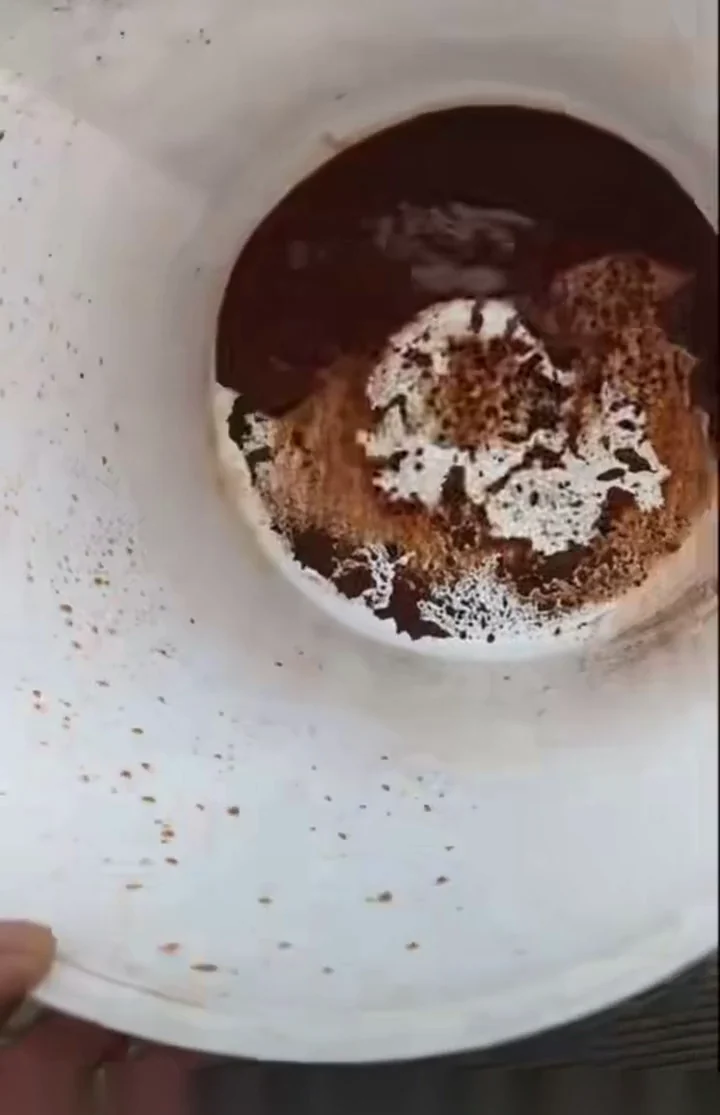
| Reservoir appearance | Usually clean and at the correct level | Discoloured, oily, foamy or carrying sediment | Only fluid faults leave evidence in the bottle |
| Cold pressure test | Holds pressure unless a separate leak exists | May fall if corrosion has opened a leak path | Rules out the system before blaming the contents |
Read the table as a set of tendencies, not a verdict. One odd signal is not a diagnosis; a pattern across three or four rows is. The single most useful habit is to observe the vehicle cold, before anyone opens the cap or tops anything up. Once a system has been refilled, the evidence is changed and the first ten minutes of the story are gone.
Path A — the thermostat that will not do its job
A thermostat stuck closed behaves like a blocked route. The water pump keeps circulating liquid through the engine jacket, but the radiator is largely out of the circuit. Idling may look acceptable for a while; a hill, a loaded truck or a hot afternoon pushes the gauge up quickly. The upper radiator hose stays surprisingly cool while the engine side is hot. Fit a new thermostat and the symptom disappears — the fluid was innocent.
A thermostat stuck open is quieter and often misdiagnosed. The engine takes far longer to reach its normal band, the gauge sits low in cold weather, and the cabin heater cannot supply enough heat even though the blower works. Drivers often report poor fuel economy along with the cold cabin. This pattern overlaps with heater-circuit complaints, so it is worth reading the companion guide on cold cabin heat with a normal gauge before deciding which part to replace.
A ten-minute warm-up observation
- 1Start from a genuinely cold engine and note the ambient temperature. A warm engine cannot show you a warm-up curve.
- 2With the heater on full hot and the blower low, watch the gauge and time how long it takes to reach its normal band.
- 3At the same moment, feel the upper radiator hose. It should stay cool at first and then warm noticeably when the valve opens.
- 4Compare the heater outlet air with the gauge. A hot gauge and cool vents point at the heater circuit; a low gauge and cool vents point at the thermostat or the control side.
- 5Listen for the cooling fan. A fan that runs from cold start can mask a stuck-open valve by adding noise and airflow without raising engine temperature.
- 6Stop the test if the gauge rises past its normal band. Do not open a hot cap to 'check the flow' — a pressure release can scald.
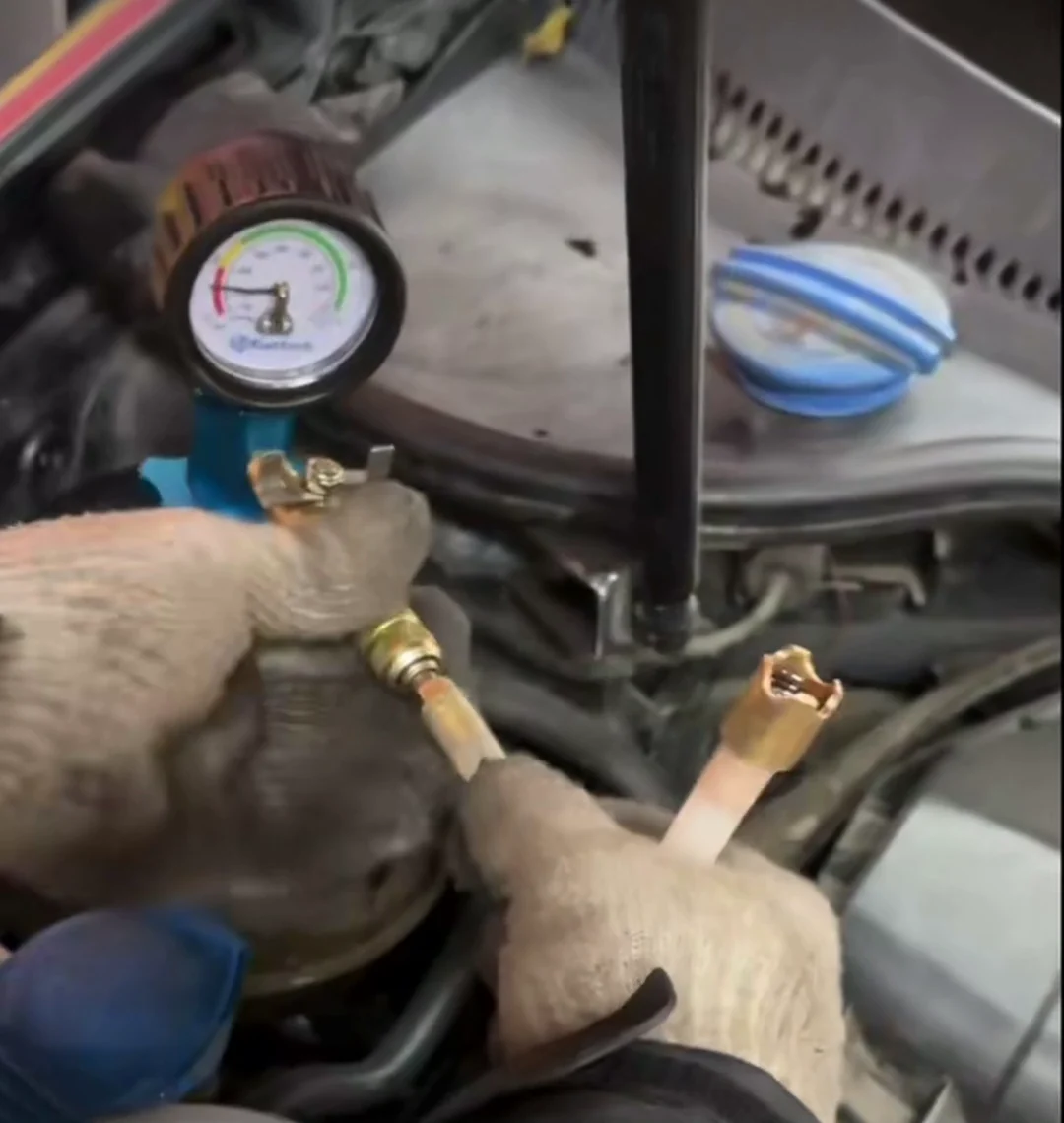
When the pattern still is not clear, a cold pressure test settles the mechanical side. A hand pump on the filler neck, pumped to the pressure marked on the cap, should hold rather than fall steadily. A falling needle points at a leak path — a hose, a cap seal, a radiator joint — and it is a system problem before it is a fluid problem. The gauge in the photograph is a workshop tool, not a claim about a particular product.
Do not stop at the thermostat if the test result is odd. A faulty temperature sender, a relay stuck on the fan, an air pocket after a recent refill and a partially blocked radiator can all imitate a thermostat fault. Each has a different fix, and none of them is improved by draining good coolant. Record the gauge behaviour, the hose temperature and the pressure reading together; that three-line note is worth more than a verbal recollection a week later.
Path B — coolant that has lost its protective margin
Fluid-related overheating rarely arrives as a single dramatic event. Over-dilution lowers the glycol content and therefore the reserve against both freezing and boiling. A concentrate diluted with hard or conductive water brings chloride and scale into the loop. A fluid mixed with a different inhibitor chemistry can form gel and drop solids. And a long-life product kept well beyond its service interval may still look like coolant while its inhibitor package has been consumed.
The result is a system that loses efficiency where it matters most. Thin scale on tube walls insulates; corrosion product in a heater core restricts flow; a depleted package allows pitting that opens a seep. The engine may behave normally at idle and then climb when the load rises, because that is when the heat rejection margin is actually tested. A driver who only remembers 'it does it on the highway' is usually describing this pattern.
What a fluid test can and cannot prove
A refractometer or a hydrometer estimates concentration, which is a useful proxy for freeze protection when the base fluid is known. pH strips and a conductivity pen can flag a fluid that has drifted, been diluted with unsuitable water or been contaminated. None of these tools proves the remaining life of the inhibitor package. For that, a batch COA for a new product, a retained sample for an in-service product and, where a dispute exists, a controlled laboratory test are the defensible evidence.
| Tool or document | What it answers | What it cannot prove |
|---|---|---|
| Refractometer | Approximate glycol concentration at the time of the test | Inhibitor health, contamination, base-fluid identity |
| pH strips | Whether the fluid has drifted acidic or alkaline | Remaining service life or exact formulation |
| Conductivity pen | Whether ions from water or contamination are present | Which ion caused the reading |
| Batch COA | What the producer measured for that batch at release | How the fluid was stored or diluted afterwards |
| Laboratory test | A defensible result on a sealed sample | Who caused the fault in the vehicle |
Remember that freeze grade is a specification, not a repair. A colder grade does not add inhibitor life and it does not unblock a radiator. Conversely, a product with a honestly labelled 0 °C grade is the right choice for a tropical market where frost never occurs; buying a colder grade for that climate changes cost without changing the failure being investigated. Match the grade to the climate first, then investigate the fault.
A decision sequence that avoids the wrong repair
- 1Write down the symptom before touching anything: cold or hot start, time to normal gauge, load condition, heater output.
- 2Check the reservoir at cold rest. Correct level and clean fluid weaken the fluid-fault theory; low level, foam or sediment strengthen it.
- 3Run the ten-minute warm-up observation and feel the upper hose when the gauge should be opening the valve.
- 4Compare heater output and gauge behaviour. Cold vents with a low gauge is a different branch from cold vents with a normal gauge.
- 5Perform a cold pressure test and inspect the cap, hoses and joints. Fix leaks before evaluating the fluid's condition.
- 6Measure concentration with a refractometer and record the reading with the liquid temperature; use pH and conductivity as supporting clues only.
- 7Take a sample from the bottom of the system into a clean container and label it with date, vehicle, batch code and odometer.
- 8Only then choose the repair: thermostat and hardware if the mechanical branch is proven; flush and correct refill if the fluid branch is proven; escalate with the sealed sample if neither is clear.
That order is deliberate. Mechanics who skip straight to step seven always find something to blame in the bottle, because a used sample is never pristine. Mechanics who skip straight to step five fit new parts to a system whose chemistry is still wrong. The sequence protects the workshop, the fleet and the supplier from three different kinds of wasted money.
Why this matters to importers and distributors
In an export market, the cost of a misdiagnosis travels further than the single vehicle. A distributor who teaches workshop customers to check warm-up behaviour and pressure first will sell fewer unnecessary fluid changes, but will be trusted when a genuine fluid problem appears. That trust is worth more than one drum. It also makes claim files much easier: a sample with a gauge note and a pressure reading has a story, while a bottle of dirty liquid on its own proves very little.
- Publish a short warm-up and pressure-check card with every concentrate you sell, in the language of the destination market.
- State the dilution water specification and the freeze grade by climate, so that over-dilution is not mistaken for a defective batch.
- Offer a basic toolkit list — refractometer, pH strips, conductivity pen — and explain clearly which conclusion each tool does not support.
- Define a claim file in the distribution agreement: sealed sample, batch code, gauge and pressure notes, photos of the reservoir and hose condition.
- Keep TDS and batch COA accessible for your customers. TDS are ready to download; MSDS are available on request.
None of this requires a distributor to become an engine specialist. It requires agreeing, in writing, what evidence counts. That agreement is the difference between a market that says 'your coolant failed' after every hot summer and a market that can describe exactly which vehicles, which loads and which readings preceded the complaint.
Five questions we get asked
Can a stuck thermostat ruin the coolant?
Not directly. A stuck-closed valve raises operating temperature and can accelerate the ageing of every under-hood component, including the fluid, but the repair is the valve and a system inspection. If the fluid is otherwise within specification, replacing it is not what fixes the fault.
Can bad coolant make a thermostat stick?
Indirectly, over a long period. Scale and corrosion product from years of poor dilution or depleted inhibitors can deposit around the valve and housing, restricting its movement. In that case a new thermostat alone is a short-term repair: the system needs a clean-out and a correct refill, and the reason for the contamination should be identified.
Will a colder freeze grade stop the overheating?
No. Freeze grade describes winter protection, not heat-transfer capacity or inhibitor strength. A -45 °C product is chosen for severe cold; in a tropical market its extra glycol content changes cost and viscosity without addressing a stuck valve or a scaled radiator. Choose the grade for the climate, then fix the fault separately.
What do the boiling-point numbers actually mean?
They describe atmospheric boiling margin by freeze grade: 0 °C grades around 101 °C, -35 °C grades around 109 °C, and -45 °C grades around 110 °C, with the line spanning 101–110 °C. A rising gauge on a cold start is not a boiling-point problem. Those numbers belong on the technical sheet, not in a shortcut diagnosis.
When should the fluid be changed?
Our external guidance for conventional long-life coolant is 5 years or 300,000 km under normal use. The clock can shorten under severe duty, but we do not publish a shorter interval as a claim. Whatever the interval, a system that has overheated because of a mechanical fault should be inspected and refilled with the correct grade before it returns to service.
The short version
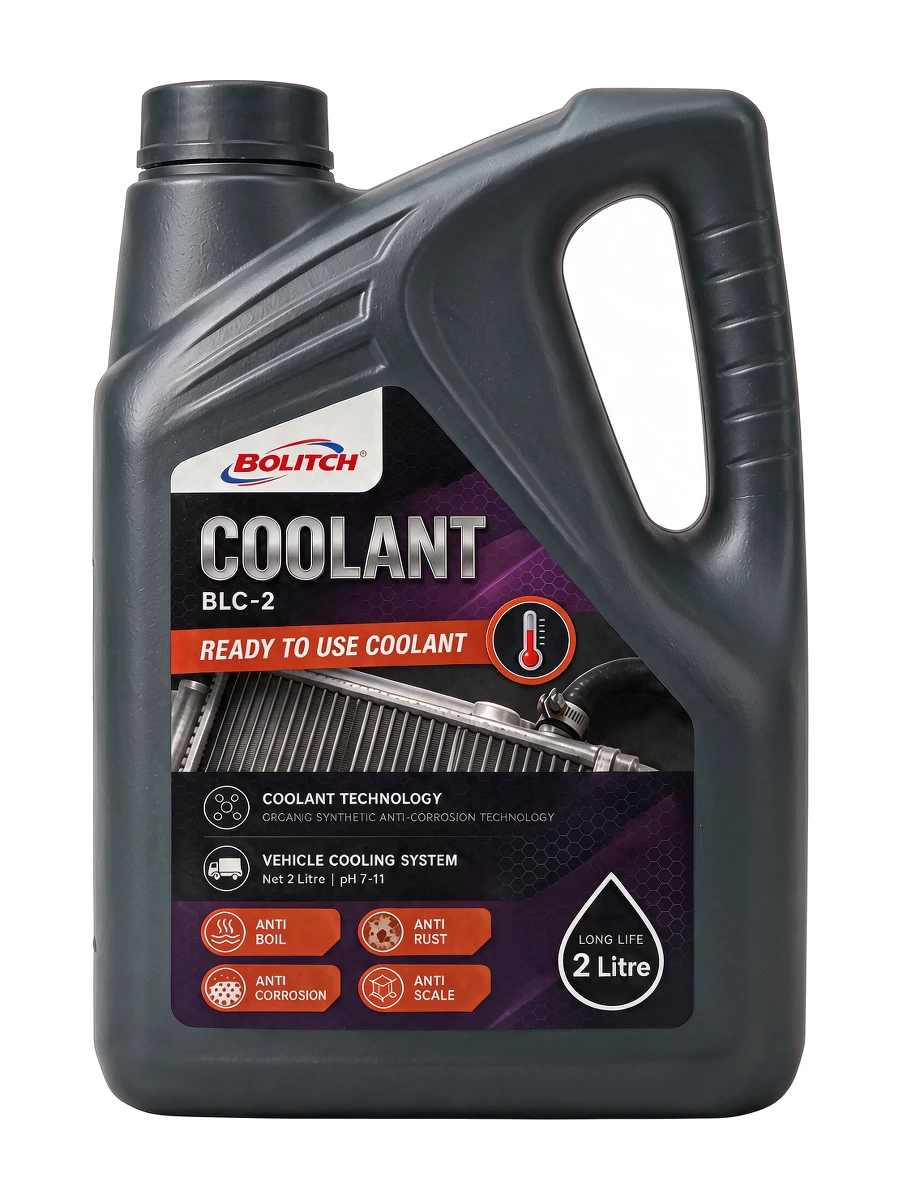
A stuck-open thermostat gives you a slow warm-up and a cool cabin. A stuck-closed thermostat gives you a fast climb once warm and a cool upper hose. Degraded coolant leaves evidence in the reservoir and under load, not just on the gauge. Observe cold, feel the hose, pressure-test the hardware, then test the fluid — in that order. If you want coolant with published data by grade, clear dilution and refill guidance, and a distribution package that helps your workshops diagnose before they order parts, the BOLITCH range and TDS are a sensible place to start.
Ask for grade data and workshop guidance for your market
BOLITCH supplies conventional coolant as concentrate and ready-to-use in 1 L, 2 L, 4 L, 9 L and 10 L packs and bulk drums for distributors, importers, private-label buyers and fleet operators, with freeze grades for tropical, temperate and severe-cold markets. TDS are ready to download and MSDS are available on request. Tell us your climate, pack sizes, monthly volume and whether you buy concentrate or ready-to-use, and we will send measured freeze-point and boiling-point data by grade, dilution and refill guidance, a sample batch COA and a quotation for your first container. Visit bolitch.com or email sale@bolitch.com.