A driver calls with a problem that sounds worse than it is: the heater blows cold, yet the temperature gauge sits exactly where it always does. The engine is not overheating. There is no warning light, no steam, no smell. On a cold morning that combination is miserable, and it is easy to misdiagnose — the workshop replaces a thermostat, the fleet manager blames the coolant, and the vehicle comes back with the same cold vents. The reason this fault wastes so much time is that two completely different systems share one liquid. The engine cooling loop and the cabin heater are the same circuit, but the symptom points at the smaller, quieter half of it. This guide is written for mechanics, fleet operators and importers who need a repeatable way to tell heater-circuit faults from engine-cooling faults, and to know which of them a bottle of coolant can actually fix.
We will keep the distinction sharp throughout: a normal engine temperature with cold cabin air is a different problem from an overheating engine. They share parts, but the diagnostic path is not the same. The sequence below starts with checks that cost nothing, moves to flow tests, and only then points at the coolant itself.
First, separate the two problems: engine temperature versus cabin heat
The temperature gauge reads the engine, not the heater. If it reaches its normal band and stays there, the engine side of the circuit — water pump, radiator, fan, thermostat — is broadly doing its job. Cold air from the vents means heat is not reaching the heater core, or is not being carried into the cabin. Treat the gauge as your first branch point.
| Signal combination | What it usually means | Where to look first |
|---|---|---|
| Gauge normal, vents cold | Heat is not reaching or leaving the heater core | Heater circuit: air lock, flow, controls |
| Gauge high, vents cold | Engine is overheating; heater may be starved by low level or air | Coolant level, cap, fan, radiator, pump |
| Gauge normal, vents warm then cold | Intermittent flow or air moving through the core | Air pocket, low level, failing pump impeller |
| Gauge normal, one side cold | Air or flow imbalance, or a control/duct fault | Blend door, heater valve, core restriction |
That table is why the phrase “blows cold but the engine is fine” is so useful: it hands you a short list. An overheating engine with cold vents is an emergency — stop and fix the cooling system. A normal-temperature engine with cold vents is a comfort and flow problem, and that is what the rest of this guide addresses.
How the heater circuit works — and why it fails first
Hot coolant leaves the engine and takes two paths. The main path runs through the radiator to dump heat to the outside air. The smaller path runs through the heater core, a compact radiator tucked inside the dashboard, where the blower fan pushes cabin air across its fins. The driver's temperature control either blends air around the core or opens and closes a valve that lets coolant through it. The cabin warms only when three things happen together: the core is hot, coolant is actually flowing through it, and air is being pushed across it.
The heater core is usually the first component to show a problem because it sits at the end of the flow path and has the narrowest passages. It is the highest point in many circuits too, which makes it a favourite place for trapped air. Anything that reduces flow — a low level, an air pocket, a partially blocked core, a weak pump — shows up at the vents before it shows up on the gauge. That is why a cold heater can be the earliest warning of a cooling-system fault that has not yet become an overheat.
Cause 1 — trapped air and an under-filled system
This is the most common cause after any recent service. Draining and refilling coolant leaves air in the cylinder head, the upper hose and the heater core. If the level is not topped up as that air works its way out, an air pocket sits in the core and hot coolant simply cannot enter. The gauge still reads normal because the engine jacket is full; only the branch to the cabin is starved.
- 1Check the reservoir at cold rest — it should sit between MIN and MAX, not hovering on MIN.
- 2Start the engine from cold with the heater set to full hot and the blower on low.
- 3Watch the level as the engine warms. A noticeable drop means air is leaving the system; top up to the mark each time.
- 4Squeeze the upper hose gently and watch for bubbles in the reservoir — a sign of continuing air or a small leak drawing air in.
- 5Once the thermostat opens and the level is stable, fit the cap and road-test with the heater on full.
Vehicles with a bleed screw or a specified bleed procedure should follow it; the point of a vacuum fill is precisely to remove air before the engine is started. If the level keeps dropping after two heat cycles, stop topping up and look for the leak — a system that repeatedly loses level is telling you something, and refilling it again only buys time. (For the leak locations themselves, see the companion guide on coolant loss with no visible leak.)
Cause 2 — a restricted or scaled heater core
If the level is correct and there is no air, the next suspect is flow through the core itself. Over years, scale, corrosion product and gel from incompatible coolants collect in the narrow heater passages. The engine loop can still circulate well enough to hold a normal temperature while the heater core, which needs far less flow to be starved, runs cool. A core that is partly blocked often feels warm at the inlet hose and cool at the outlet — a temperature difference you can check with a hand or an infrared thermometer.
| Check | Healthy reading | Points to |
|---|---|---|
| Inlet vs outlet hose temperature | Both hot, outlet only slightly cooler | Core flowing |
| Inlet hot, outlet cold | Large temperature drop across core | Restricted or scaled core |
| Both hoses cold | No coolant reaching the core | Air lock, closed valve, blocked hose |
| Both hot, vents still cold | Coolant fine; air or control side at fault | Blend door, blower, ducts |
A restricted core is a strong argument for a proper system flush rather than another top-up. Flushing removes the material that is blocking the passages; adding fresh coolant to a dirty system does not. This is also where the quality of the coolant matters over the long term: a well-formulated product with a stable inhibitor package keeps corrosion product from forming in the first place, while a cheap or diluted one quietly creates the debris that plugs the core two winters later.
Cause 3 — the coolant itself: degraded, over-diluted or the wrong type
Coolant age rarely causes a sudden cold heater on its own, but it is the underlying reason many heater cores restrict early. Spent inhibitor packages allow corrosion; heavy tap-water dilution leaves scale; mixing incompatible technologies can drop silicates or phosphates out of solution and form a gel that settles in the narrowest passage — the heater core first. If the fluid in the reservoir is brown, murky, slimy or smells wrong, treat it as evidence, not as an inconvenience.
Concentration matters as well. A concentrate that was mixed far too thin gives weaker corrosion protection and a lower boiling margin. Our conventional range is stated honestly by freeze grade: a 0 °C tropical grade boils at about 101 °C, a -35 °C grade at about 109 °C and a -45 °C grade at about 110 °C, so the whole line sits in a 101–110 °C band depending on grade. Those numbers describe the coolant's own safety margin; they do not change the fact that a cold heater with a normal gauge is almost always a flow problem. Use them when you are deciding whether the fluid in the system is still fit to keep circulating, not as a diagnosis of the heater fault.
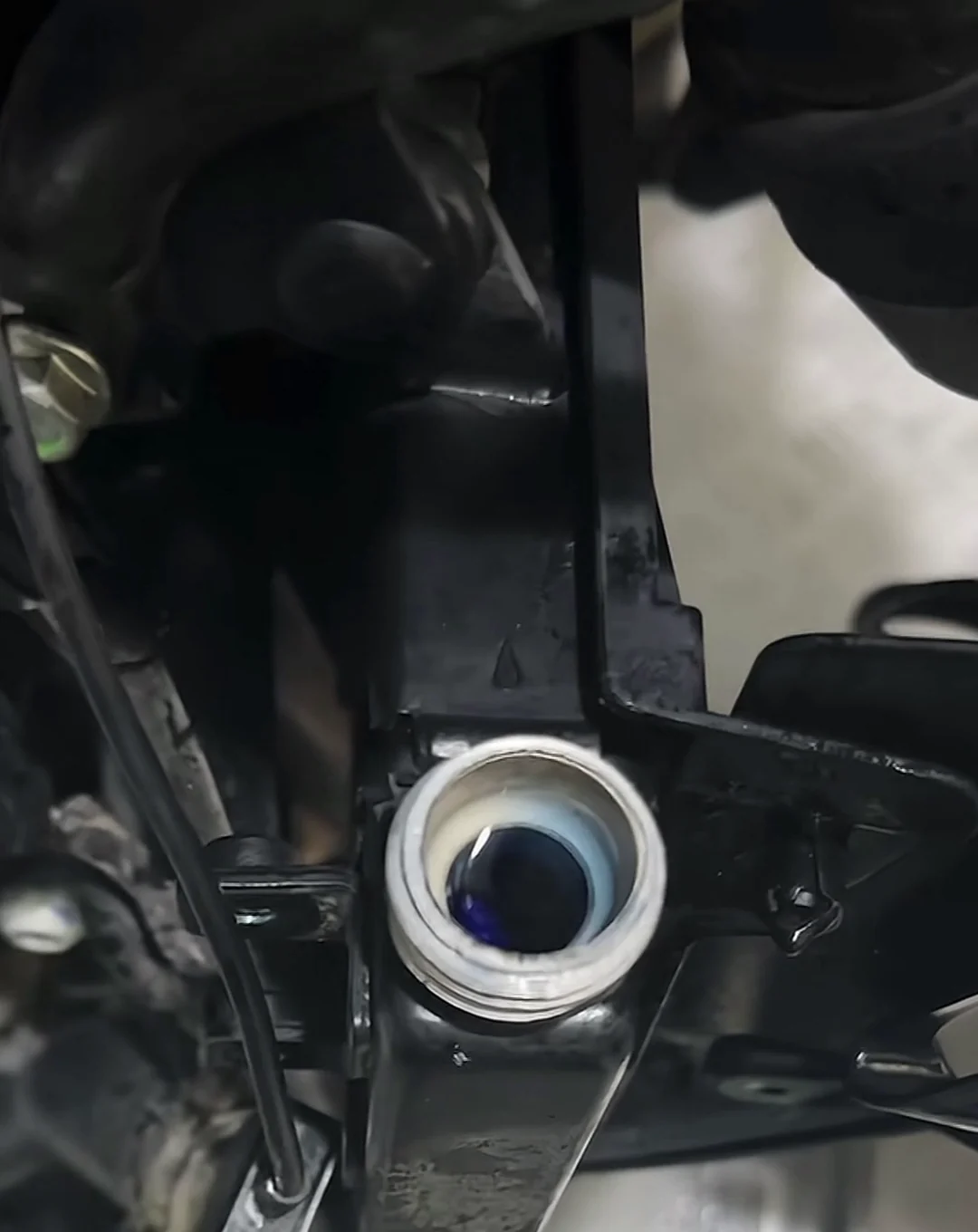
Cause 4 — faults that are not the coolant's fault at all
A surprising share of “cold heater” complaints come from the control and air side, and no amount of coolant will fix them. If both heater hoses are hot but the vents stay cold, the coolant is doing its job and the problem is downstream.
- Blend door or actuator: the flap that mixes hot and cold air is stuck or its motor has failed, so the air never crosses the hot core. Often one side blows warm and the other cold.
- Heater control valve: on systems that use one, a stuck-closed valve keeps coolant out of the core even though the rest of the circuit is hot.
- Blower fan or resistor: weak airflow across a perfectly hot core feels like weak heat; check fan speed on all settings.
- Blocked ducts or a cabin filter clogged solid: air cannot reach the vents, which mimics a heater fault from the driver's seat.
- Thermostat stuck open: the engine may run slightly cool, so there is less spare heat for the cabin — usually with a gauge that sits lower than normal rather than truly normal.
This is why the hose-temperature test is worth two minutes. Hot hoses with cold air move the investigation out of the cooling system entirely and save a needless drain and fill.
A twenty-minute diagnosis sequence in the yard
Run these steps in order. Each one either eliminates a cause or narrows the next step; skipping ahead is what turns a twenty-minute job into a parts cannon.
- 1Confirm the gauge. Normal band = heater-circuit problem; high = stop and treat as an overheat.
- 2Check level at cold rest and inspect the reservoir and cap for residue or a low mark.
- 3Set heater to full hot, blower low, start from cold and watch the level as the engine warms; top up for any drop.
- 4Feel both heater hoses once the engine is warm: both hot, inlet hot/outlet cold, or both cold each lead somewhere different.
- 5Check airflow: fan speeds, cabin filter, and whether air changes temperature when you move the temperature control.
- 6Inspect the fluid: colour, clarity, smell and any gel or sediment; note whether service history says the coolant was changed on schedule.
- 7If air keeps returning, pressure-test the system cold and look for external seepage before refilling again.
For importers and distributors: what this fault means for your range
Heater complaints travel upstream as warranty claims and phone calls to the distributor. A buyer whose fleet reports cold cabins in winter will not care whether the root cause was air, a valve or a blocked core — they will ask whether the coolant you supplied was to blame. The way to protect your position is to sell a product and a message that reduce the odds of the coolant-related causes, and to keep the evidence that separates them.
- Supply a stable, well-inhibited coolant and state the freeze grade honestly; the core is the first place poor compatibility shows up.
- Include clear dilution and refill guidance with every concentrate — over-dilution and poor bleed practice create a large share of cold-heater tickets.
- Keep batch COA and TDS documents so you can show what was in the bottle when a claim arrives. TDS are ready to download; MSDS are available on request.
- Teach the hose-temperature test to your workshop customers; it prevents unnecessary drain-and-fill jobs and protects your reputation.
- Related reading in this library covers flushing, coolant loss with no visible leak, pressure caps and water-pump cavitation — link them in your own technical notes.
Four questions buyers ask most
Can low coolant make the heater blow cold while the engine stays normal?
Yes. The heater core sits high in the circuit, so a slightly low level can starve it while the engine jacket remains full and the gauge reads normally. Top up to the mark, bleed properly, and watch whether the level returns.
If both heater hoses are hot, is the coolant fine?
For the heat-transfer path, yes — hot hoses mean hot coolant is reaching and leaving the core. Look instead at the blend door, heater valve, blower and ducts. Changing the coolant in that situation rarely changes anything.
Does a heater core blockage mean I need a different coolant?
Not by itself. A blockage usually reflects age, dilution or a past incompatible mix. Flush the system properly and refill with a correctly specified product; switching brands without a full clean-out can make the mixing problem worse.
Should I use the boiling-point number to judge the heater fault?
No. The 101–110 °C band by freeze grade describes boil-over margin, not cabin heat. A cold heater with a normal gauge is a flow or control issue. Use the boiling-point data when you assess whether the coolant is still serviceable, not to explain the cold vents.
The short version
Normal gauge plus cold vents means the heater circuit, not the engine. Start with level and trapped air, then read the two heater hoses, then check the control and air side, and only then question the coolant. Most cases are fixed with a careful top-up and bleed, a proper flush, or a control-component repair — not with a guessed thermostat or a needless coolant change. If you want a coolant that stays stable in the system and clear technical guidance to sell alongside it, the BOLITCH range and TDS are the place to start.
Ask for coolant data and refill guidance for your market
BOLITCH supplies conventional coolant as concentrate and ready-to-use in 1 L, 2 L, 4 L, 9 L and 10 L packs and bulk drums for distributors, importers, private-label buyers and fleet operators, with freeze grades for tropical, temperate and severe-cold markets. TDS are ready to download and MSDS are available on request. Tell us your climate, pack sizes, monthly volume and whether you buy concentrate or ready-to-use, and we will send measured freeze-point and boiling-point data by grade, dilution and refill guidance, a sample batch COA and a quotation for your first container. Visit bolitch.com or email sale@bolitch.com.