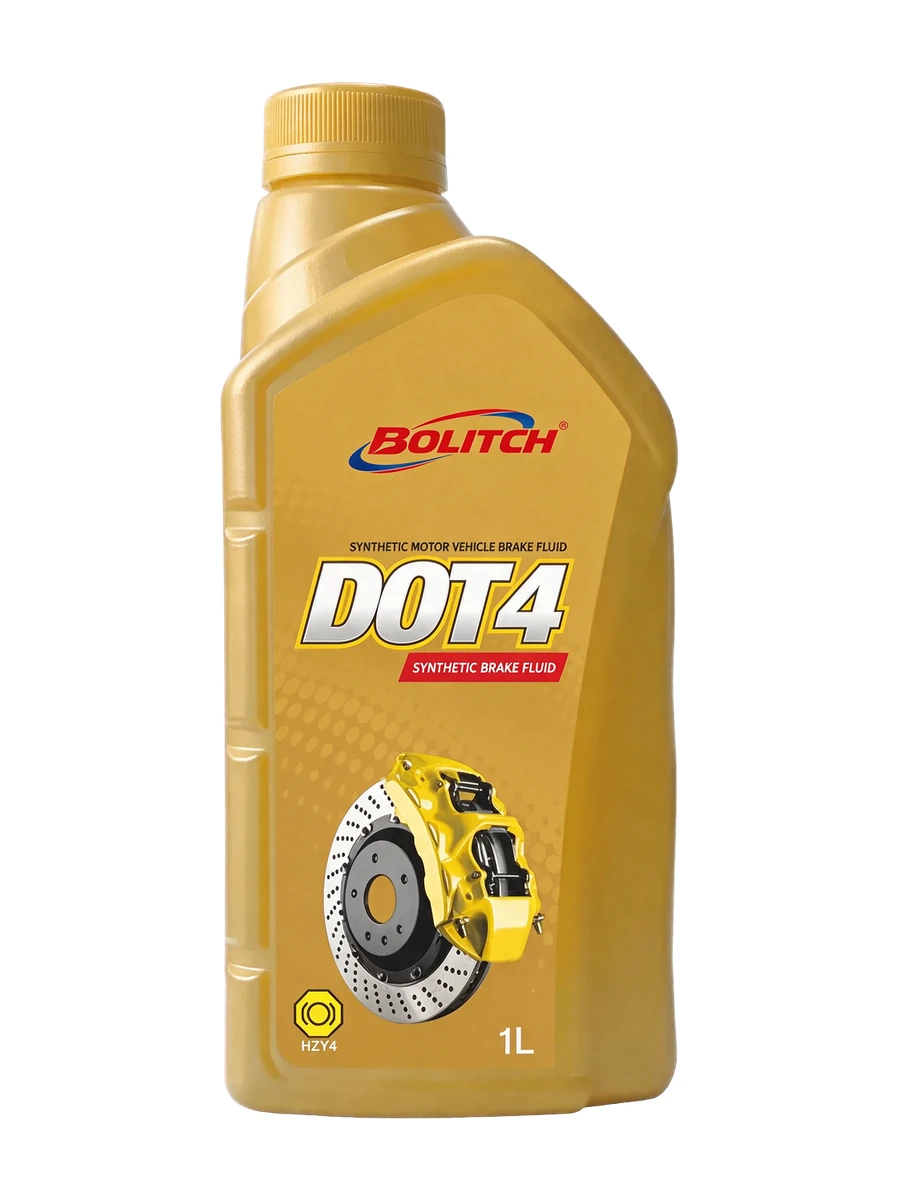
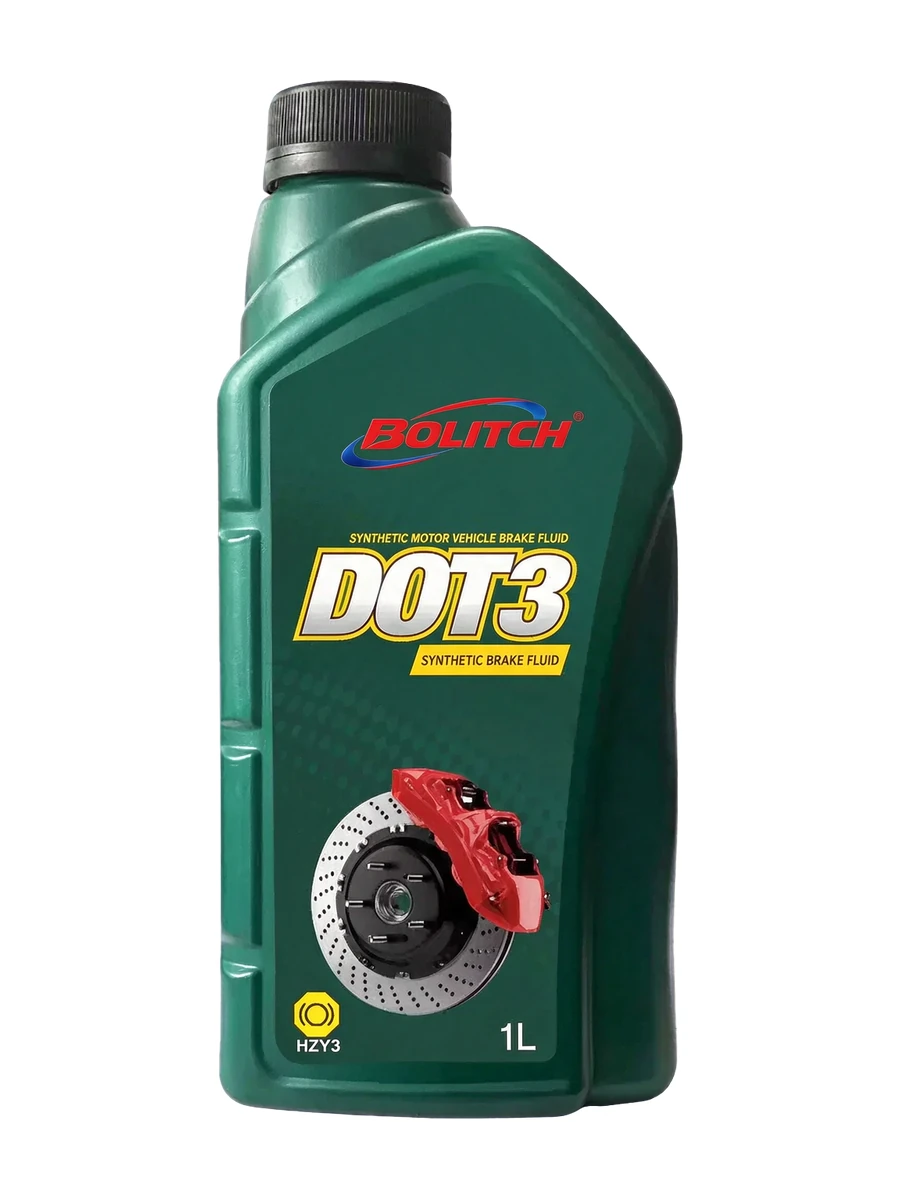
Ask ten importers which brake fluid they sell and you will hear the same answer: DOT 3 and DOT 4. Ask them which pack sizes they sell and you will hear ten different answers — and those answers explain more about their business than the grade does. Brake fluid is bought in three very different ways. A driver walks into a parts shop after a soft pedal and wants one small container he can carry to the car. A workshop buys a carton, keeps it on a shelf and opens one unit at a time for months. A fleet buys by the drum and expects a pump, a storeroom and a person who records batch numbers. The chemistry is the same; the commercial job is not. This guide is for distributors and importers deciding how to split their first order across those three channels without tying up cash in stock that nobody turns.
Start with what is actually available. BOLITCH supplies DOT 3 (BLC-OL-003) and DOT 4 (BLC-OL-004) as 1 kg sealed units, 20 units per carton: 20 kg net and about 21 kg gross per carton, with a stated shelf life of three years unopened. That format is deliberate. It gives the retail buyer a manageable container, gives the workshop a wholesale carton that still fits a shelf, and gives the importer one SKU architecture for both grades. Larger containers are a sourcing conversation rather than a catalogue claim — if your market needs a 5 L can or a drum, ask us to quote it against your volume instead of assuming it is in stock.
Three buyers, three different pack jobs
A pack size is not a bigger or smaller version of the same product. It is a different promise. The retail unit promises convenience and a visible grade mark. The workshop carton promises a predictable cost per service and enough units to survive a busy month. The fleet pack promises continuity: the same grade, the same label, a traceable batch and a container that can be handled safely. If you choose packs only by per-litre price, you will optimise the fleet end and lose the retail shelf, because the shelf is won by facings and quick decisions, not by the lowest unit cost.
| Channel | Who buys it | What they need from the pack | Practical pack | What sells the pack |
|---|---|---|---|---|
| Retail / parts counter | Driver, small garage, walk-in trade | One unit, clear grade mark, easy to carry | 1 kg sealed unit | Visibility, grade clarity, impulse purchase |
| Workshop / service bay | Independent repair shop, 2–10 bays | Consistent cost per job, stock that keeps | Carton of 20 units | Reliable supply, batch traceability |
| Fleet / contract account | Bus, truck and plant operator | Volume continuity, controlled dispensing, records | Cartons or a quoted bulk pack | Price stability, documentation, delivery schedule |
| Private-label buyer | Distributor building its own brand | Label compliance, artwork control, MOQ | Carton-level private label | Lead time, artwork approval, repeatability |
Notice that the table is ordered by who buys, not by how much liquid is in the container. That is the correct sequence. A small workshop with fifteen brake jobs a month has different needs from a retail chain with two hundred facings, even though both may order the same number of cartons. Build your SKU sheet backwards from the buyer: write down who will open the pack, how quickly they will finish it, where it will be stored and who will be blamed if the grade is wrong. Then pick the pack.
The sealed unit is the safety boundary
Glycol-ether brake fluid is hygroscopic: it pulls water out of the air. That single property makes packaging more important here than in almost any other automotive fluid. A sealed 1 kg unit starts life with its specified dry and wet boiling points; the moment it is opened, a clock starts. A larger container opened in a slow workshop can sit half full for months, and the remaining fluid absorbs moisture while it waits. Two smaller sealed units kept closed are a better choice than one large container opened repeatedly. This is why the unit-level label and the closure matter as much as the liquid: grade, batch and handling instructions must be readable on the container the technician actually holds.
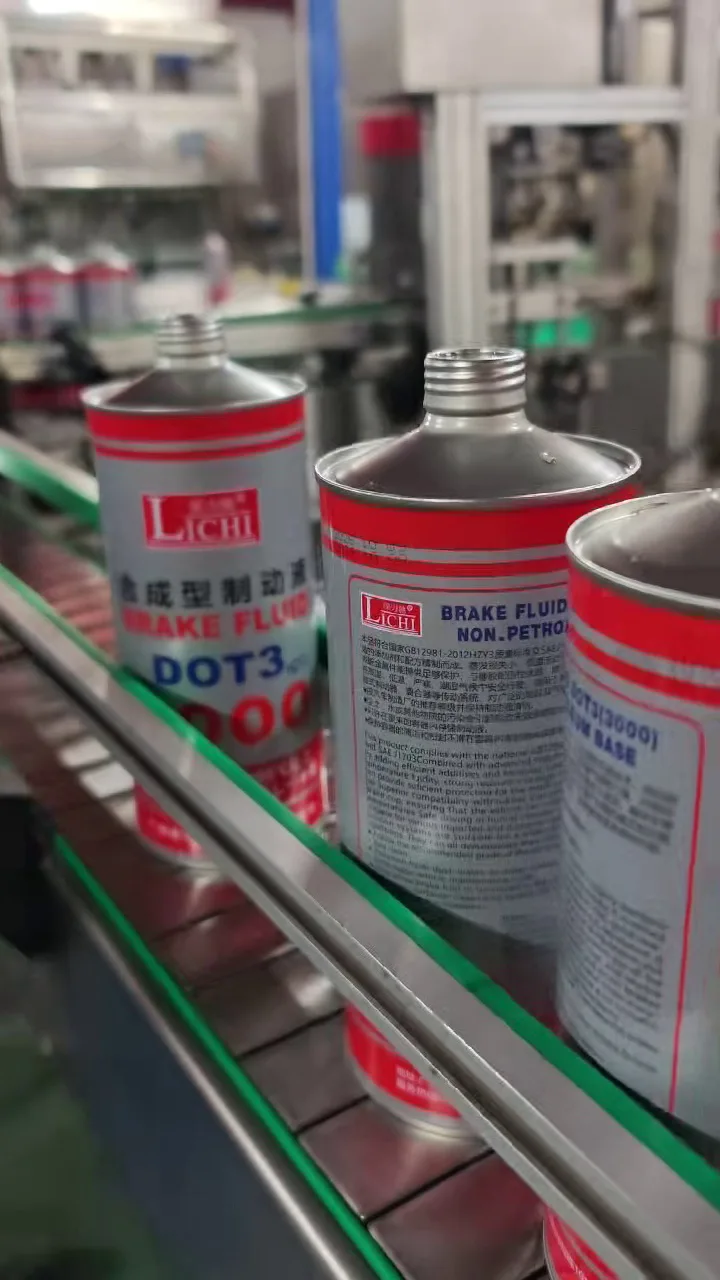
That photograph shows the practical point clearly. The unit is labelled before it leaves the line, while grade and batch information are still tied to a defined production run. When the carton is later opened at a parts counter, the buyer can still see what the container holds. Specify unit-level marking in your purchase order, not just carton marking. Cartons get thrown away; containers get opened, used, and sometimes left on a shelf for the next job.
Why the wrong pack size quietly costs money
Buying too large is the classic mistake. The per-unit price looks better on a drum, so the importer books one, and then discovers that only two workshops in the country can consume it at the rate the moisture clock allows. The drum occupies a pallet, ties up working capital and eventually becomes a discount problem. Buying too small has its own cost: a retail chain that has to hand-wrap twenty single units to satisfy one workshop order will charge you for the labour, or simply refuse the order. Both errors come from treating pack size as a price question instead of a flow question.
- Match the pack to consumption speed: how long will one container stay open? A slow bay needs smaller sealed units, not a bargain drum.
- Keep grades physically separate in the warehouse. DOT 3 and DOT 4 cartons should be labelled and stacked so a picker cannot grab the wrong one at speed.
- Rotate by production date at carton level, first in, first out. Unopened shelf life is a stated three years; an opened unit is a different story.
- Never decant brake fluid into an unlabelled container. The traceability you paid for disappears at the moment of transfer.
- Stock the grade your vehicle parc actually needs. In most modern markets DOT 4 is the lead SKU, with DOT 3 kept for older vehicles — the grade mix is a separate decision from the pack mix.
Cost per job, not cost per litre
The right comparison for a workshop is cost per service, and for a distributor it is gross margin per unit of shelf space and working capital. Work with your own measured figures rather than copied benchmarks: how many millilitres does one bleed job actually use, how many jobs does the bay do in a month, and how much labour is spent handling and storing the pack? The worksheet below is a structure to fill in, not a set of claimed results. Once the numbers are in your own spreadsheet, the right pack usually becomes obvious — and it is often not the one with the lowest litre price.
| Line | What to record | Why it changes the pack decision |
|---|---|---|
| Units per bleed | Measured ml per job, by vehicle class | Small jobs favour sealed units; high volume favours cartons |
| Jobs per month | Actual workshop throughput | Sets how fast an opened container is finished |
| Open-container days | Days from first opening to empty | Longer exposure argues for smaller packs |
| Cartons per month | Wholesale orders from your counters | Determines MOQ and whether private label pays |
| Handling labour | Time to unpack, decant, label and store | Hidden cost that do-it-yourself repacking adds |
| Capital tied up | Cartons in stock × landed cost | Slow SKUs should not be bought for a lower unit price |
One more line belongs in the worksheet: what happens when the buyer orders the wrong grade? A carton that clearly says DOT 4 on every unit is worth more than a cheaper carton whose grade is only printed on the shipping box. This is not a marketing preference; it is a claims and returns issue. Pack specification and label artwork should be agreed before the first production run, not after a complaint.
Cartons, pallets and mixed containers
At wholesale level the carton is the real unit of trade. Twenty 1 kg containers give a 20 kg net carton — heavy enough to be a commercial quantity, light enough for one person to move off a pallet. Cartons also make mixed containers practical. A buyer who wants brake fluid alongside coolant, washer fluid and gear oil can build one container around carton counts instead of negotiating a special run for every liquid. Ask for the carton dimensions and pallet pattern in writing before you quote landed cost: the difference between a tidy pallet and a hand-loaded one shows up in freight, damage and unloading time at your warehouse.
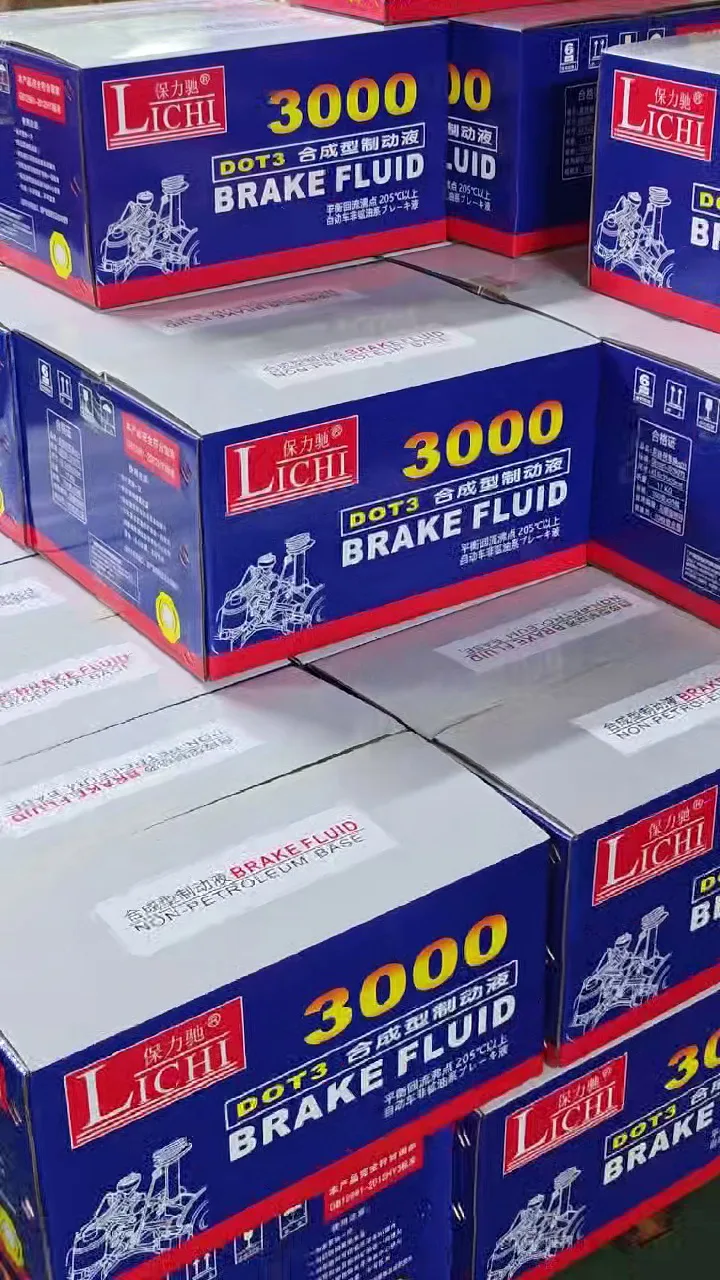
One caution about the photograph: a carton stack is evidence of packing discipline, not of shelf life. Always read the production date on the carton and on the unit, and rotate stock. A beautifully stacked pallet that has been sitting in a hot, humid warehouse for a year is a worse buy than a smaller quantity shipped more often.
Put the pack into the purchase order
Most pack disputes are not arguments about price — they are arguments about something nobody wrote down. The list below is short enough to paste into an RFQ and specific enough to prevent the common misunderstandings between an importer, a distributor and a factory.
- 1State the grade and SKU per carton, e.g. DOT 3 / BLC-OL-003 or DOT 4 / BLC-OL-004 — never mix grades inside one carton unless it is an agreed promotional assembly.
- 2State the unit net quantity (1 kg) and units per carton (20), plus expected carton net and gross weight.
- 3Require grade marking on the individual container, not only on the outer carton.
- 4Require a readable batch or production date on both unit and carton, so a complaint can be traced to a run.
- 5Agree the unopened shelf-life statement (three years) and the storage conditions your warehouse will actually provide.
- 6Confirm label language, surplus-label policy and artwork approval steps if you are buying private label.
- 7Ask for the TDS, which is ready to download, and request the MSDS on request — do not assume either document comes automatically.
- 8Write the Incoterm, carton dimensions, pallet pattern and mixed-container rules into the same order so freight is quoted on the real load.
Five mistakes that cost real money
- Booked a drum before confirming anyone could consume it quickly. Moisture does not wait for your sales plan.
- Chose one pack for all channels, then paid someone to repack it for retail and again for workshops.
- Negotiated the unit price but never agreed carton dimensions — freight was quoted on an assumed pallet.
- Printed the grade only on the carton, so the moment a unit left the box its identity was gone.
- Compared brake fluid pack sizes using coolant logic. Coolant tolerates an opened container far better than brake fluid does.
A starter mix for a new importer
If you are entering a market from scratch, resist the urge to buy one enormous quantity of a single SKU. Start with the grade your vehicle parc demands, in the pack your first customers can actually use, and let real sell-through decide the second order. The table is a planning pattern, not a volume recommendation; replace the descriptions with your own customer names and monthly figures.
| Phase | Channels to serve first | Pack to lead with | What to learn before reordering |
|---|---|---|---|
| First container | Parts counters and 2–3 independent workshops | DOT 4 in 1 kg units, cartons of 20 | Which grade is asked for by name; how fast a carton turns |
| Second order | Add older-vehicle specialists | Keep DOT 4, add DOT 3 in the same pack architecture | Whether two grades create picking errors in your warehouse |
| Third order | Add one fleet or contract account | Cartons, or a bulk pack quoted against volume | Whether the buyer has storage and dispensing discipline |
Questions buyers ask
Do I need both grades in the same pack?
For a small importer, yes — one container architecture keeps labeling, storage and picker training simple. Grade identification then becomes a label and colour discipline rather than a packaging overhaul. Keep the two grades in separate stacks and require grade marking on the unit itself; our guide to DOT 3, DOT 4 and DOT 5.1 explains the specification differences in detail.
Can I order a larger container?
Ask, and ask with numbers. Larger formats depend on volume, filling setup and destination regulations; they are a quotation, not an assumed catalogue item. Before requesting one, confirm the buyer has a dry store, a pump and enough throughput to finish the container before moisture becomes the real specification.
How long does an unopened carton keep?
Our stated shelf life for the unopened DOT 3 and DOT 4 units is three years. Treat that as a storage-condition statement: unopened, sealed, upright and out of direct sun. Once opened, the container should be used promptly and resealed between uses. Shelf life in a warehouse is not the same as service life in a vehicle.
Can different grades share a carton?
Not in a standard order. A mixed-grade carton creates picking errors and makes a batch trace messy. If you want a promotional assortment, agree it in writing with clearly separated inner packs and a carton mark that states exactly what is inside. The small saving on cartons is rarely worth a wrong-grade delivery.
The short version
Pack size is a channel decision disguised as a logistics detail. Use sealed 1 kg units for retail and slow workshops, cartons of twenty for wholesale, and quote larger formats only against a buyer with real throughput and storage discipline. Require grade marking on the unit, batch numbers on both unit and carton, and written carton dimensions before you quote freight. If you want DOT 3 and DOT 4 in a consistent pack architecture with measured specifications and a clear RFQ process, BOLITCH is ready to quote your first container.
Ask for a pack-size quotation
BOLITCH manufactures DOT 3 (BLC-OL-003) and DOT 4 (BLC-OL-004) brake fluid in sealed 1 kg units, 20 per carton, with a stated three-year unopened shelf life. TDS are ready to download and MSDS are available on request. Tell us your target channel mix, monthly volume, grade split, label language and destination market, and we will send the specification sheets, carton dimensions and pallet pattern, a sample label layout and a quotation for your first container. Visit bolitch.com or email sale@bolitch.com.