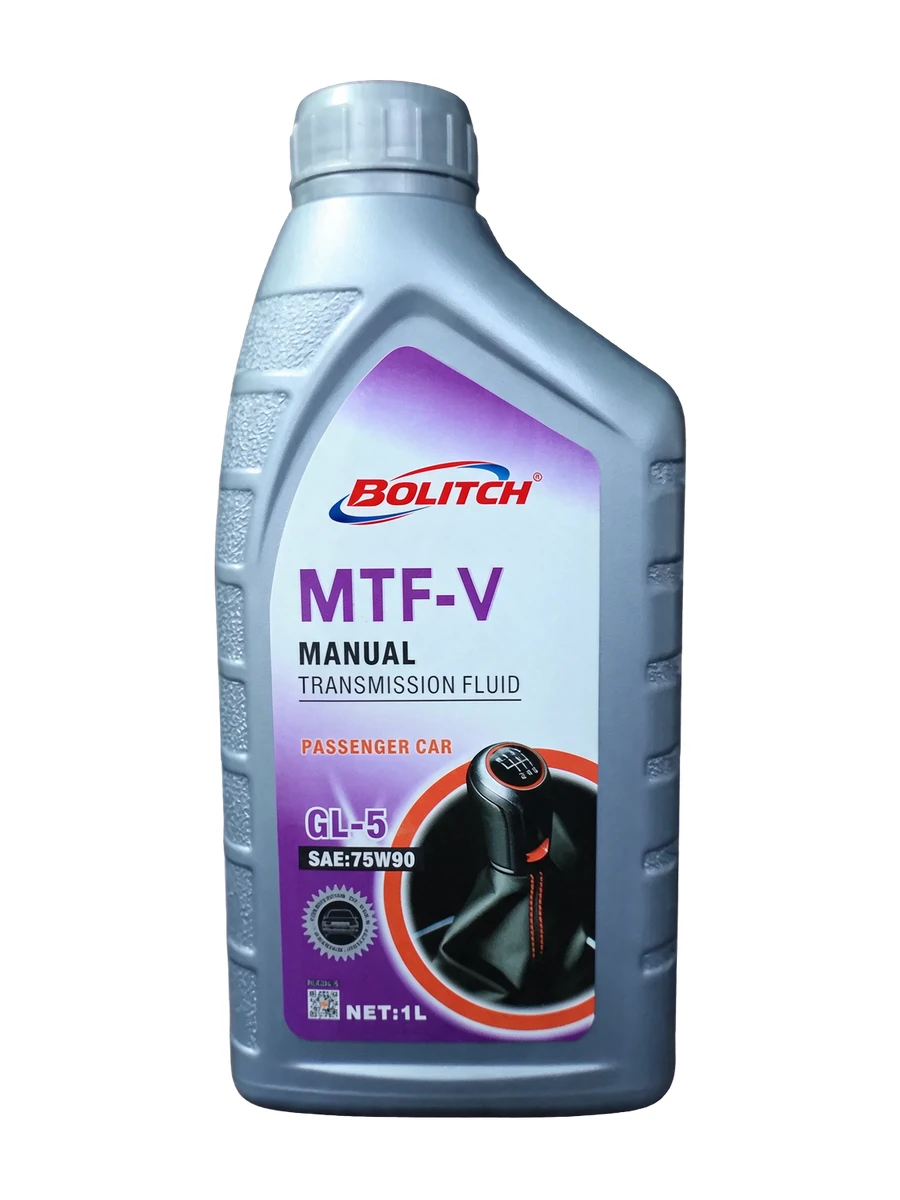
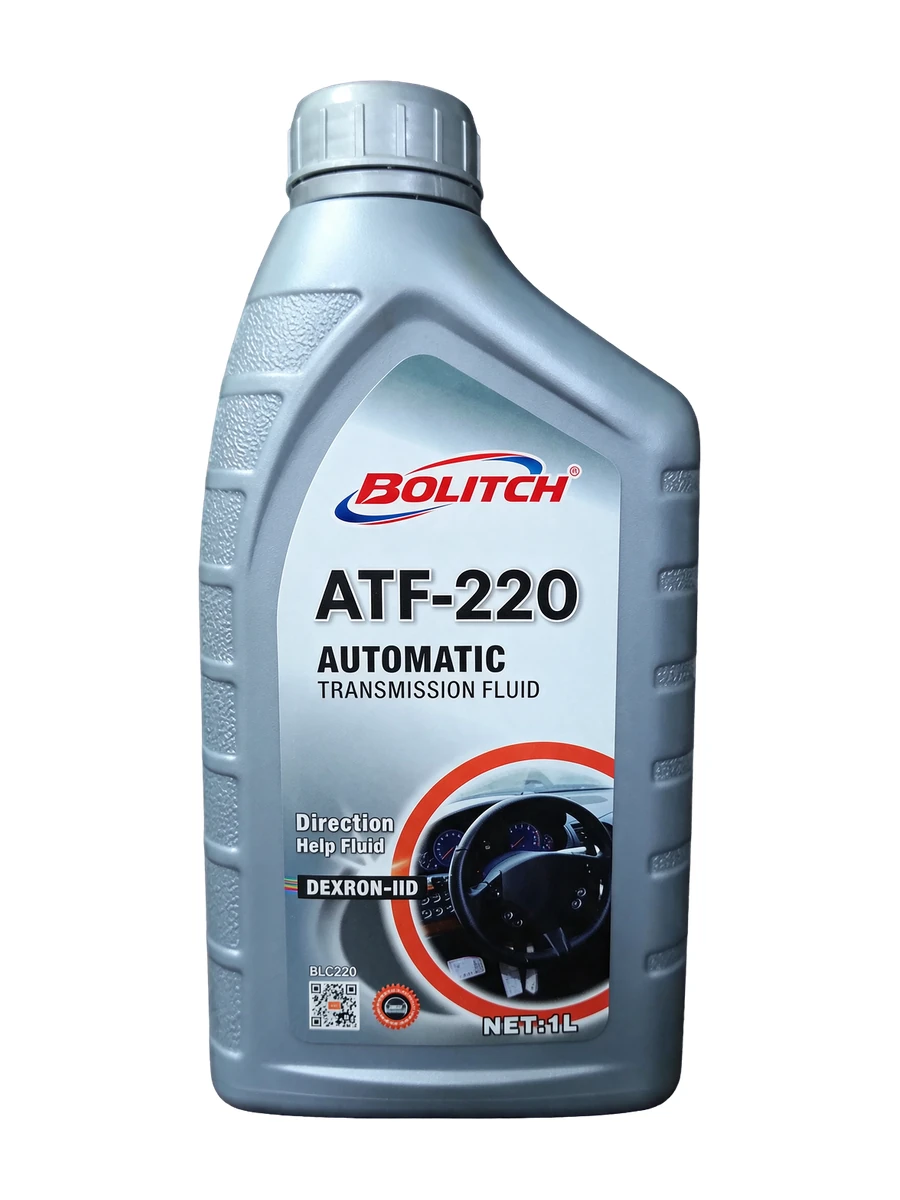
An importer or workshop gets the same call every week: a high-mileage manual gearbox has started to whine, the customer is convinced the oil has failed, and someone is about to quote a rebuild. The expensive mistake is rarely the fluid itself — it is the decision made before anyone has listened to the noise properly. On a vehicle with 180,000 km behind it, gearbox noise is far more often a bearing, a synchroniser, a clutch release bearing or a low oil level than a chemical failure of the lubricant. At the same time, dismissing every complaint as mechanical wear is just as costly: a box filled with the wrong viscosity grade, the wrong API service level, or a drum that has taken on water will genuinely destroy itself, and a distributor who refuses the claim without evidence will lose the account. This guide is written for distributors, importers, fleet buyers and the workshops they supply. It sets out a repeatable order for separating fluid-related noise from mechanical noise, explains what a drained-oil sample can and cannot prove, gives a decision table for when a fluid change is worth trying and when it is not, and ends with the evidence pack that settles a warranty discussion without an argument. None of the checks needs a laboratory, and none of them asks you to claim a certificate you do not hold.
Read the sound before you open the gearbox
Gearbox noise is not one symptom. A constant whine that rises with road speed, a rattle that disappears the moment you press the clutch, and a crunch on a fast second-gear downshift come from completely different parts, and only one of the three is plausibly a fluid problem. Before any oil is drained, get the driver to reproduce the noise under four conditions: stationary with the clutch up, stationary with the clutch down, steady speed in a tall gear, and a light-throttle acceleration through the gears. Write down which condition makes it louder. That single note usually narrows the cause more than any laboratory result, and it is the first line a distributor should ask for when a warranty claim arrives.
| How the noise is described | When it is loudest | Most likely source | First check that costs nothing |
|---|---|---|---|
| Steady whine or hum that rises with road speed | Cruising in 4th or 5th, light throttle | Worn input or output shaft bearing, or gear-tooth wear | Compare the same road speed in two gears; a road-speed-linked whine is downstream of the clutch |
| Rattle or chatter at idle, gone when the clutch pedal is pressed | Stationary, engine warm, gearbox in neutral | Release bearing, clutch disc or dual-mass flywheel | Press and release the pedal a few times and note exactly when the sound changes |
| Crunch or graunch on a quick downshift into 2nd | Cold start, fast shifts, first ten minutes | Worn synchroniser rings, or a fluid with the wrong friction behaviour | Warm the box fully and repeat; note the viscosity grade and service level on the invoice |
| Whine that changes pitch when cornering or under load | Loaded, climbing, or on a long bend | Low oil level, a blocked breather, or bearing preload loss | Check the level on level ground with the correct filler-plug procedure |
| Knock or heavy thud from the driveline on take-up | Pulling away, towing, stop-start traffic | Mounts, driveshaft joints or excessive backlash — not the lubricant | Inspect mounts and joint play before discussing oil at all |
The distinction that matters most is whether the sound tracks road speed or engine speed. A whine that follows road speed is being generated inside the gearbox or final drive after the clutch; a noise that follows engine rpm with the vehicle stationary is ahead of, or at, the clutch. A lubricant can influence the first group and cannot do anything for the second. Recording that one distinction protects both sides of the conversation: the workshop avoids an unnecessary strip-down, and the distributor avoids crediting a perfectly good drum of oil.
Four failures a fluid change will never fix
At 150,000–250,000 km most manual boxes carry some genuine mechanical wear. Fresh oil can quiet a marginal bearing for a few hundred kilometres, which is exactly why a fluid change is so often misdiagnosed as a cure. It cannot restore a lost surface. These four findings mean the box needs a mechanical decision, not a lubricant decision.
- A release bearing or dual-mass flywheel that is noisy with the clutch engaged and silent with the pedal down — the gearbox internals are not transmitting torque in that condition.
- Synchroniser rings worn past their friction reserve, so the box crunches on cold downshifts even with fresh, correctly specified oil.
- Bearing preload lost through housing wear or an earlier rebuild, producing a speed-linked whine that changes little with oil temperature.
- Excessive backlash, a chipped tooth or a worn driveshaft joint that shows up as a knock on take-up rather than a continuous whine.
None of these is a reason to refuse a claim. It is a reason to document the diagnosis. A photograph of the drain-plug magnet, a note of the test conditions and the batch code from the bottle turn a subjective argument about bad oil into a file both parties can accept — and they very often show that the fluid was blameless.
A twenty-minute inspection order that costs nothing
- 1Get the exact complaint in writing: mileage, when the noise started, whether it followed a service, and the four conditions above. Ask specifically whether it appeared within 500 km of an oil change.
- 2Confirm what went into the box from the invoice and the container: viscosity grade, API service level, quantity and batch code. A passenger box taking roughly 1.6–2.2 L that received 3 L, or a heavy box given one small jug, is a level problem before anything else.
- 3Check the level correctly — vehicle level, box at the maker's specified temperature, filler plug removed, oil just at the plug lip. Never judge level from a dipstick belonging to another system.
- 4Inspect the outside of the casing for a weeping output-shaft seal, a damaged drain-plug washer or a blocked breather. A slow leak plus high-mileage neglect is the most common cause of a genuine low-oil whine.
- 5Do the clutch-up / clutch-down idle test, then a steady-speed test in two different gears at the same road speed.
- 6Warm the box with a normal drive and repeat the shift-quality check. Note whether a cold crunch disappears; if it does, friction behaviour and viscosity are back in the frame.
- 7Only then decide whether to drain. Photograph the drain plug, collect a clean sample in a clear glass jar, and keep it sealed and labelled with the vehicle and date.
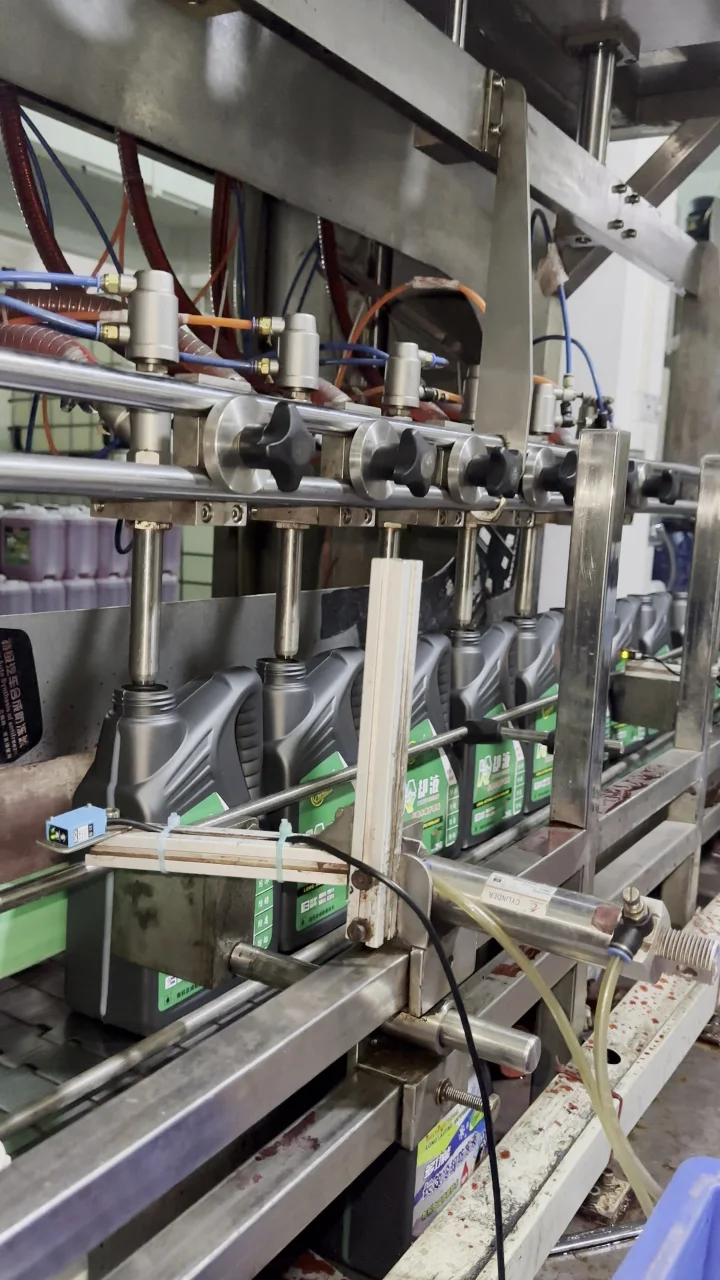
Step two is where most claims are won or lost. A workshop rarely keeps the container, so the distributor's own record is the only evidence of what was supplied. This is also why the filling operation matters to a buyer: a metered, multi-head line fixes the fill volume and the batch identity at the same moment, and that batch code is what lets you compare a complaint against a retained sample months later. Ask your supplier how batch codes are applied and whether a retained sample is kept for each production run.
What the drained oil can actually tell you
A jar of used gear oil will not tell you the remaining service life, and it will not certify anything. It will reliably show three things: gross contamination, severe oxidation, and how much metal the box has been shedding. Hold the jar against white paper in daylight, let it stand for ten minutes, and look for a separate layer, a milky haze, or a burnt smell. A dark colour alone is normal for a used gear oil and proves nothing.
| What you see in the jar | What it points to | What to do next |
|---|---|---|
| Milky brown or grey, with a visible water layer at the bottom | Water ingress — a pressure wash, a blocked breather, wading, or a drum stored open | Find and fix the entry point; refill and check seals before blaming the fluid |
| Almost black with a sharp burnt or sulphur smell | Severe overheating or a very long overdue drain | Check the breather and load history; a fresh fill may quiet it but will not undo the damage |
| Fine grey metallic paste on the drain-plug magnet | Normal bedding wear on a high-mileage box | Record and photograph; a paste alone is not a lubricant failure |
| Visible bronze or brass-coloured flakes | Synchroniser or bushing material being lost | Mechanical inspection; a fluid change cannot replace worn yellow metal |
| Clean amber-to-brown oil, no layer, no metallic debris | No gross fluid failure visible | Look harder at bearings, clutch and mounts — and keep the sample as evidence |
Treat the jar as a screening tool, not a verdict. If a dispute is worth real money, send a sealed, labelled sample for an independent analysis and compare it with the retained sample from the same batch. Keep the chain of custody simple: who took it, when, from which vehicle, and which bottle the oil came from.
When a fluid change is worth trying — and when it is not
A fluid change is cheap relative to a gearbox strip-down, so it is often a reasonable diagnostic step. The rule is to try it only where the symptom could plausibly be fluid-related, and to define in advance what result would count as success. Never use a thicker oil to silence a worn box: it masks the noise, raises cold-shift effort and can starve a bearing that depends on flow.
| Presentation | Try a change with the correct spec? | Why |
|---|---|---|
| Cold shifts crunch; the box quietens and shifts cleanly once fully warm | Yes — but verify the grade and API service level first | Viscosity and friction behaviour are temperature-dependent; this is the classic fluid-sensitive case |
| Whine appeared within 500 km of a service; the invoice shows an unknown grade | Yes, with a flush and a documented correct fill | Wrong viscosity, or a GL-5 fluid in a GL-4 box, changes shift feel and yellow-metal wear |
| Low level found, with a weeping seal | Yes — after the leak is repaired | Topping up alone repeats the failure; fix the entry point and refill to the plug lip |
| Speed-linked bearing whine unchanged by temperature or gear | No — it wastes a fill and delays the real repair | Bearing geometry, not chemistry, sets that noise |
| Noise present with the clutch pedal pressed at idle | No | The gearbox internals are not transmitting torque in that condition |
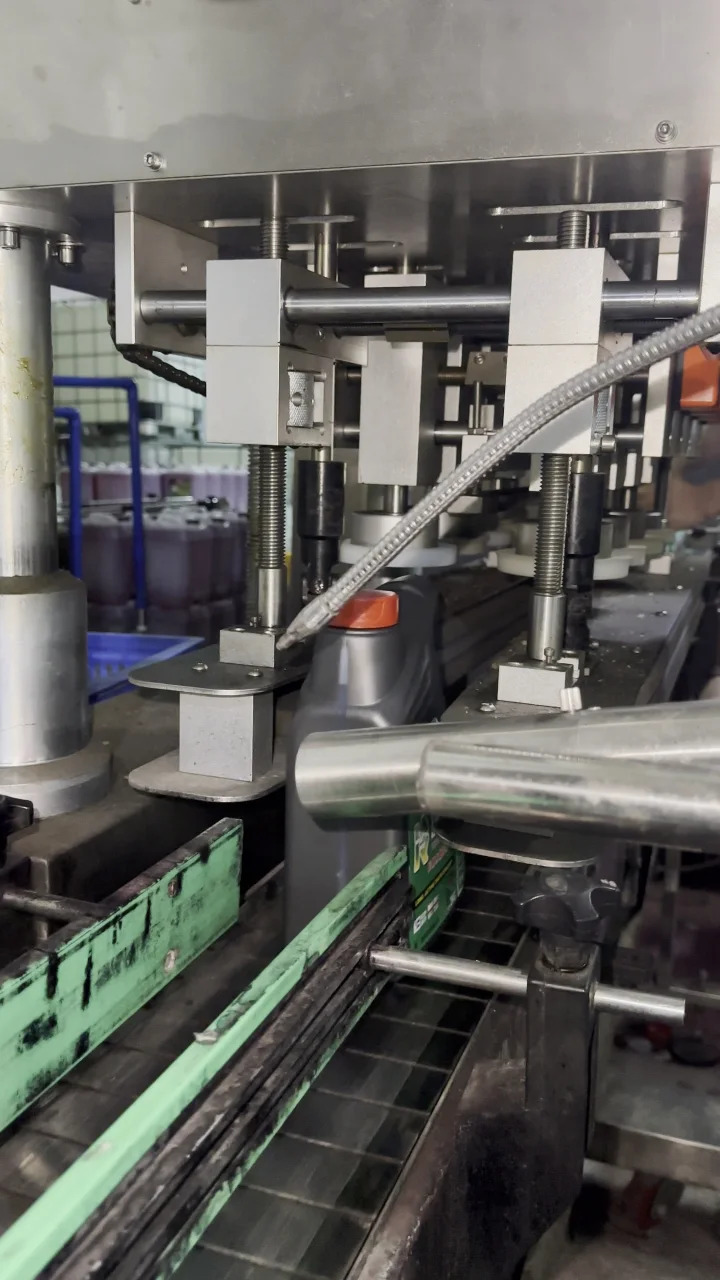
Whatever the outcome, close the loop on traceability before the vehicle leaves the workshop. Photograph the container label and its batch code, keep the drained sample sealed, and record the mileage and the test conditions. A sealed, coded container and an intact original closure are the two physical facts that let a supplier confirm the product was theirs and unopened — which is why capping and in-line coding are worth asking about when you qualify a new source.
Why the wrong viscosity or service level shows up as noise
Two separate specifications get confused on gear-oil labels. The viscosity grade — 75W-90, 80W-90, 75W-80 and so on — describes how the oil flows cold and hot. The API service level, GL-4 or GL-5, describes the extreme-pressure additive package and how aggressive it is toward yellow metals. They are independent: one 75W-90 can be a GL-4 fluid for a synchronised manual box, and another can be a GL-5 fluid for a hypoid differential. Neither is a quality ranking, and neither is an approval your company holds.
| Specification mismatch | Typical symptom | Correct action |
|---|---|---|
| A GL-5 fluid in a box that specifies GL-4 | Notchy or crunching shifts, brass-coloured debris on the magnet | Drain, flush, refill with the specified GL-4 fluid; inspect synchronisers at high mileage |
| A viscosity grade too heavy for the climate | Stiff cold shifts, a whine on cold starts that fades with heat | Match the grade to the maker's table and the market's winter temperatures |
| A viscosity grade too light for a heavily loaded box | Louder gear whine when hot and under load, rising oil temperature | Recheck the maker's specification before assuming the oil is at fault |
| An automatic transmission fluid or engine oil used by mistake | Slipping, foaming, rapid shift-quality collapse | Drain and flush immediately; do not run the vehicle further |
The GL-4 / GL-5 distinction is covered in detail in our separate guide; here it is enough to say that a brass or bronze synchroniser ring is the part that suffers first. If a noise complaint arrives together with bronze-coloured flakes in the drained oil, check the service level on the invoice before you discuss the lubricant's age. Asking for the technical data sheet at the time of purchase is far easier than reconstructing it afterwards.
The evidence pack a distributor should ask for on a noise claim
- The written complaint: mileage, date the noise began, and whether it followed a service or a fluid change.
- The four-condition noise note (clutch up, clutch down, steady speed, acceleration) and which gear was engaged.
- A photograph of the container label, including viscosity grade, API service level and batch code.
- The level-check result with the method used, plus a photo of any external leak or weeping seal.
- A sealed, labelled sample of the drained oil and a photo of the drain-plug magnet before it was cleaned.
- The workshop job card showing the diagnosis order and any parts already replaced.
Ask for the same six items every time and the conversation changes. Most claims resolve at step three, because the container shows a grade the vehicle maker never specified. The remaining cases usually turn into a mechanical repair with the lubricant explicitly cleared — a better commercial outcome than an argument, because it keeps the account and gives the workshop a defensible answer to pass on to its own customer.
What to write into your next purchase order
- 1State the viscosity grade and the API service level separately for each SKU, and require both to appear on the label and the technical data sheet.
- 2Specify pack sizes against real fill volumes — small bottles for passenger-box top-ups, larger drums for fleet and heavy-truck service — so a workshop is not tempted to stretch one container across several vehicles.
- 3Require a batch code on every container and a retained sample from every production run, with a stated retention period.
- 4Ask for the technical data sheet with the quotation and confirm safety data sheets are available on request; keep both on file before the container is opened.
- 5Define the acceptance check on arrival: label text, seal integrity, the appearance of a sample, and a simple comparison against the retained sample.
These are documentation habits, not certificates. They cost nothing to write into an order, and they turn a future noise complaint from a dispute about blame into a checkable comparison between two samples from the same batch. For a distributor supplying workshops across several markets, that repeatability is worth more than any single performance claim on a data sheet.
Frequently asked questions
Will fresh gear oil quiet a noisy high-mileage gearbox?
Sometimes, briefly, and only when the symptom is fluid-sensitive — typically a cold shift crunch or a whine that appeared right after a service with an unverified grade. Fresh oil can add a little film thickness and quiet a marginal bearing for a few hundred kilometres. It cannot rebuild a worn synchroniser or restore bearing preload. Define success before you drain: if the noise is unchanged after a correct fill and a warm drive, stop and move to a mechanical inspection.
Can a distributor refuse a claim on the basis of a dark, smelly oil sample?
No. A used gear oil darkens and picks up a sulphur note in normal service; colour and smell alone prove nothing. What a sample does show reliably is gross water contamination, a separate layer, or visible metal debris. If the claim is worth disputing, compare a sealed drained sample with the retained sample from the same batch and get an independent analysis rather than arguing from the jar.
Is a thicker oil a legitimate fix for a whining box?
No. It usually masks the noise for a short period while making cold shifts heavier and reducing flow to bearings and synchroniser passages that depend on it. In a hot climate it can also raise operating temperature. Use the viscosity grade in the vehicle maker's table, and treat any suggestion to go thicker as a reason to inspect the box rather than as a service recommendation.
What should a workshop record before contacting the supplier?
The mileage, the date the noise started, whether it followed a service, the four-condition noise note, the level-check result, the container label with its batch code, and a sealed drained sample with a photo of the drain-plug magnet. Six items, ten minutes of work, and enough to settle most claims without a strip-down.
Request gear-oil specs, TDS and batch samples
BOLITCH supplies 75W-90 manual transmission fluid in both API GL-4 and API GL-5, so you can match whichever level the gearbox maker specifies, plus related driveline fluids. Technical data sheets (TDS) are ready to download and safety data sheets (MSDS) are available on request. Tell us the vehicle mix in your market, the pack sizes you resell and your monthly volume, and we will send the viscosity and service-level options, the label and batch-coding detail, a retained-sample plan and a quotation for your first container. Visit bolitch.com or email sale@bolitch.com.