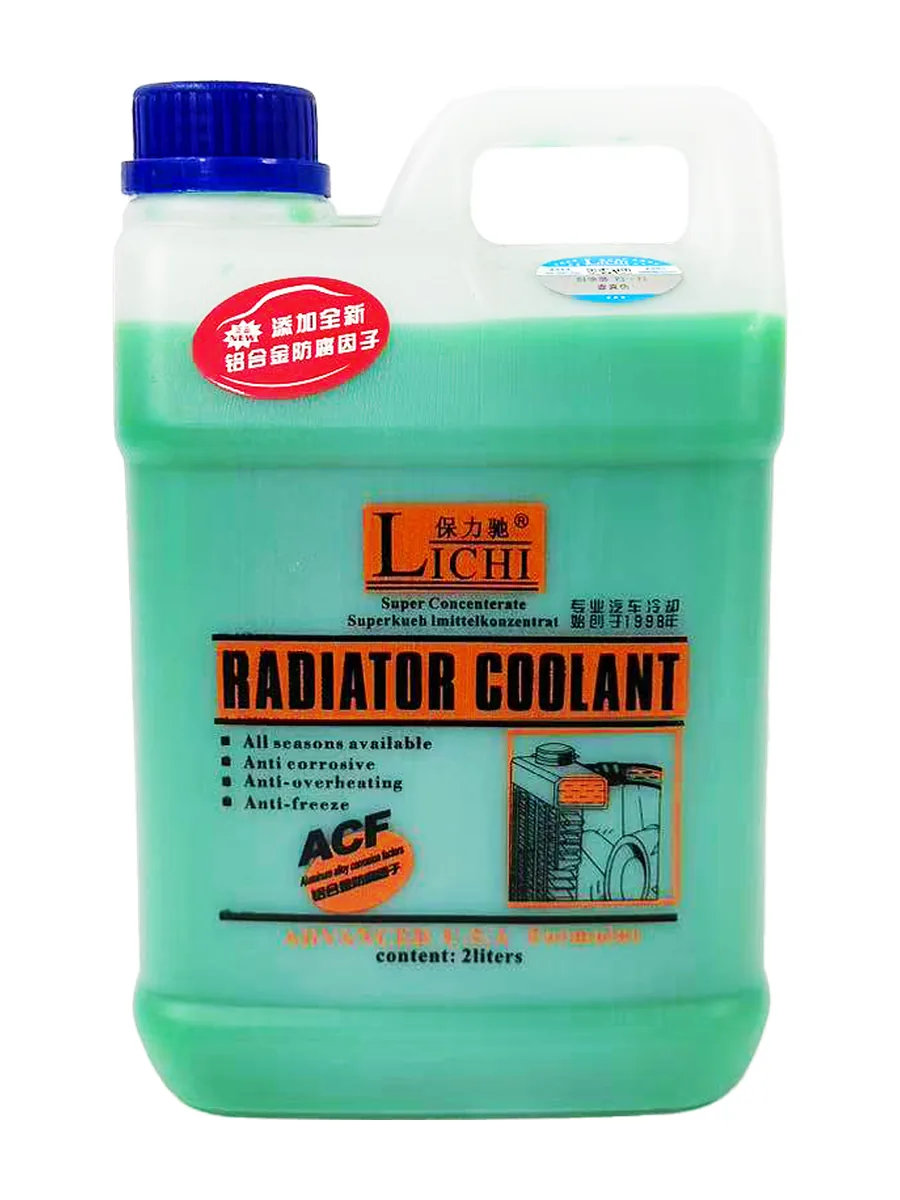
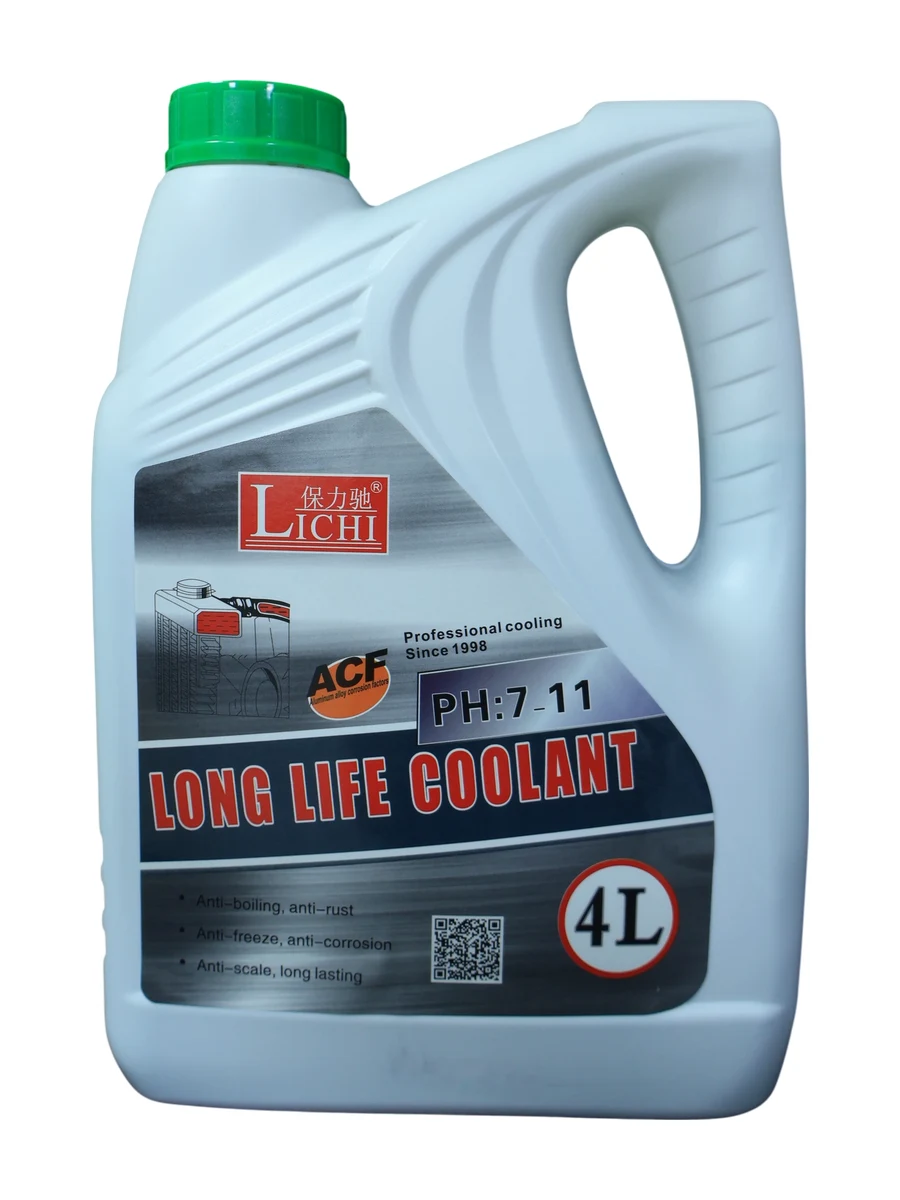
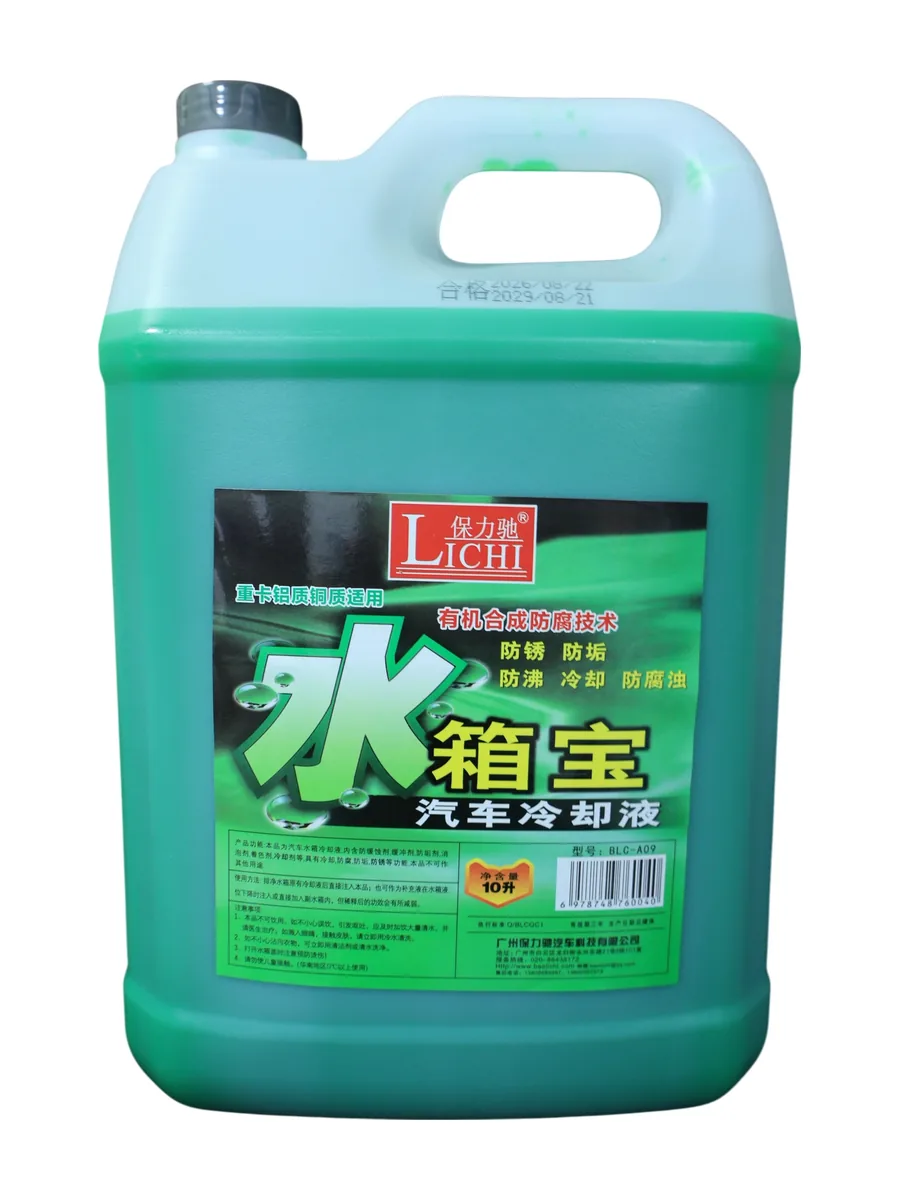
A coolant jug is a quiet purchase. Buyers compare the colour, the price and the brand on the front, then move on. The one place that actually tells you what the fluid will do — the label — is the part almost nobody reads, and in many markets it is also the part that says the least. Walk down a tropical hardware or auto-parts aisle and you will find jugs marked only with a colour and a vague claim, with no freeze point, no boil point and no batch code in sight. This guide explains why the boiling point so often disappears from a coolant label, what a complete label should carry, and the specific boil-over specification that importers in hot climates should ask for instead. It is written for distributors and importers who want to sell a product they can defend, not just a bottle they can shift.
Why the boiling point is usually missing from the label
The short answer is that the boiling point printed on a label would be misleading, and most sellers would rather not print a number they cannot stand behind. A coolant's atmospheric boiling point depends on two things the label alone does not capture: the actual glycol concentration in the jug, and the pressure of the cooling system it ends up in. A correctly formulated 0 °C tropical grade boils at about 101 °C at atmospheric pressure, and a −37 °C grade at roughly 110 °C, but those figures only hold if the product was blended to spec and the radiator cap is holding pressure. Print 'boils at 110 °C' and a diluted or depressurised system will contradict it within a season. The radiator cap is the missing half of the story. Every 1 psi of system pressure raises the coolant's boiling point by roughly 1.7 °C, so a healthy 15 psi cap can lift a 101 °C tropical grade past 125 °C before the engine ever boils. A label that prints a single open-pot number invites the buyer to blame the fluid when the real fault was a worn cap — which is exactly why serious suppliers publish both the atmospheric figure and a note that the cap does the rest.
- Regulation points at freeze protection. In most destination markets the mandatory label fields cluster around freeze point, net content and hazard warnings — not boil point — so many factories simply print what the rule requires and stop there.
- Concentration is variable. A concentrate and a premix of the same chemistry show different boiling points; a single printed number cannot cover both without confusing the buyer.
- Dilute-and-ship games. A jug that has been cut with water boils far sooner than the label implies. Sellers who over-dilute have a strong incentive to leave the boil point off entirely.
- Marketing prefers simple claims. 'Anti-boil protection' reads better than a measured temperature with caveats, so the measured number gets replaced by a slogan.
What every coolant label should carry
None of that is an excuse for an empty label. A label that earns the buyer's trust carries a small, specific set of fields that anyone can check. The list below is what a serious importer should expect to see printed on the unit, not just on a separate data sheet.
| Field | Why it matters |
|---|---|
| Product type and chemistry | States whether it is an OAT, HOAT, hybrid or conventional blend — the single most important fact for compatibility. |
| Freeze point (measured) | The one number that proves the jug was blended to a real specification, not just dyed water. |
| Net content | The volume actually in the jug; the basis for fair pricing and customs declaration. |
| Batch / lot code | Lets a problem be traced back to the exact production run. |
| Production and shelf date | Coolant has a shelf life; the date tells the buyer how fresh the inventory is. |
| Safety pictograms | GHS hazard symbols and handling warnings required for transport and storage. |
| Language of the market | The label must be readable in the language the local buyer and inspector use. |
The number that matters in hot climates: atmospheric boil point
In tropical and subtropical markets the failure mode is overheating, not freezing. A distributor in Lagos, Bangkok or Manila does not need a −45 °C product; they need a coolant whose atmospheric boiling point is honestly stated and genuinely high. For a 0 °C tropical grade that means roughly 101 °C at atmospheric pressure, rising further once the system is pressurised by the radiator cap. The useful number to put in front of a buyer is not a freeze point they will never reach, but a boil-over margin they live with every hot afternoon in traffic. In practice this is why a distributor who stocks a properly specified 0 °C grade and trains the buyer to keep the cap healthy will see fewer summer boil-over complaints than one who ships a mislabelled 'super coolant' with no boil figure at all.
| Spec field | What to specify |
|---|---|
| Atmospheric boil point | 101 °C or higher for a 0 °C tropical grade |
| Glycol content | 25–35 % by volume for a real boil margin without over-concentrating |
| pH window | 8.5–9.5 for phosphate / OAT tropical blends, with reserve to spare |
| Pressure-cap rating | Label should remind the buyer the cap holds the margin |
| Corrosion inhibition | Named inhibitor chemistry, not just 'long life' |
Net content, batch code and traceability
Two fields do more for an importer's peace of mind than any slogan: net content and batch code. Net content is the obvious one — it is what the buyer pays for and what customs checks. The batch code is the quiet one: when a field problem appears months later, that code maps the complaint straight back to the exact lot you shipped, turning a warranty shouting match into a paperwork check. A label without a batch code is a product that cannot be traced, and a product that cannot be traced is a liability you do not want on your shelf. The cost of that liability shows up at the worst moment: a fleet reports cavitation after a hot-season batch, and without a code you cannot tell whether the fault sits in one lot, one formula revision, or a dilution step at the blender. With a code, the same report becomes a two-minute lookup against the certificate of analysis, and either clears the product or names the exact lot to recall.
- Print the batch and production date on the unit, not only on the outer carton — cartons get separated from jugs.
- Use a code format your warehouse can actually scan or read, not a smear of ink that fades in humidity.
- Keep the batch linked to the certificate of analysis so any jug can be verified against its test values.
- State net content in the local unit (litre or millilitre) and the local language.
Freeze-point honesty for tropical markets
There is a temptation, when selling into never-freezing climates, to slap a −25 °C claim on the jug because it sounds more protective. It is the wrong move. An honest 0 °C tropical grade with a high boil point and strong corrosion inhibition is not a downgrade — it is the correct product for the climate, and it is cheaper to make because it uses less glycol. Pretending it protects against frost it will never meet only sets up a buyer to distrust the next number you print. Say 0 °C when it is 0 °C, and let the boil margin and inhibitor life carry the story.
Safety pictograms and the language on the bottle
A coolant label is also a safety document. The jug will be transported, stored, decanted and eventually disposed of, and each of those steps needs the right pictogram and phrase in a language the local handler reads. A beautifully designed label that carries no hazard symbol, or that prints warnings in a language nobody on the warehouse floor understands, is a compliance gap waiting to be found at the border.
- Carry the GHS hazard pictograms required for the formulation in the destination market.
- Print handling and first-aid text in the local language, not only English.
- Match the label proof to the destination's registration or labelling rules before the first container ships.
How to read a coolant label in 60 seconds
- 1Find the freeze point. If there is none, the jug has no spec to stand behind — walk away.
- 2Check the chemistry line. OAT, HOAT or conventional tells you what it mixes with and what it protects.
- 3Read the net content and confirm it matches the price you were quoted.
- 4Look for a batch code and production date; no code means no traceability.
- 5Confirm the boil-over or glycol statement, and ask for the TDS if the boil point is missing.
A label checklist for importers
| Check | Pass criterion |
|---|---|
| Freeze point printed | A measured value, not just a colour or a claim |
| Boil / glycol statement | Atmospheric boil point or glycol % stated for the grade |
| Batch + date on unit | Both printed on the jug, scannable |
| Net content accurate | Matches the quoted volume and local unit |
| Pictograms present | GHS symbols in the market language |
| Chemistry named | OAT / HOAT / hybrid / conventional stated |
| TDS + MSDS available | TDS ready to download, MSDS on request |
Frequently asked questions
| Question | Short answer |
|---|---|
| Why doesn't my coolant label show a boiling point? | Because the real boil point depends on concentration and system pressure; many labels only print the legally required freeze point and skip the measured boil figure. |
| Is a higher freeze point claim always better? | No. In tropical markets an honest 0 °C grade with a high boil point is the correct product; a false −25 °C claim just erodes trust. |
| What is the most important thing on the label? | The freeze point and the batch code — one proves the spec, the other makes the jug traceable. |
| Do I need the TDS if the label is complete? | Yes. The label is a summary; the TDS carries the full measured values you verify against. |
| Should the label be in the local language? | Yes, for pictograms and handling text; border inspectors and warehouse staff need to read it. |
Request coolant label specs, TDS and COA
Safety data sheets are available on request and product specification sheets (TDS) are ready to download for every coolant grade. Tell us your climate mix and monthly volume and we will propose a 0 / -15 / -25 / -37 °C plan with batch COA, boil-point data and private-label options. Visit bolitch.com or email sale@bolitch.com.