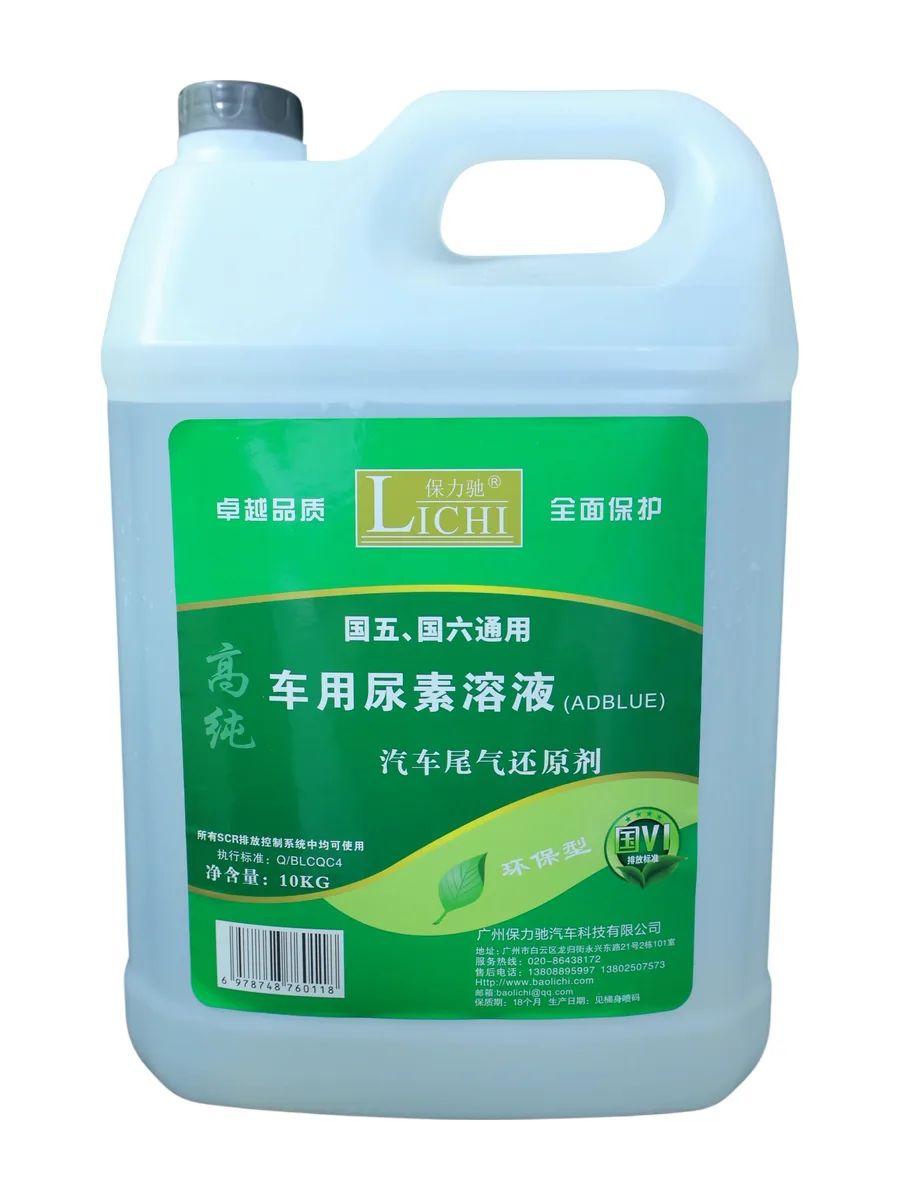
AdBlue looks like the cheapest thing on a diesel truck's shopping list. A few litres of urea solution, a capped jug, a fraction of the fuel bill. That cheapness is exactly why it is dangerous to buy on price alone. AdBlue is not a commodity you can water down — it is a precisely specified reagent, and the one thing that decides whether it protects or destroys an SCR system is purity. A drum that is a few percent off specification can clog the injector, coat the catalyst and trigger a derate that grounds a truck, and the repair will cost more than the entire fluid budget for a year. For importers and distributors this is not a technical footnote; it is the difference between a product your customers refill without thinking and a product that generates warranty claims. This guide explains what AdBlue purity actually means, what impurities do inside the exhaust, why the dosing injector is the expensive part, and the verification steps you should build into every purchase.
Why purity is the lifeblood, not a line item
Selective catalytic reduction works by injecting a fine mist of AdBlue into the hot exhaust, where the urea breaks down and reacts with nitrogen oxides to form nitrogen and water. The dosing system is built around that exact 32.5% concentration. It meters by volume and assumes a fixed strength, so every component downstream — the pump, the injector, the catalyst — is tuned to a solution of that precise composition. Change the composition and the system no longer does what it was designed to do, often quietly, until a fault code appears. Purity is therefore not a matter of 'better quality' in the marketing sense; it is the precondition for the system functioning at all. A cheap drum with the wrong urea grade or a stray contaminant is not a bargain — it is a slow, expensive failure you paid to receive.
What 'pure' AdBlue actually means (ISO 22241)
AdBlue is defined by the international standard ISO 22241-1: a solution of 32.5% high-purity urea in deionised water, with tightly capped impurity levels and nothing else — no dye, no additive, no 'enhanced' formula. The standard exists because the SCR dosing strategy assumes that exact recipe. When a supplier says their fluid is 'to spec', what they mean is it stays inside the ISO 22241 limits across a list of parameters. The most important ones for an importer to understand are below; they are the defining limits of the standard, not a claim about any single product.
| Parameter | ISO 22241-1 limit (typical) | Why it matters |
|---|---|---|
| Urea content | 31.8–33.2% by mass (32.5 ± 0.7) | Drives dosing accuracy; off-strength triggers a derate |
| Biuret | ≤ 0.3% | Byproduct that coats and deactivates the catalyst |
| Aldehydes (as HCHO) | ≤ 5 mg/kg | Corrosive; deposits on injector tips |
| Insoluble matter | ≤ 20 mg/kg | Clogs the fine dosing nozzle |
| Alkalinity (as NH3) | ≤ 0.2 mmol/L | Indicates degradation and ammonia-slip risk |
| Metals (Fe, Cu, Zn, Cr, Al…) | Each ≤ 0.2–0.5 mg/kg | Poison the catalyst and corrode parts |
| Specific gravity @20 °C | 1.087–1.092 | Quick field check of concentration |
| Refractive index @20 °C | 1.3814–1.3843 | Field check, cross-checked with gravity |
What contamination does inside the SCR system
Once AdBlue leaves specification, the damage is concentrated in the two most expensive parts of the after-treatment system: the metering injector and the SCR catalyst. The injector sprays the fluid as a fine mist through a nozzle a fraction of a millimetre wide. Anything that should not be there — solid particles, gel, crystallised urea, metal ions — collects there first. The catalyst is a ceramic honeycomb coated with rare-earth and precious-metal chemistry; it is designed to last the life of the vehicle, but it is also the part most easily poisoned by the wrong contaminants.
- Biuret and related byproducts from low-grade urea bake onto the catalyst surface and permanently reduce its ability to convert NOx — conversion drops and emissions rise.
- Metal ions (iron, copper, zinc, chromium) from agricultural-grade urea or contaminated water poison the catalyst's active sites, sometimes irreversibly.
- Insoluble matter and crystallised urea block the injector nozzle, causing uneven dosing, poor atomisation and eventually a no-start or limp-home mode.
- Water added to 'stretch' a drum dilutes the urea below 32.5%, so the system under-doses and the engine derates or flags a fault.
- Aldehydes and high alkalinity accelerate corrosion of the fluid lines, pump and tank, leading to leaks and contamination of the next fill.
The injector that costs more than the fuel
Here is the arithmetic that changes how you buy. AdBlue itself is inexpensive — typically a small fraction of the diesel price per litre, and a truck uses only a few percent of its diesel volume as AdBlue. The SCR dosing injector, by contrast, is a precision component priced like the engineered part it is: replacement often runs into several hundred euros or dollars depending on the vehicle maker, before you add labour and downtime. The SCR catalyst sits further up the cost curve — a full catalyst replacement can reach into the thousands. A single contaminated drum that takes out an injector has therefore destroyed value many times the price of the fluid. For a fleet or a distributor, one bad batch does not just spoil one jug; it can take down multiple vehicles and generate warranty and reputation damage that no per-litre saving offsets.
| Item | Typical relative cost | What the buyer should remember |
|---|---|---|
| AdBlue fluid (per litre) | Baseline — low | Cheap; never the place to save money |
| SCR dosing injector | Hundreds per unit | One contaminated drum can ruin several |
| SCR catalyst | Thousands to replace | Poisoned by metals/biuret, often permanent |
| Downtime + labour | Variable, per breakdown | A grounded truck earns nothing |
A verification protocol for importers
You do not need a laboratory in your warehouse to avoid bad AdBlue, but you do need a protocol. The goal is to prove you received 32.5% high-purity urea, not to take a supplier's word for it. Build these steps into the purchase order and the goods-in process.
- 1Request a batch certificate of analysis (CoA) with every shipment, showing urea content, biuret, aldehydes, insoluble matter, alkalinity and the metal panel — all against ISO 22241-1.
- 2At goods-in, run a quick field check: measure specific gravity (1.087–1.092 at 20 °C) and the refractometer index (1.3814–1.3843 at 20 °C). Both should land inside the band for a correct 32.5% solution.
- 3For high-volume or first-time suppliers, send a retained sample to an independent laboratory for a full ISO 22241 panel — it is cheap insurance against a year of comebacks.
- 4Check the container and handling: sealed, labelled AdBlue only, never transferred through a drum that previously held diesel, coolant or a cleaning chemical.
- 5Keep the batch CoA with the batch number so any field problem maps back to the exact lot you received.
Red flags when you source AdBlue
Most AdBlue failures are avoidable at the sourcing stage. A few signals tell you a supplier is selling something other than specification-grade fluid, and they are worth walking away from even when the price looks attractive.
- No certificate of analysis, or a CoA that only shows urea content and skips the impurity panel.
- A price far below the market that cannot be explained by volume or freight — urea is a traded commodity, so a huge discount usually means a different, cheaper raw material.
- Claims that 'agricultural-grade urea is the same thing' — it is not; agricultural urea carries higher biuret and metal content that damages the catalyst.
- A generic 'AdBlue' with no named standard, no batch number and no traceability.
- Fluid that has been decanted, blended or 'topped up' outside a controlled production line.
Storage still matters once it is pure
Purity at the factory is only half the story; AdBlue also degrades in storage if handled badly. Keep it between about 0 °C and 30 °C — above roughly 30 °C the urea breaks down and releases ammonia, drifting the strength below specification, and below about −11 °C it freezes (freezing itself is reversible if thawed properly, but do not store it solid). Keep containers sealed so the solution does not absorb moisture from humid air and dilute, and never store it in a galvanised, zinc-plated or bare-aluminium container, because urea attacks zinc and copper alloys and picks up metal ions that poison the catalyst. Good storage protects the spec you paid for.
What BOLITCH supplies and the documents to request
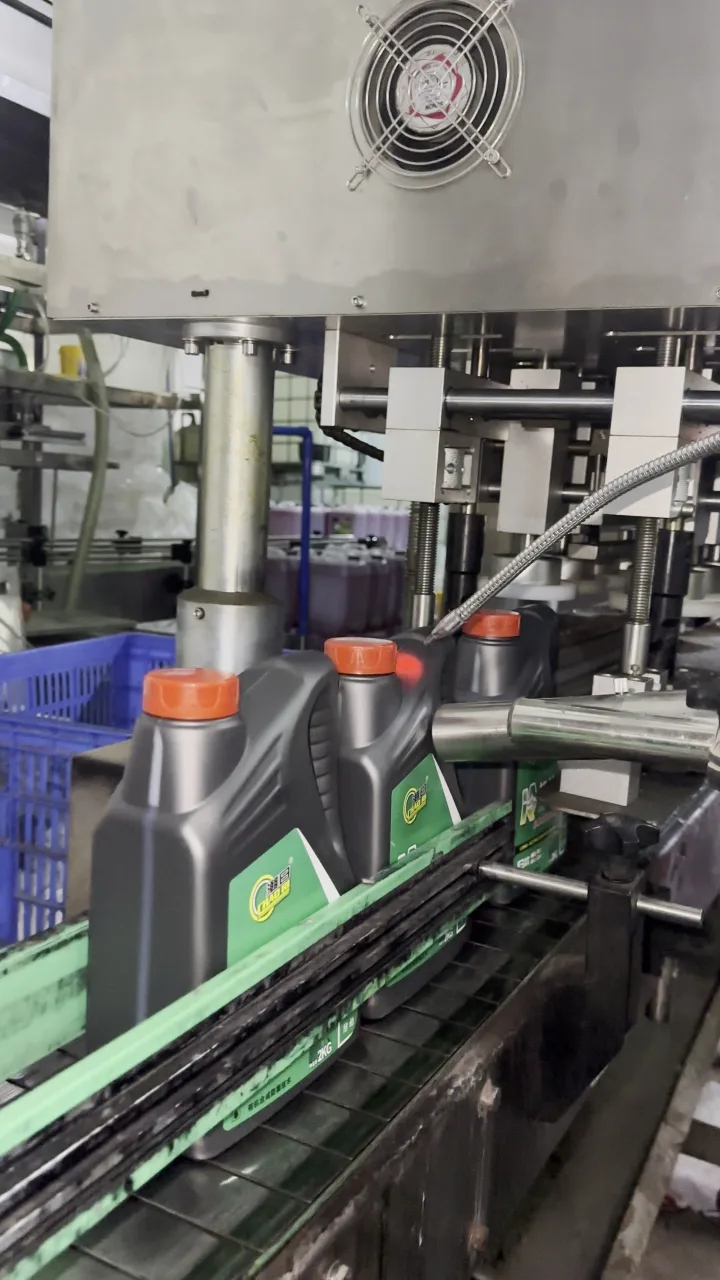
AdBlue is defined by ISO 22241-1; BOLITCH AdBlue is blended to that specification and batch-checked before it leaves the line. For distributors and importers, it is supplied in 10 L capped jugs and bulk formats. What matters for your due diligence is the paper trail: every shipment can be accompanied by a batch certificate of analysis, a safety data sheet (available on request) and a technical data sheet (ready to download). Ask for all three before you commit a container, and keep them filed against the batch number. A supplier who provides the full documentation without hesitation is showing you what is in the drum; one who will not is telling you something as well.
Pre-shipment purity checklist
- Specify ISO 22241-1 compliance and 32.5% urea in the purchase order.
- Require a batch CoA with the full impurity panel for every lot, not just the first.
- Confirm SDS (on request) and TDS (ready to download) are available for the exact product and grade.
- Agree a goods-in field check (specific gravity + refractometer) and retain a sample per batch.
- Plan storage at 0–30 °C, sealed, away from zinc/aluminium and from previously-used chemical drums.
- Keep batch traceability from the jug back to the CoA and the production lot.
Frequently asked questions
| Question | Short answer |
|---|---|
| Can I dilute AdBlue with water to save cost? | No. The 32.5% concentration is fixed by the SCR dosing design; dilution drops the strength, the system detects it and the engine derates. |
| Is agricultural urea the same as AdBlue urea? | No. Agricultural grade carries higher biuret and metal content that coats and poisons the SCR catalyst. Automotive-grade, ISO 22241 urea is required. |
| How do I check AdBlue at goods-in without a lab? | Measure specific gravity (1.087–1.092 at 20 °C) and refractometer index (1.3814–1.3843 at 20 °C); both confirm a correct 32.5% solution. |
| What does bad AdBlue do first? | Usually it blocks the dosing injector nozzle or coats the catalyst, causing fault codes, poor NOx conversion and eventually a derate or limp-home mode. |
| How long does AdBlue last in storage? | Up to about 12 months unopened within the 0–30 °C window; heat and light shorten that. Check the batch date on arrival. |
Request AdBlue samples, CoA and TDS
Safety data sheets are available on request and product specification sheets (TDS) are ready to download for every AdBlue grade. Tell us your target market and monthly volume and we will send specification sheets, packaging options and mixed-container pricing. Visit bolitch.com or email sale@bolitch.com.